A Thriving Bakery Scene Across the Borough
Broxtowe's high streets in Beeston, Stapleford, Kimberley and Eastwood support a bakery culture that has strengthened considerably in recent years. Renewed interest in craft baking, the growth of independent coffee culture and a willingness to pay for genuine quality have all contributed.
The borough's bakeries fall into several categories. Traditional family bakers, some operating for generations, produce daily bread, morning goods, pies and cakes for a loyal local following. Artisan sourdough bakeries focus on long-fermented breads made with minimal ingredients. Patisserie and celebration cake specialists produce bespoke work for weddings and events. Café-bakeries combine production with seating. Wholesale bakeries supply restaurants, delicatessens and farm shops across Nottinghamshire.
What Distinguishes Genuine Craft Baking
The most significant technical difference between industrial and craft bread is time. Long fermentation, often overnight or across several days for sourdough, develops flavour through the action of wild yeasts and lactic acid bacteria. It also improves digestibility, as the extended fermentation breaks down components that some people find difficult.
Industrial processes achieve in a few hours what traditional methods take a day or more to accomplish, using accelerated mixing, chemical improvers and higher yeast quantities. The result is consistent and inexpensive but noticeably different in flavour, crust and keeping quality.
Flour choice matters enormously. Bakers using stoneground flour from regional mills, heritage wheat varieties or high-extraction flours produce breads with markedly more character than those using standard commodity flour. Some Broxtowe bakers name their mills specifically, which is a reliable indicator of ingredient seriousness.
Hydration levels, shaping technique, proving conditions and baking environment all influence the final loaf. A well-made sourdough shows an open, irregular crumb, a deeply coloured blistered crust and a pronounced tangy aroma.
Product Ranges to Expect
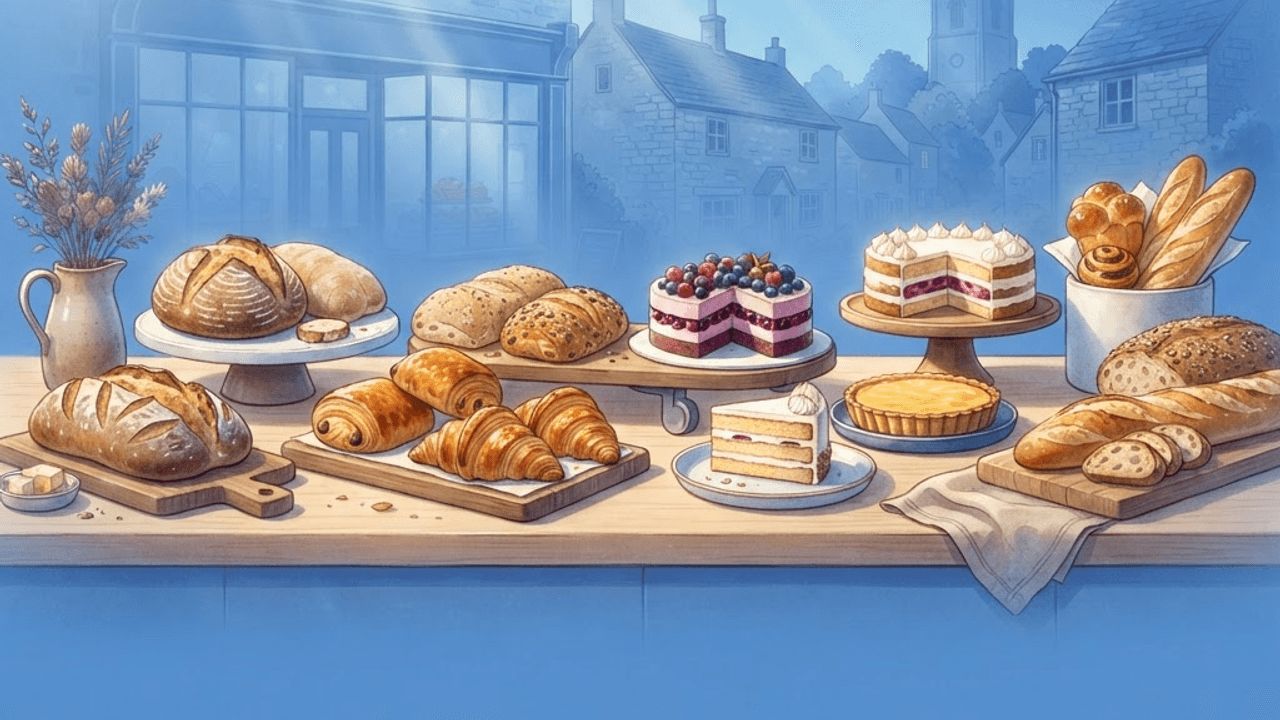
Bread offerings across the borough typically include white and wholemeal tin loaves, bloomers, cobs, seeded varieties, rye breads, focaccia and sourdough in several forms. Nottinghamshire's strong tradition of the cob roll remains firmly in place, and local bakers take it seriously.
Morning goods encompass croissants and laminated pastries, which are a genuine test of skill given the precision required in butter lamination and proving. Danish pastries, cinnamon buns, scones and teacakes feature widely.
Savoury lines reflect regional preference, with pork pies, sausage rolls, pasties and quiches common. A good pork pie with hot water crust pastry and properly set jelly remains a point of pride for traditional Midlands bakers.
Cakes range from everyday slices and traybakes to elaborate celebration work. Bread pudding, Bakewell-style tarts and fruit cakes represent the enduring regional repertoire.
Specialist provision has expanded considerably. Gluten-free, vegan and reduced-sugar options are now widely available, though anyone with coeliac disease should confirm whether products are made in a dedicated environment or simply from gluten-free ingredients in a shared bakery.
Celebration and Wedding Cakes
Bespoke cake work is a distinct craft. Specialists in the borough handle tiered wedding cakes, sculpted novelty designs, sugar flower work and dietary-adapted celebration cakes.
Commissioning well involves discussing flavour and filling combinations, structural requirements for tiered designs, delivery and setup logistics, seasonal availability of decorative elements, and timescales. Popular bakers book wedding dates many months ahead, particularly for summer.
Tastings are standard practice for significant commissions and are the best way to assess quality before committing.
Ingredient Sourcing and Sustainability
Serious bakeries increasingly publicise their supply chains. Regional flour milling, local dairy, British butter, free-range eggs and seasonal fruit all appear in the sourcing statements of quality-focused operators.
Sustainability practices have become more visible. Bakeries reduce waste through accurate production planning, end-of-day discounting, surplus redistribution and repurposing unsold bread into puddings, croutons and breadcrumbs. Packaging has shifted towards paper and compostable materials, and many operators encourage customers to bring their own bags and containers.
Energy use is a substantial cost for bakeries, and several local operators have invested in more efficient ovens and heat recovery systems.
Food Safety and Standards
All food businesses in England are inspected by local authority environmental health teams and receive a food hygiene rating, which is published and should be displayed. Ratings reflect hygienic food handling, the condition of the premises and the quality of food safety management systems.
Allergen labelling is a legal requirement. Prepacked products must list allergens clearly, food prepacked for direct sale must carry a full ingredients list with allergens emphasised, and loose products must have allergen information readily available. Any reputable bakery will answer allergen questions confidently and accurately.
Customers with serious allergies should ask specifically about cross-contamination risk, since flour dust and shared equipment make absolute separation difficult in most bakeries.
How to Judge a Bakery
Visit in the morning when the range is complete and the products are freshest. Look at the crust colour of the bread — pale, uniform loaves suggest rushed baking, while deeply coloured crusts indicate proper development.
Ask what time the bread was baked and how often they bake each day. Bakers proud of their process answer enthusiastically.
Examine the pastries. Croissants should show distinct layers, a shattering exterior and a honeycomb interior rather than a bready texture.
Consider the ingredient list on packaged items. Short lists of recognisable ingredients generally indicate craft production.
Note the queue and the turnover. Busy bakeries sell out, which means fresher stock and better product rotation.
Supporting Local Bakeries
Independent bakeries operate on modest margins with high labour costs and early starts. Ordering ahead for weekends, buying consistently rather than occasionally, and giving notice for large orders all help enormously.
Many Broxtowe bakeries offer subscription bread collections, workplace delivery and wholesale supply to local cafés. Others run baking classes, which have proved popular and provide useful additional income.
For residents across Beeston, Chilwell, Stapleford, Kimberley and Eastwood, the borough's bakeries offer a standard of everyday food that repays seeking out. Choosing well is largely a matter of visiting, tasting and asking questions — and most bakers are delighted to be asked.
Want your brand featured in front of decision-makers? Publish a guest post or get a link insertion in our guides through AAMAX's guest post and link insertion service.
Helpful Links
 SponsoredAAMAX — Full-Service Digital Agency
Write for Us
Share your expertise with our readers. We welcome guest contributions from industry specialists.
Pitch your idea