

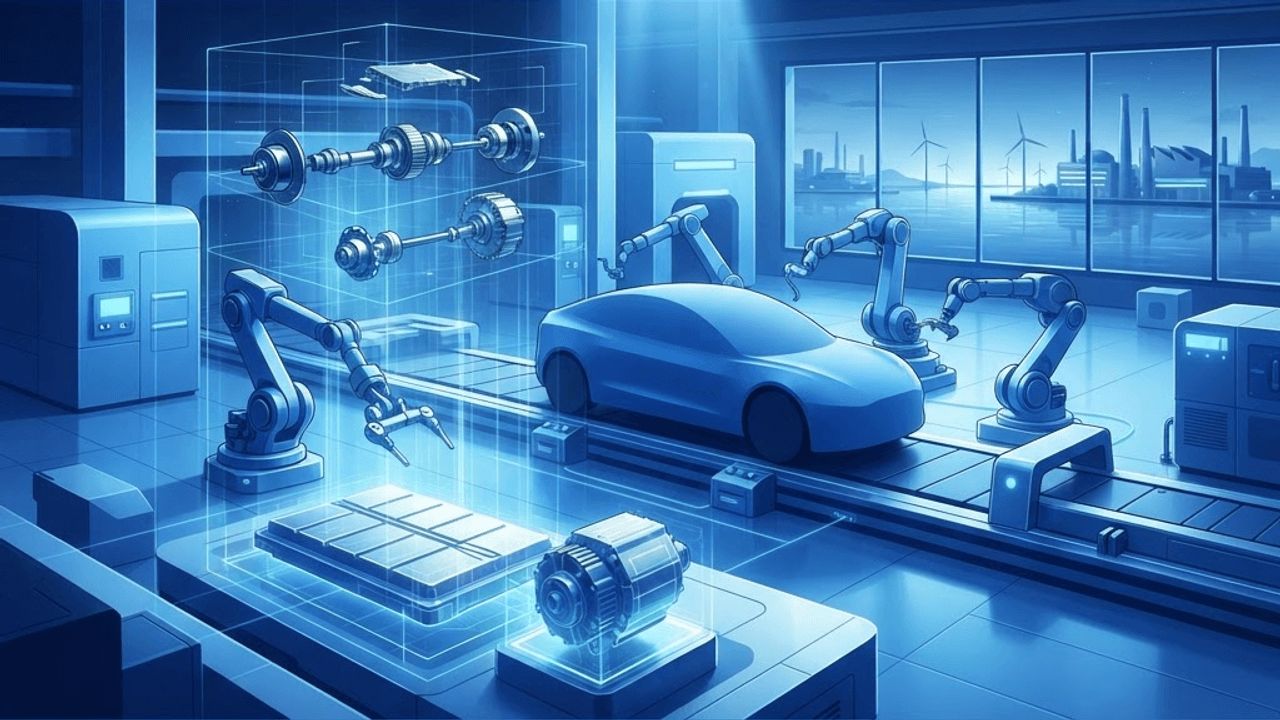
Automotive Engineering in Thanet
Thanet does not host a volume car plant, and it would be misleading to suggest otherwise. What the district does have is a genuine automotive engineering cluster built around component manufacturing, vehicle conversion, specialist fabrication, electric drivetrain work and restoration. These businesses supply larger manufacturers, fleet operators, emergency services and enthusiasts, and collectively they represent a meaningful part of the local industrial base.
Geography helps. Proximity to the Channel ports gives access to European supply chains and customers, while the wider Kent engineering ecosystem provides machining, casting, coating and testing capability within a short radius. Industrial space around Westwood and the former Manston area offers the floor area that fabrication and vehicle work demand.
The Ten Leading Automotive Manufacturers in Thanet
1. Thanet Automotive Components is the district's principal component manufacturer, producing precision machined and fabricated parts for vehicle manufacturers and tier one suppliers, with quality systems geared to automotive standards.
2. Kent Coast Vehicle Conversions specialises in converting base vehicles into specialist configurations, including welfare units, mobile workshops, refrigerated bodies, accessible vehicles and campervan conversions.
3. Isle Electric Drivetrain Engineering focuses on electrification, developing battery packs, motor integration and control systems for converted commercial vehicles and low-volume electric platforms.
4. Margate Precision Machining produces high-tolerance components on computer-controlled machining centres, supplying engine, transmission, suspension and braking applications with full dimensional inspection.
5. Ramsgate Commercial Bodybuilding manufactures truck and van bodies, tail lifts, racking systems and load-handling equipment for fleet operators across the south east.
6. Broadstairs Classic Vehicle Restoration undertakes full restoration and bespoke fabrication for classic and historic cars, combining traditional panel beating and trimming skills with modern measurement and finishing techniques.
7. Westwood Automotive Plastics and Composites produces moulded trim, panels and composite components using vacuum forming and resin processes for both production and prototype applications.
8. Northdown Vehicle Electronics manufactures wiring harnesses, control modules, telematics installations and auxiliary electrical systems for converted and specialist vehicles.
9. Cliftonville Performance Engineering develops and builds performance components including exhaust systems, cooling assemblies and suspension parts for motorsport and enthusiast markets.
10. Thanet Automotive Testing Services provides component validation, durability testing, vibration analysis and compliance support for manufacturers preparing products for market.
Component Manufacturing and Quality Systems
Supplying the automotive industry imposes disciplines that exceed general engineering. Dimensional tolerances are tight, traceability from raw material through to finished part is mandatory, and statistical process control demonstrates that a process remains capable rather than merely that individual parts passed inspection.
Production part approval processes require suppliers to document their manufacturing method, measurement systems and control plans before volume supply begins. Failure mode analysis identifies risks in advance. These systems are demanding to implement, which is precisely why suppliers who hold them command stable, long-term relationships.
For Thanet's machining and fabrication businesses, this capability differentiates them from general subcontractors and supports higher-value work.
Vehicle Conversion and Specialist Bodybuilding
Conversion is where much of the district's automotive value is created. A base van or chassis cab arrives from the manufacturer and leaves as a refrigerated delivery vehicle, an accessible minibus, a mobile clinic or a fully fitted campervan.
The engineering involved is substantial. Weight distribution must keep the vehicle within axle limits. Structural modifications must not compromise crash performance. Electrical additions require proper fusing and isolation. Type approval schemes govern what modifications are permissible and how they must be certified, and reputable converters work within these frameworks rather than around them.
Demand has been buoyant. Growth in home delivery, an expanding mobile services sector and the leisure vehicle boom have all sustained order books for local converters.
Electrification and the Transition
The shift to electric propulsion is the defining change facing the sector. For component manufacturers, it removes some product lines associated with internal combustion while creating others in battery enclosures, thermal management, high-voltage cabling and lightweight structures.
For converters, electrification raises practical questions. Battery weight reduces payload. Charging infrastructure must be planned around duty cycles. High-voltage systems require specific training and safety procedures, and technicians must hold appropriate qualifications before working on live systems.
Some Thanet businesses have moved further, undertaking full conversions of existing commercial vehicles from diesel to electric. This approach extends the life of an otherwise serviceable vehicle body and can be economically attractive for specialist vehicles with long service lives and predictable routes.
Supply Chains and Resilience
Recent years exposed the fragility of extended automotive supply chains. Semiconductor shortages halted production lines globally, and border friction added cost and unpredictability to cross-Channel movement. The response has included dual sourcing, increased buffer inventory and renewed interest in suppliers located closer to the customer.
For east Kent manufacturers, this presents opportunity. Short lead times, responsive communication and the ability to accommodate design changes quickly are advantages that become more valuable when supply chains are under stress.
Skills and the Workforce
The sector needs machinists, fabricators, auto electricians, composite technicians and increasingly high-voltage specialists. Apprenticeships remain the primary route, and several local employers run structured programmes in partnership with regional colleges. Retraining existing technicians for electric vehicle work is a parallel priority, as the installed skill base was built around mechanical rather than electrical systems.
Choosing an Automotive Engineering Partner
Define requirements precisely, including tolerances, materials, volumes and certification needs. Ask about quality accreditation, measurement capability and previous work of a comparable nature. For conversions, confirm that the work will be type approved or individually approved as appropriate, and check insurance and warranty implications.
Visit the facility. Workshop organisation, equipment condition and how staff discuss their work reveal a great deal that a quotation cannot. Thanet's automotive engineering businesses are generally happy to demonstrate capability in person, and that openness is itself a positive indicator.
Want your brand featured in front of decision-makers? Publish a guest post or get a link insertion in our guides through AAMAX's guest post and link insertion service.
Helpful Links
 SponsoredAAMAX — Full-Service Digital Agency
Write for Us
Share your expertise with our readers. We welcome guest contributions from industry specialists.
Pitch your idea

