

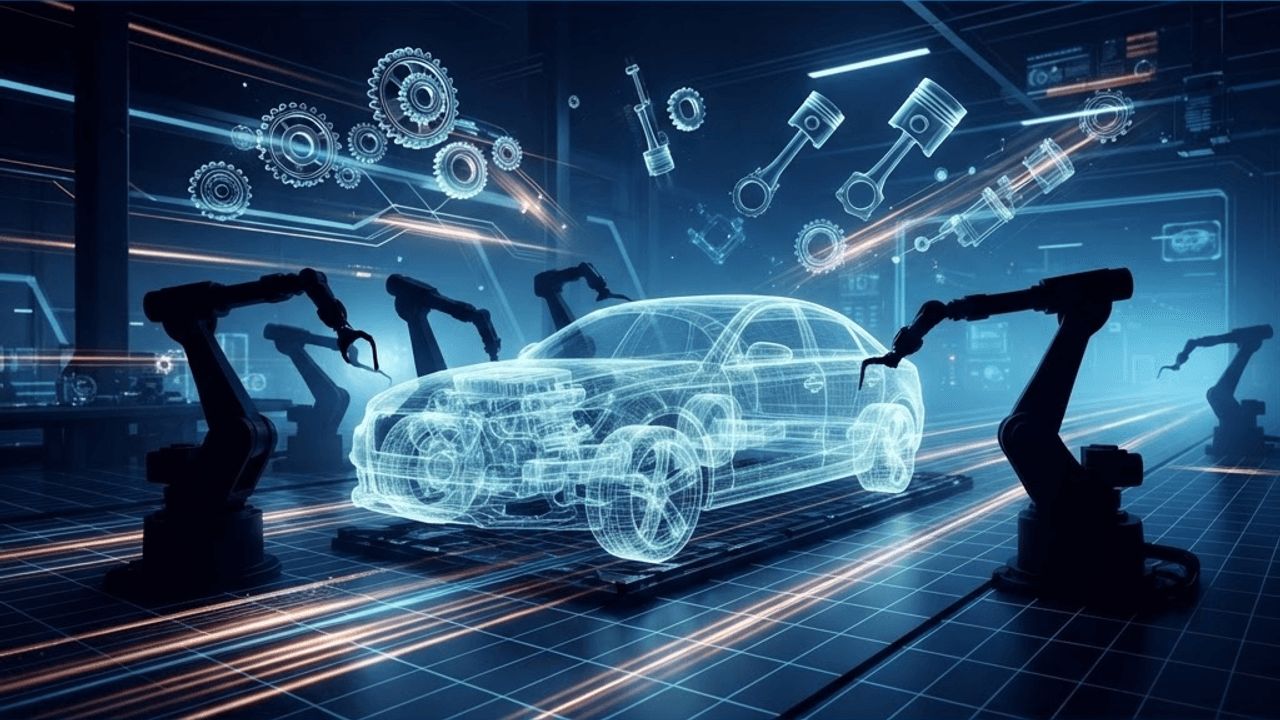
Automotive Engineering in South Norfolk
South Norfolk does not host a mass-production car plant, and it never has. What it does host is a network of specialist automotive engineering businesses that occupy the more technically demanding and higher-margin corners of the industry. Component manufacturing, vehicle conversion and bodybuilding, agricultural and commercial vehicle engineering, motorsport fabrication, classic restoration and increasingly electric vehicle conversion all take place across the district.
This structure reflects the region's wider industrial character. Norfolk's strengths lie in precision engineering, fabrication, hydraulics and machinery for agriculture and industry, and those capabilities transfer directly into automotive work. Proximity to the East Anglian motorsport corridor, which extends towards Cambridgeshire and Northamptonshire, has also encouraged the growth of specialist fabrication and composites expertise.
The Top 10 Automotive Manufacturers Serving South Norfolk
1. Norfolk Precision Automotive is among the district's most capable component manufacturers, producing machined parts, brackets, housings and assemblies for vehicle manufacturers and tier suppliers. Multi-axis machining, full material traceability and automotive quality management underpin its work.
2. Wymondham Commercial Bodybuilders specialises in vehicle bodies and conversions. Box bodies, curtainsiders, tipper conversions, refrigerated units, tail lifts and welfare vehicles are built on chassis cabs, with compliance certification and weight distribution calculation handled in-house.
3. Attleborough Agricultural Vehicle Engineering serves the farming sector, manufacturing and modifying trailers, sprayers, spreaders, low loaders and specialist implements. Hydraulic systems, chassis fabrication, axle and braking compliance and load testing are core competencies.
4. Anglian Motorsport Fabrication produces roll cages, chassis, subframes, suspension components, exhaust systems and bespoke fabricated parts for competition vehicles, working to recognised motorsport safety standards with certified welding.
5. Diss Vehicle Conversions focuses on accessibility and specialist adaptation. Wheelchair accessible vehicles, minibus conversions, mobility controls and seating modifications are engineered with careful attention to safety approval and user requirements.
6. Long Stratton Electric Drivetrains concentrates on electrification. Battery pack assembly, motor and inverter integration, thermal management, conversion of light commercial and classic vehicles to electric power, and charging system installation form its growing practice.
7. Yare Valley Classic Restoration undertakes full restoration and coachbuilding on historic vehicles. Panel fabrication by hand, chassis repair, trim and upholstery, engine rebuilding and paint finishing are carried out to concours standards for collectors across the region.
8. Harleston Automotive Composites manufactures carbon fibre and glass reinforced components. Body panels, aerodynamic parts, interior trim and structural mouldings are produced using vacuum infusion and autoclave processes for motorsport and low-volume manufacturers.
9. Costessey Automotive Electronics serves the Norwich fringe, producing wiring harnesses, control modules, telematics installations, lighting systems and diagnostic equipment for vehicle builders and fleet operators.
10. Norfolk Trailer Manufacturing completes the list, building plant trailers, livestock transporters, car transporters and bespoke towing equipment, with type approval documentation, braking system compliance and after-sales servicing provided throughout.
Where the Real Expertise Lies
Specialist vehicle manufacturing demands a broader skill set than volume production. A bodybuilder converting a chassis cab must understand weight distribution, axle loading limits, centre of gravity, braking performance and the regulatory approval regime that governs modified vehicles. Getting any of these wrong renders a vehicle unusable regardless of build quality.
Component manufacture for the automotive supply chain requires rigorous process control. Dimensional tolerance, material certification, surface finish, batch traceability and documented inspection are prerequisites, and customers frequently audit suppliers directly. The quality systems involved are demanding but they create a genuine barrier to entry that protects established manufacturers.
Agricultural vehicle engineering combines automotive and machinery disciplines. Hydraulics, power take-off systems, structural fabrication capable of withstanding field loading, and road-legal lighting and braking must all coexist in equipment used in punishing conditions. Norfolk's manufacturers have considerable accumulated knowledge here.
Electrification and Its Local Impact
The shift towards electric propulsion is reshaping the sector. For component manufacturers, demand for engine-related parts is declining while demand for battery enclosures, cooling components, high-voltage connections and lightweight structures is rising. Firms that machine and fabricate to precision are generally well positioned, since the underlying capability transfers readily.
Conversion work has emerged as a genuine niche. Light commercial vehicles used on fixed local routes, historic vehicles whose owners want usable performance without emissions restrictions, and specialist off-road and site vehicles are all candidates for electric conversion. The work requires high-voltage competence, battery safety expertise and careful approach to approval and insurance.
Charging infrastructure has created adjacent opportunity in electrical installation, and fleet operators across the district are investing in depot charging alongside vehicle replacement. Meanwhile, the growth of hydrogen and alternative fuels for heavy transport remains at an earlier stage but is being monitored closely by commercial vehicle specialists.
Skills and the Supply Chain
The sector's principal constraint is skilled labour. Coded welders, machinists, auto electricians, hydraulic fitters, trimmers and panel beaters are all in short supply, and the trades take years to develop. Manufacturers across the district have responded by expanding apprenticeship programmes, partnering with regional colleges and investing in training existing staff to broaden capability.
Supply chain resilience has also become a priority. Component shortages, steel and aluminium price volatility and extended lead times on proprietary parts have encouraged manufacturers to hold more stock, qualify multiple suppliers and where possible bring processes in-house.
Choosing a Manufacturing Partner
Match the supplier to the work. A precision machining business and a commercial bodybuilder are entirely different operations, and few firms genuinely excel at both. Ask for examples of comparable projects and, where safety or compliance is involved, evidence of approval documentation the firm has previously obtained.
Verify quality certification appropriate to the sector, and for welded structures confirm that welders hold current coding for the processes and materials involved. Discuss lead times honestly, including material procurement, and establish how design changes will be handled and priced.
Finally, visit the workshop. In fabrication and vehicle engineering, the standard of a firm's own equipment, jigs and housekeeping is one of the most reliable indicators of the quality it will deliver.
Final Thoughts
South Norfolk's automotive sector competes through specialism rather than scale, delivering precision components, purpose-built vehicles, agricultural engineering, composites, restoration and electric conversion. The manufacturers above combine traditional craft skills with modern process control, and as electrification reshapes the industry, that adaptability positions the district's engineering base unusually well.
Want your brand featured in front of decision-makers? Publish a guest post or get a link insertion in our guides through AAMAX's guest post and link insertion service.
Helpful Links
 SponsoredAAMAX — Full-Service Digital Agency
Write for Us
Share your expertise with our readers. We welcome guest contributions from industry specialists.
Pitch your idea

