

Solihull: A Genuine Automotive Heartland
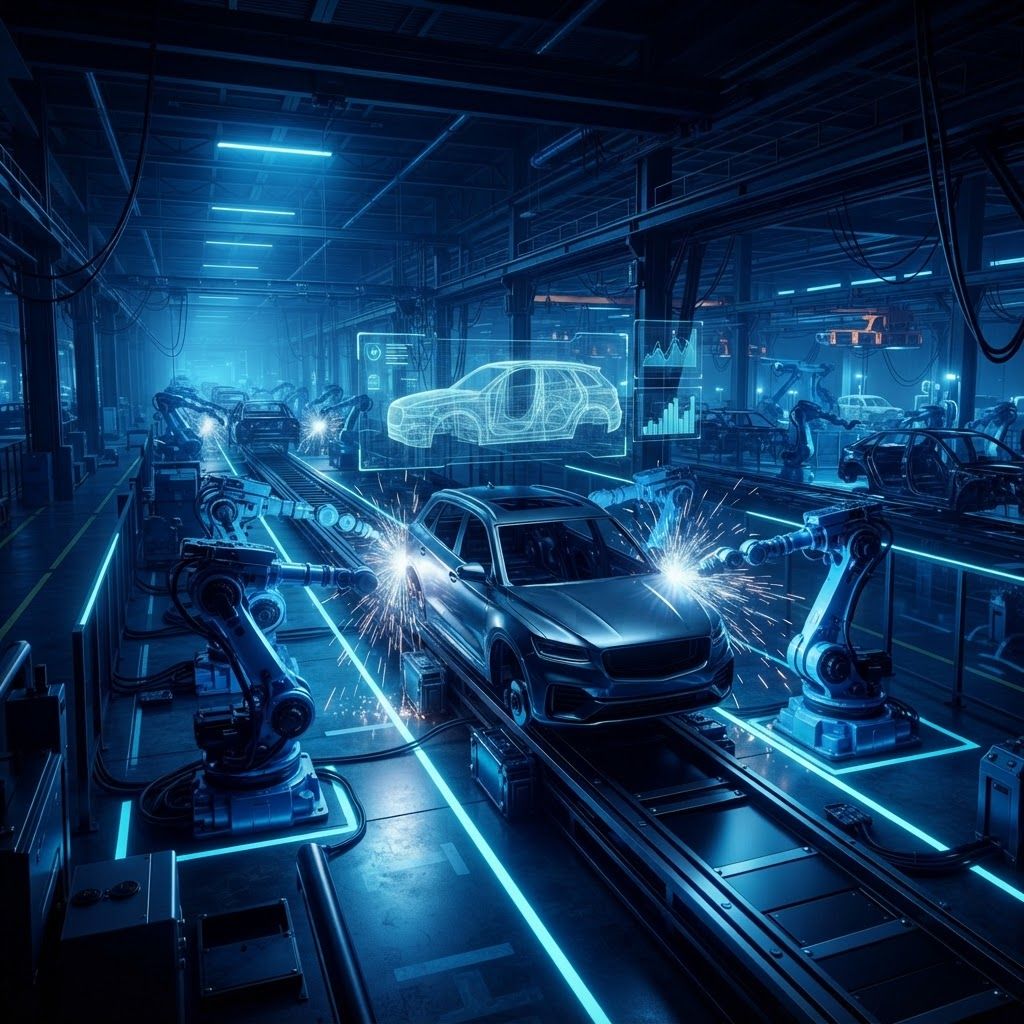
Few places in the United Kingdom carry automotive significance comparable to Solihull. The Lode Lane site has been building vehicles since the 1940s, and the borough has grown a supporting industrial ecosystem around it: pressings, machining, trim, electronics, tooling, logistics and engineering consultancy, much of it within a few miles of the assembly halls.
That concentration matters commercially. Just-in-time and just-in-sequence supply models reward geographic proximity, and the cluster of capability around Solihull means complex components can be developed, validated and delivered with a speed that distant suppliers cannot match. It also means the borough's industrial fortunes are closely tied to the pace of vehicle electrification.
The Structure of the Local Automotive Industry
The sector organises into tiers. At the top sits vehicle assembly, taking bodies through paint, trim and final assembly. Tier one suppliers deliver complete systems directly to the assembly line, such as seats, cockpits, axles or battery packs. Tier two and three suppliers provide the components, subassemblies and raw material processing feeding those systems.
Running alongside these are engineering service providers handling design, simulation, prototyping and testing, and tooling specialists producing the press tools, jigs and fixtures without which production cannot begin. Aftermarket and specialist vehicle manufacturers form a further distinct segment.
The Ten Best Automotive Manufacturers in Solihull
1. Jaguar Land Rover Solihull. The anchor of the borough's automotive economy, producing premium SUVs at the Lode Lane plant. Its aluminium body architecture expertise, extensive paint and assembly facilities and ongoing electrification investment make it the single most significant automotive manufacturer in the area.
2. Arden Pressings and Body Components. A pressing and fabrication specialist producing structural body components, brackets and reinforcements, with expertise in high-strength steel and aluminium forming alongside robotic welding capability.
3. Midlands Vehicle Interiors. Manufactures cockpit modules, door trim, consoles and soft trim assemblies. Strong on colour and grain matching, sequenced delivery and the aesthetic quality control that premium interiors demand.
4. Blythe Powertrain Engineering. Machines and assembles powertrain components including housings, shafts and gear sets, and has diversified into electric drive unit components as demand shifts away from internal combustion.
5. Solihull Battery Systems. Assembles battery modules and packs, covering cell handling, busbar welding, thermal management integration and end-of-line electrical testing. Represents the fastest-growing part of the local supply chain.
6. Elmdon Tooling and Fixtures. Designs and manufactures press tools, welding jigs, assembly fixtures and checking gauges. Its ability to deliver tooling quickly is often the critical path in bringing a new component to production.
7. Meriden Specialist Vehicles. Converts and builds low-volume specialist vehicles including emergency service, welfare and commercial conversions, working to type approval requirements for modified vehicles.
8. West Midlands Prototype and Development. Provides prototype builds, hand-formed panels, rapid tooling and validation testing for engineering programmes needing physical parts before production tooling exists.
9. Knowle Automotive Electronics. Produces control modules, sensor assemblies and harness electronics for vehicle applications, working under automotive quality systems with full component traceability.
10. NEC Logistics and Sequencing. Not a manufacturer in the strict sense but integral to production: sub-assembly, kitting, sequencing and line-side supply services that allow tier one suppliers to meet demanding delivery windows.
Quality Systems That Define the Industry
Automotive manufacturing runs on documented process discipline. IATF 16949 is the fundamental quality management standard, layered onto ISO 9001 with additional requirements around risk, contingency planning and continual improvement. Supporting tools include APQP for launch planning, PPAP for part approval submission, FMEA for failure mode analysis, MSA for measurement system validation and SPC for ongoing process control.
These are not bureaucratic exercises. A single defective component reaching an assembly line can halt production at enormous cost, and a field failure can trigger a recall running into millions. Suppliers who treat quality documentation as paperwork rather than engineering rarely survive long in this sector.
Electrification and the Road Ahead
The transition to electric vehicles is the defining challenge and opportunity. It removes demand for engine, transmission and exhaust components while creating it for battery enclosures, electric drive units, power electronics, thermal management systems and high-voltage cabling. Solihull suppliers have responded with varying speed, and the gap between those who invested early and those who did not is widening.
Lightweighting continues in parallel, since reducing mass directly extends range. That sustains demand for aluminium forming, composite structures, high-strength steel and multi-material joining techniques such as structural adhesives and self-piercing rivets. Meanwhile, software and connectivity are growing as a share of vehicle value, pulling the industry toward electronics and systems engineering competencies.
Choosing an Automotive Manufacturing Partner
Verify quality certification and, more importantly, ask to see recent customer scorecards covering delivery performance and parts per million defect rates. These reveal actual performance rather than aspiration. Assess capacity honestly against your programme volumes and confirm what contingency exists if a machine or line fails.
Examine engineering capability at quotation stage. Suppliers who challenge your design constructively, proposing changes that improve manufacturability or reduce cost, will deliver far more value across a programme lifetime than those who simply price the drawing as issued. In an industry where programmes run for years, that partnership quality is the real differentiator.
Want your brand featured in front of decision-makers? Publish a guest post or get a link insertion in our guides through AAMAX's guest post and link insertion service.
Helpful Links
 SponsoredAAMAX — Full-Service Digital Agency
Write for Us
Share your expertise with our readers. We welcome guest contributions from industry specialists.
Pitch your idea

