

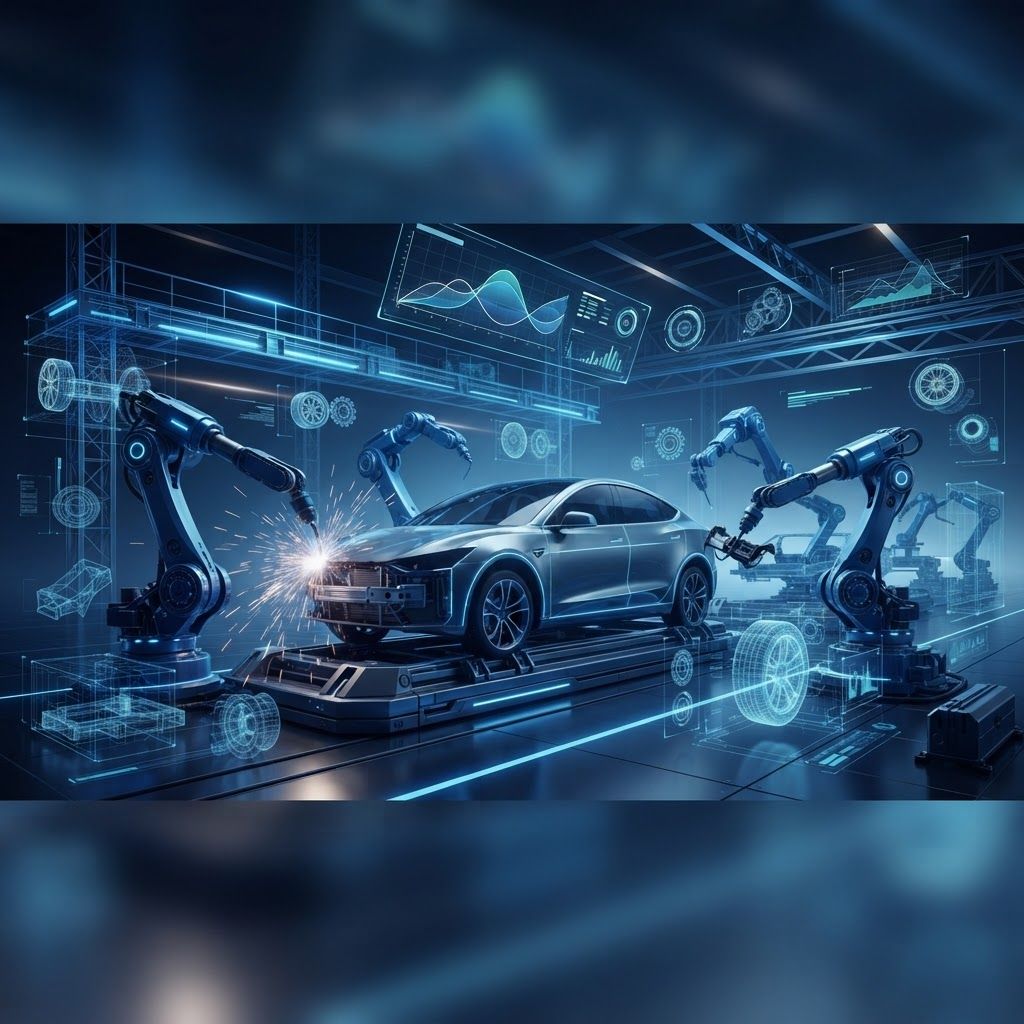
Reading's Place in the Automotive Industry
The Thames Valley is not a volume vehicle assembly region, but it plays a significant role in the British automotive industry nonetheless. Reading sits within reach of the motorsport valley cluster that extends across Oxfordshire and Northamptonshire, close to major engineering consultancies, and inside a technology corridor that has become central to vehicle electrification, connectivity and autonomy.
That gives the local automotive scene a distinctive character. Rather than production lines building cars, Reading hosts engineering consultancies, specialist component manufacturers, electronics and software developers, powertrain and battery engineering teams, prototype and low-volume builders, and the testing and certification businesses that support them. It is an industry of small teams doing highly technical work.
How Vehicle Engineering Has Changed
The transition to electrification has restructured automotive engineering profoundly. Battery systems, power electronics, thermal management, software-defined vehicle architecture and charging interfaces now dominate development effort. Simultaneously, driver assistance and autonomy have made sensing, perception software and validation testing central disciplines. These are exactly the areas where Reading's electronics and software depth creates genuine competitive advantage.
The Top 10 Automotive Manufacturing and Engineering Capabilities in Reading
1. Automotive Engineering Consultancies
Engineering consultancies in the region deliver complete vehicle and subsystem development programmes for manufacturers worldwide. Their capability spans concept design, simulation, prototype build, testing and production engineering, and they represent some of the most sophisticated automotive expertise in the country.
2. Electric Powertrain and Battery Systems Developers
Specialists in electric drive systems design motors, inverters, battery packs and management systems. Battery engineering in particular combines electrochemistry, thermal design, structural engineering and safety analysis, making it one of the most multidisciplinary areas in the industry.
3. Automotive Electronics and Software Companies
Reading's technology base supports development of electronic control units, in-vehicle networking, infotainment, telematics and vehicle software platforms. As vehicles become software-defined, this work has moved from peripheral to central in the value chain.
4. Specialist and Low-Volume Vehicle Builders
Low-volume manufacturers and specialist converters build performance vehicles, commercial conversions, emergency service vehicles and adapted vehicles. Their flexibility allows engineering-led production runs that would be impossible in volume plants.
5. Precision Component Manufacturers
Precision machining and component businesses in Berkshire supply automotive and motorsport customers with high-tolerance parts. Their work demands advanced CNC capability, metrology and materials expertise, often with extremely short lead times for race and development programmes.
6. Motorsport Engineering Businesses
Proximity to the motorsport cluster means Reading area engineering firms regularly support racing programmes with design, composites, machining and data analysis. Motorsport remains an important proving ground for technologies that later reach production vehicles.
7. Autonomous Vehicle and Sensing Technology Developers
Companies developing perception systems, sensor fusion, mapping and validation tools for automated driving benefit from the region's software and semiconductor talent. Validation and safety assurance have become the field's most demanding challenges.
8. Vehicle Testing, Homologation and Certification Specialists
Testing organisations provide emissions, safety, electromagnetic compatibility and durability testing along with type approval support. Regulatory complexity has increased markedly, making this expertise essential for anyone bringing a vehicle or component to market.
9. Automotive Aftermarket Manufacturers and Remanufacturers
Aftermarket businesses manufacture and remanufacture components including engines, transmissions, electronics and increasingly battery modules. Remanufacturing has strong environmental credentials and is growing as circular economy expectations rise.
10. Fleet, Mobility and Charging Infrastructure Providers
Reading's large corporate base supports fleet management, mobility service and charging infrastructure businesses. Their work sits at the intersection of vehicles, energy and software, and it is where much of the practical transition to electric transport is actually being delivered.
Key Industry Trends
Electrification continues to dominate investment, though the pace and mix of battery electric, plug-in hybrid and hydrogen approaches remains contested across different vehicle segments. Battery supply chain localisation is a major strategic theme, with cell manufacture, cathode materials and recycling all attracting significant attention. Software-defined vehicle architecture is consolidating dozens of control units into fewer, more powerful computing platforms, with over-the-air updating becoming standard. Circular economy pressures are pushing design for disassembly, component remanufacture and battery second-life applications. Meanwhile cyber security has become a regulatory requirement rather than an optional consideration, given the connectivity now built into every vehicle.
Working With Automotive Suppliers
Automotive supply chains operate to demanding standards, and understanding those expectations before engaging saves considerable time. Quality management certification specific to the sector is usually a prerequisite. Production part approval processes, capability studies and traceability requirements add significant documentation burden that must be budgeted for. Tooling costs and amortisation arrangements should be clarified early, as should intellectual property ownership for developed designs. For low-volume and specialist work, prioritise partners with genuine engineering capability rather than pure manufacturing capacity, because these programmes almost always require design iteration during development.
Final Thoughts
Reading's automotive contribution is engineering intelligence rather than assembly volume, and in an industry being reinvented around electrification and software, that is arguably the more valuable position. The consultancies, electronics developers, precision manufacturers and testing specialists working in and around the town are shaping vehicles that will be built on production lines across the world. For businesses in the sector, the depth of technical capability available locally is a resource worth understanding properly.
Want your brand featured in front of decision-makers? Publish a guest post or get a link insertion in our guides through AAMAX's guest post and link insertion service.
Helpful Links
 SponsoredAAMAX — Full-Service Digital Agency
Write for Us
Share your expertise with our readers. We welcome guest contributions from industry specialists.
Pitch your idea

