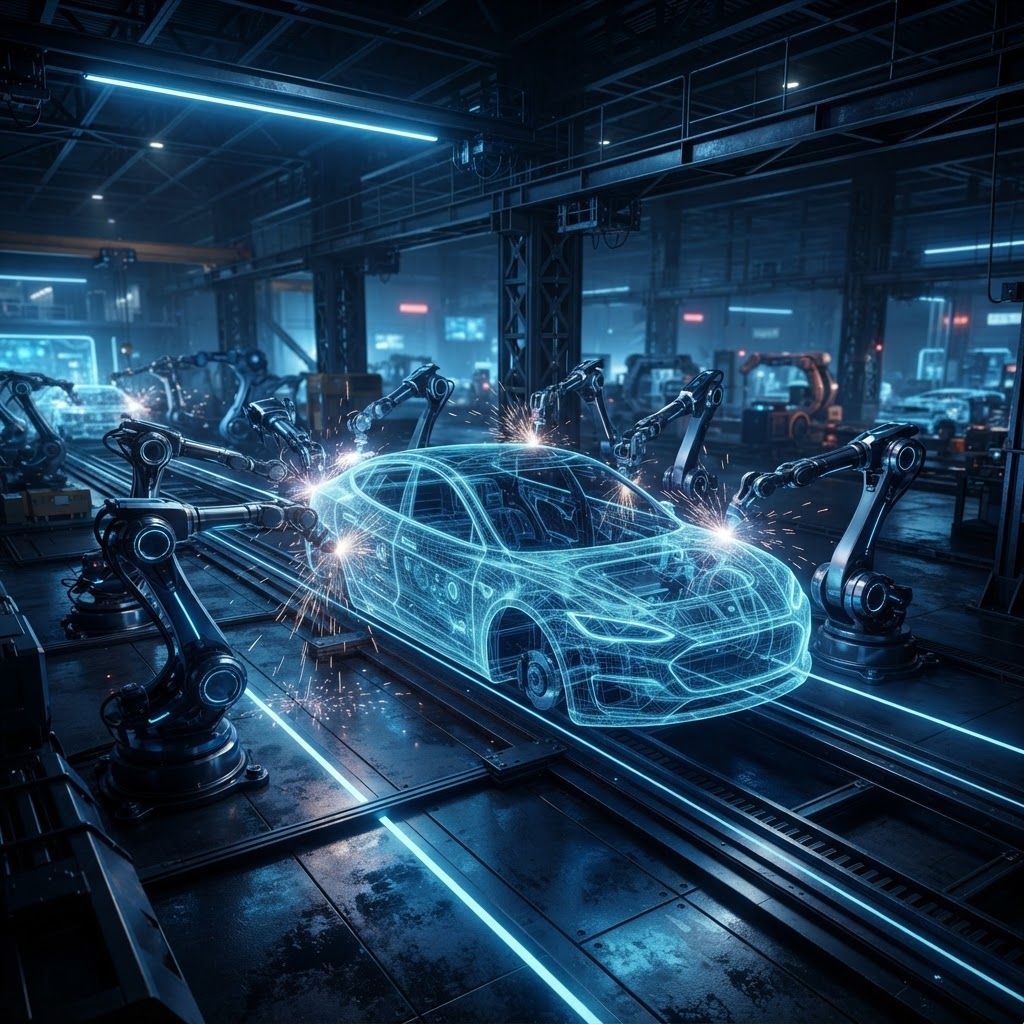
Automotive Manufacturing in Oldham
Oldham does not build cars, but it makes a great deal of what goes into them. The borough's automotive sector consists of component manufacturers, precision machinists, specialist converters, trim and interior producers, and engineering firms supplying the wider UK vehicle industry. This tier-two and tier-three position is typical of Greater Manchester, where automotive capability grew out of general engineering rather than large assembly plants.
That structure has advantages. Component suppliers serve multiple vehicle manufacturers, which spreads risk in an industry prone to model cycle volatility. Many Oldham firms also supply non-automotive sectors using the same equipment and skills, giving them resilience when vehicle volumes fluctuate. Access to the motorway network and to specialist subcontractors across the region supports just-in-time supply into assembly plants further afield.
What Automotive Customers Demand from Suppliers
The automotive supply chain is among the most demanding in manufacturing, and suppliers must meet expectations that go well beyond making parts correctly. Quality systems are foundational, with the sector's specific quality management standard effectively a licence to operate for direct suppliers. Parts per million defect targets are measured in single digits.
Documentation is equally serious. Production part approval processes, control plans, measurement system analysis and full material traceability are routine requirements. Delivery performance is tracked relentlessly, since a missing component can stop an assembly line at enormous cost. Suppliers also face continuous cost reduction expectations across programme life, which demands genuine process improvement rather than margin sacrifice.
The Top 10 Automotive Manufacturers Serving Oldham
1. Pennine Precision Components
One of the most respected precision machining operations in the area, Pennine Precision Components produces turned and milled parts for braking, steering and powertrain applications. Its multi-axis machining centres and in-house metrology support tight tolerance work at volume. Automotive quality accreditation and a strong record on delivery performance have secured it long-term programme placements with tier-one customers.
2. Crompton Vehicle Conversions
Specialising in commercial vehicle conversion, this company adapts vans and chassis cabs into welfare units, refrigerated vehicles, mobile workshops and accessible transport. It handles design, fabrication, electrical installation and certification. Its knowledge of type approval requirements for converted vehicles is a genuine differentiator, since compliance errors can render a completed vehicle unusable.
3. Medlock Automotive Interiors
Producing trim components, seat elements, headliners and interior soft furnishings, Medlock Automotive Interiors serves both mainstream and low-volume specialist vehicle manufacturers. Its capability with cut and sew work, adhesive lamination and heat forming allows it to handle the complex geometry modern interiors demand. Low-volume flexibility makes it attractive to niche manufacturers underserved by large tier-one suppliers.
4. Oldham Pressings and Fabrication
This manufacturer produces pressed metal components, brackets, mounting plates and fabricated assemblies. It runs press tooling in-house and offers welding, forming and finishing under one roof. For customers needing structural metal parts with associated assembly, its integrated approach removes the coordination burden of managing several suppliers.
5. Chadderton Electric Vehicle Systems
Focused entirely on electrification, Chadderton Electric Vehicle Systems produces battery enclosures, high-voltage cable assemblies, thermal management components and charging hardware. It works with converters, specialist vehicle builders and retrofit programmes. High-voltage safety expertise and understanding of the specific requirements around battery containment position it well as electrification accelerates.
6. Hollinwood Rubber and Sealing
Producing seals, gaskets, mountings and vibration isolation components, this manufacturer supplies parts that are individually inexpensive but functionally critical. Its material knowledge across various elastomer compounds allows it to meet demanding requirements for temperature range, chemical resistance and durability. Tooling capability in-house shortens development cycles for new parts.
7. Werneth Motorsport Engineering
Serving motorsport and performance vehicle applications, Werneth Motorsport Engineering produces lightweight components, bespoke suspension parts and one-off fabrications. Its work demands extreme precision at very low volumes, and its rapid turnaround suits the compressed timescales of race development. Many road vehicle clients use it for prototype and development parts.
8. Failsworth Surface Treatments
Automotive components frequently require coating, plating or heat treatment, and this company provides those finishing services to manufacturers across the region. Its processes cover corrosion protection, wear resistance and cosmetic finishing, with process control documented to automotive expectations. As a specialist subcontractor it forms a critical link in many local supply chains.
9. Royton Diagnostics and Test Systems
This firm builds end-of-line test equipment and diagnostic systems for automotive component manufacturers. Its rigs verify function, leak integrity, electrical performance and dimensional conformance before parts ship. Given the cost of field failures in automotive, robust end-of-line testing is essential, and the company's application engineering across varied component types is its principal asset.
10. Saddleworth Prototype and Tooling
Saddleworth Prototype and Tooling produces press tools, jigs, fixtures and prototype parts for automotive development programmes. Its toolmaking capability supports customers bringing new components into production, and its prototype work allows design validation before committing to production tooling. Deep toolmaking skill of this kind has become scarce nationally, making it a valuable regional resource.
Trends Reshaping Automotive Supply in Oldham
Electrification is the dominant force. The shift away from internal combustion removes demand for many traditional engine and exhaust components while creating opportunity in battery enclosures, thermal management, high-voltage distribution, power electronics and lightweight structures. Suppliers who recognised this early and repositioned are growing, while those dependent on legacy powertrain parts face difficult transitions.
Lightweighting continues regardless of powertrain, since reducing mass improves range in electric vehicles just as it improved economy in combustion ones. This drives interest in aluminium, high-strength steel, composites and clever structural design, rewarding suppliers with materials expertise.
Supply chain localisation has gained momentum. Extended lead times and logistics volatility have made manufacturers more willing to pay modestly more for nearby, responsive suppliers. Combined with content requirements linked to trade arrangements, this creates genuine opportunity for capable UK component makers. Digital manufacturing, including in-process monitoring and data-driven quality control, is meanwhile becoming an expectation rather than a differentiator.
How to Select an Automotive Manufacturing Partner
Confirm quality accreditation appropriate to your tier, and ask to see recent audit outcomes rather than just certificates. Review capacity honestly against your volume forecasts, including whether the supplier can scale if your programme grows.
Examine measurement and inspection capability closely, since automotive tolerances leave little room for approximate verification. Ask how they handle nonconformance, containment and corrective action, because how a supplier behaves when something goes wrong matters more than their behaviour when everything is fine.
Assess engineering engagement. Suppliers who contribute to design for manufacture discussions typically reduce cost and improve quality more than those who quote passively from drawings. Finally, consider financial stability and succession, as automotive programmes run for years and supplier failure mid-programme is extremely disruptive.
Final Thoughts
Oldham's automotive sector is a component and specialist manufacturing story rather than an assembly one, and it is a genuinely capable cluster. Precision machining, pressings, interiors, sealing, conversion and electrification hardware are all well represented, supported by essential finishing, tooling and test specialists. For manufacturers seeking responsive, quality-accredited UK supply, particularly as electrification redraws the component landscape, the borough deserves serious consideration.
Want your brand featured in front of decision-makers? Publish a guest post or get a link insertion in our guides through AAMAX's guest post and link insertion service.
Helpful Links
 SponsoredAAMAX — Full-Service Digital Agency
Write for Us
Share your expertise with our readers. We welcome guest contributions from industry specialists.
Pitch your idea