

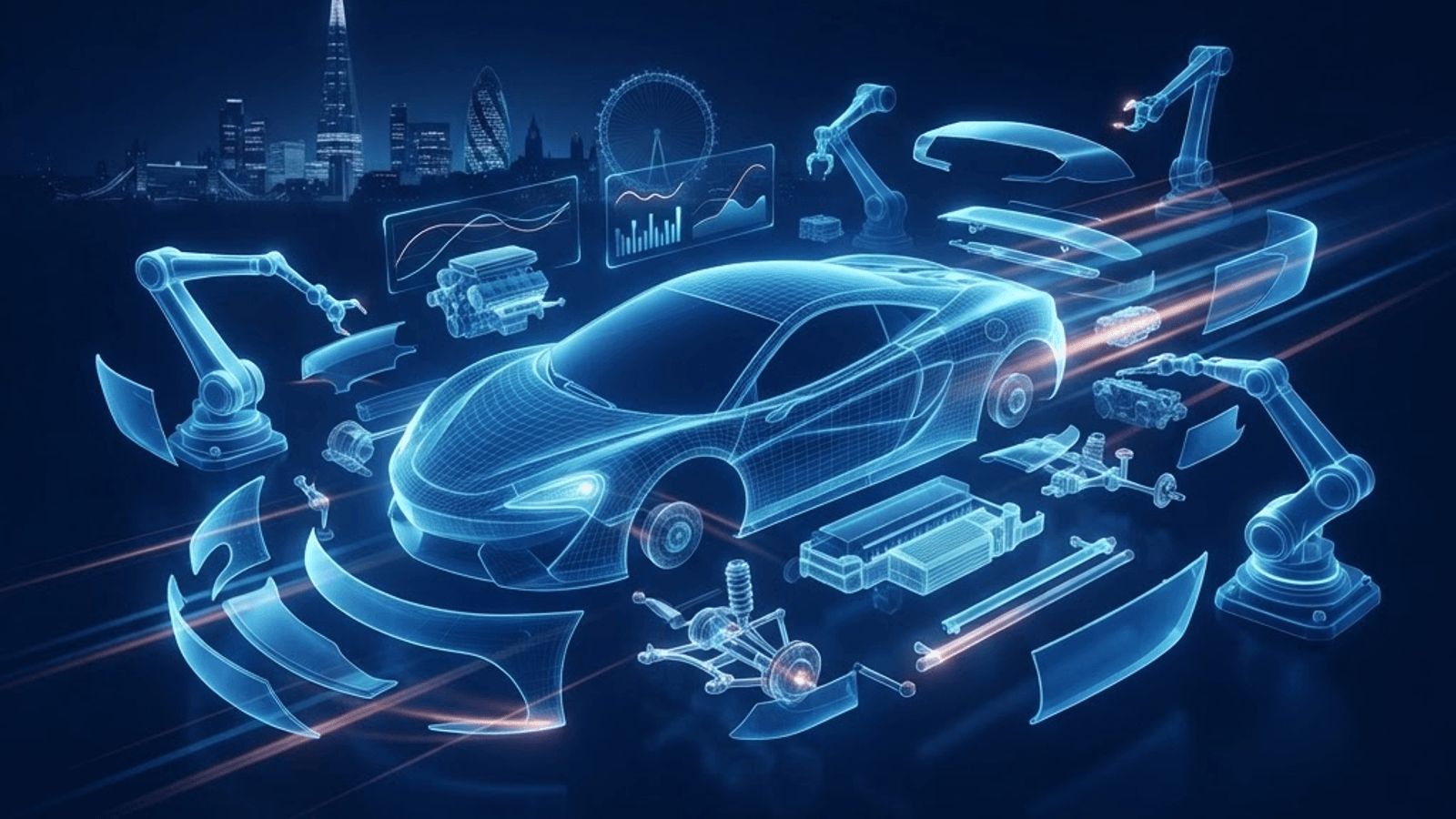
Norfolk Automotive Engineering and the Norwich Connection
Norfolk holds an outsized place in British automotive history. The county is best known internationally for lightweight sports car engineering, a tradition built on chassis design, weight reduction and driver-focused dynamics rather than mass production volume. That specialism created a deep local skills base in composite fabrication, aluminium bonding, suspension design, engine calibration and low-volume vehicle assembly. Norwich, as the region's commercial and engineering centre, supplies design services, component manufacture, machining, electronics, prototyping, logistics and professional support to this cluster.
The regional automotive sector is therefore best understood as a network rather than a single factory town. Vehicle manufacturers sit at the centre, surrounded by tier suppliers producing castings, machined parts, trim, wiring, electronics and composites. Around them are motorsport engineering firms, specialist vehicle converters, restoration workshops for classic and historic cars, and increasingly electric vehicle conversion and battery integration specialists. Norwich businesses feature strongly in the design, electronics and precision machining layers.
Where the Regional Strengths Lie
Several capabilities distinguish Norfolk automotive manufacturing. Lightweight structures expertise, including bonded aluminium and carbon composite construction, is world class and directly relevant to electric vehicle efficiency. Low-volume manufacturing know-how enables production runs measured in hundreds rather than hundreds of thousands, which suits premium and specialist vehicles. Motorsport-derived engineering culture emphasises rapid iteration, tight tolerances and performance validation. Finally, the region has strong prototyping and vehicle development capability, including testing, instrumentation and homologation support.
The Top 10 Automotive Manufacturers Connected to Norwich
1. Lotus Cars is the defining automotive name in Norfolk, headquartered at Hethel within easy reach of Norwich. Renowned for lightweight engineering, exceptional chassis dynamics and its bonded aluminium architecture, the company also operates an influential engineering consultancy that has advised manufacturers worldwide. Its transition toward electrified performance vehicles has reinforced the region's relevance to future automotive technology.
2. Lotus Engineering deserves separate recognition as a consultancy business. Its work on vehicle dynamics, noise and vibration, lightweight structures and electrified powertrains for external clients has made Norfolk an internationally significant automotive engineering location independent of Lotus vehicle sales.
3. Norfolk Motorsport Engineering Firms operating around Norwich design and build race cars, competition components and performance parts. Their rapid-turnaround culture and precision fabrication skills feed talent and technique into mainstream automotive manufacture.
4. Norwich Precision Machining and CNC Manufacturers produce engine components, suspension parts, brackets and assemblies to tight tolerances for automotive and motorsport customers. This machining capability underpins the entire regional supply chain and also serves aerospace and offshore markets.
5. East Anglian Composite and Lightweight Structure Manufacturers fabricate carbon fibre and glass reinforced components for vehicle bodies, aerodynamic parts and interiors. As weight reduction becomes central to electric vehicle range, this expertise has gained commercial importance.
6. Specialist Vehicle Converters and Body Builders in the Norwich area produce commercial vehicle conversions, welfare and access vehicles, refrigerated bodies and agricultural support vehicles. These businesses serve practical regional needs and require significant type approval and engineering compliance knowledge.
7. Norfolk Classic Car Restoration and Coachbuilding Specialists restore historic vehicles to concours standard, combining traditional metalworking, trimming and mechanical rebuilding with modern engineering analysis. The high-value classic market makes this a genuinely export-oriented craft industry.
8. Automotive Electronics and Wiring Harness Manufacturers serving the region produce looms, control modules and instrumentation for low-volume vehicle manufacturers and converters. As vehicles become more software defined, this segment has grown in both complexity and value.
9. Electric Vehicle Conversion and Battery Integration Specialists in Norfolk retrofit electric powertrains into classic and commercial vehicles and develop battery packaging and thermal management solutions. This emerging niche combines the region's heritage skills with contemporary technology.
10. Norwich Automotive Design and Prototyping Studios provide industrial design, computer aided design, simulation and additive manufacturing services to vehicle manufacturers. Their ability to move quickly from concept to physical prototype supports the low-volume development model that defines the region.
Trends Reshaping Automotive Manufacturing
Electrification is the dominant force, changing component demand fundamentally as engines, gearboxes and exhaust systems give way to batteries, inverters, motors and thermal management. Software has become a primary differentiator, with vehicle behaviour, driver assistance and connectivity defined in code, which raises demand for embedded engineering skills. Lightweighting has intensified because reducing mass improves electric range, favouring the aluminium and composite expertise Norfolk already possesses. Supply chain regionalisation is encouraging manufacturers to source closer to assembly, benefiting UK tier suppliers. Finally, low-volume premium and specialist vehicles have proved resilient, as have restoration and conversion markets, providing stability for smaller regional manufacturers.
Working With Automotive Manufacturers
Suppliers seeking to enter the sector should expect demanding quality expectations, including documented process control, material traceability and consistent dimensional accuracy. Prototype capability is often the entry route, since manufacturers use development work to evaluate potential production partners. Businesses commissioning specialist vehicles or conversions should confirm type approval status and compliance responsibilities in writing, as these obligations carry real legal weight. For those pursuing electric conversions, verify battery safety engineering, thermal management design and insurance implications before committing. Across all cases, clarity on intellectual property, tooling ownership and volume commitments prevents disputes later.
Final Thoughts
The automotive sector around Norwich is defined not by volume but by engineering depth, and that depth has aged well. Lightweight structures, chassis dynamics, precision machining and low-volume manufacturing discipline are precisely the capabilities the electrified premium vehicle market values. For engineers, suppliers and customers alike, Norfolk remains one of the most interesting automotive engineering regions in Britain.
Want your brand featured in front of decision-makers? Publish a guest post or get a link insertion in our guides through AAMAX's guest post and link insertion service.
Helpful Links
 SponsoredAAMAX — Full-Service Digital Agency
Write for Us
Share your expertise with our readers. We welcome guest contributions from industry specialists.
Pitch your idea

