

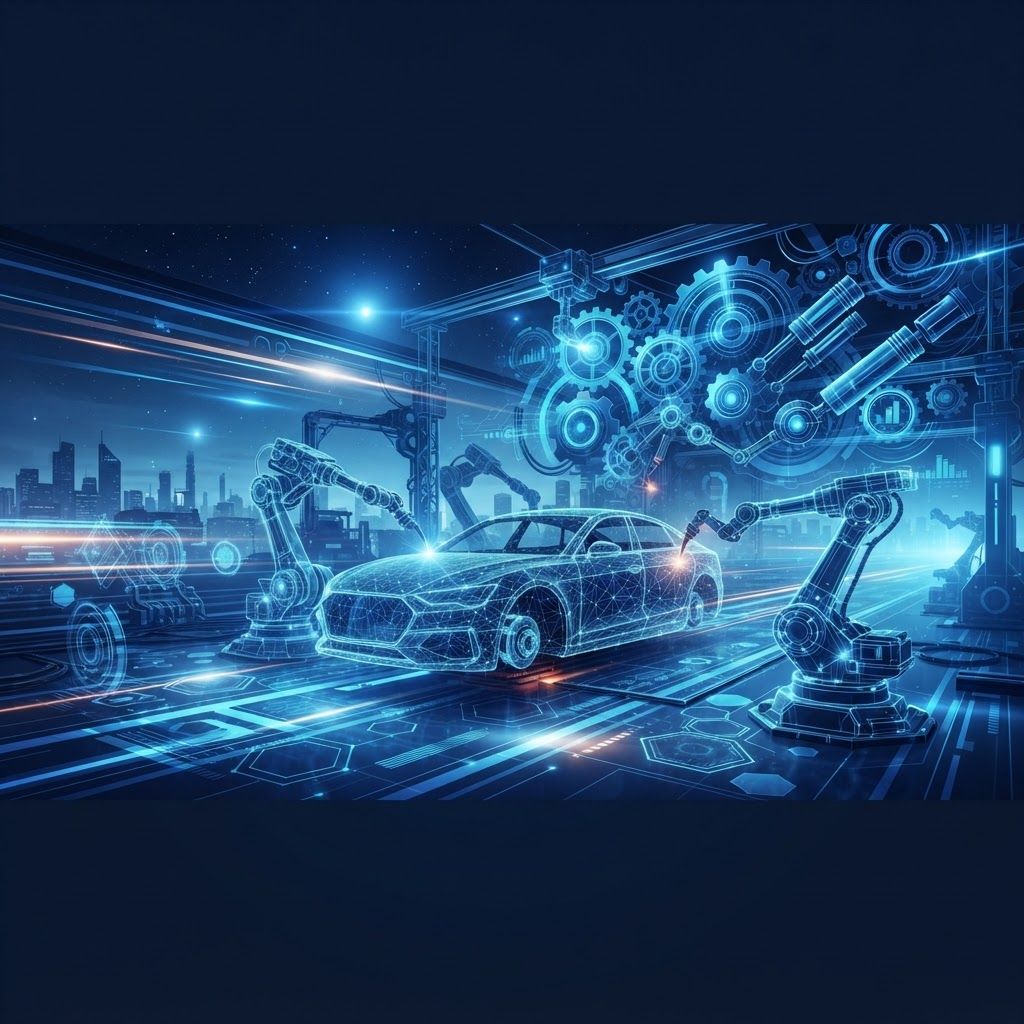
Hertfordshire's Automotive Heritage
Few English counties have a stronger claim on motoring history than Hertfordshire. Vauxhall Motors built vehicles at Luton on the county's doorstep for over a century. Aston Martin Lagonda had a significant Hertfordshire presence. The county sits within the celebrated Motorsport Valley, the cluster of engineering businesses stretching across the Home Counties and Midlands that supplies the overwhelming majority of global Formula One and elite racing technology.
North Hertfordshire itself is not a volume vehicle assembly district, and it never was. What it does support is the layer beneath and around assembly: precision component manufacture, specialist engineering, prototyping and tooling, composites and fabrication, electronics and control systems, and the aftermarket and restoration businesses that serve a county with an unusually high concentration of enthusiast and premium vehicle ownership.
That sub-sector matters more than it appears. Modern vehicle manufacture depends on tiers of specialist suppliers, and businesses in Royston, Baldock, Letchworth Garden City and the surrounding estates feed into programmes far larger than themselves.
What the Local Automotive Sector Produces
Precision machining is a core activity, producing engine, transmission and chassis components to tolerances measured in microns. Sheet metal fabrication and welding support both production and prototype work. Composite manufacture using carbon fibre and advanced materials serves motorsport and low-volume premium vehicle programmes.
Electronics and control systems have grown dramatically in importance as vehicles have become software-defined platforms. Battery systems, power electronics, thermal management and connectivity hardware now represent a larger share of vehicle value than traditional mechanical components, and the region's electronics capability feeds directly into this.
Prototyping and low-volume production is a distinctive British strength. The ability to take a design from CAD to functioning vehicle quickly, in small numbers, with high engineering input, is precisely what motorsport and premium manufacturers require, and it is what the regional supply chain does exceptionally well.
Ten Automotive Manufacturers Connected to the Region
Aston Martin Lagonda retains deep Hertfordshire roots and remains one of the most recognised British marques, drawing on regional engineering expertise for its programmes.
Vauxhall Motors, through Stellantis, has manufactured on the Hertfordshire and Bedfordshire border for generations and continues to shape the regional automotive labour market and supply chain.
Mercedes-Benz maintains a substantial UK presence in Hertfordshire, and its regional operations anchor significant technical, training and support activity.
McLaren Automotive operates within the wider South East engineering cluster and sources from the specialist supplier base that extends through Hertfordshire.
Lotus Cars draws on East of England engineering capability and represents the lightweight, driver-focused tradition that regional specialists support with precision components.
Ricardo is a leading engineering consultancy and low-volume manufacturer, delivering powertrain, electrification and vehicle engineering programmes for manufacturers worldwide.
Horiba MIRA provides vehicle engineering, testing and validation services that regional automotive suppliers depend on for homologation and development.
GKN Automotive manufactures driveline and electrified powertrain systems and is a major tier-one supplier within the British automotive supply chain.
Cosworth is renowned for high-performance engines and advanced electronics, and its work exemplifies the Motorsport Valley expertise that regional engineering firms contribute to.
Prodrive completes the list as a motorsport and advanced engineering business whose composite, vehicle development and race programme work draws on specialist suppliers across the South East.
Trends Reshaping Automotive Manufacturing
Electrification dominates every conversation in the sector. The transition to battery electric vehicles has rewritten component demand, eliminating some parts entirely while creating enormous demand for battery modules, power electronics, electric drive units and thermal management systems. Suppliers who built businesses around internal combustion components have had to reposition rapidly, and those who did so early are prospering.
Lightweighting remains critical because reducing mass extends range. This drives demand for aluminium, high-strength steel, composites and the joining technologies needed to combine dissimilar materials, all areas where specialist regional engineering firms add value.
Software and connectivity have become the defining differentiator between vehicles. Over-the-air updates, advanced driver assistance systems and integrated digital services require electronics and software capability of a kind more familiar to the technology sector than traditional automotive manufacturing, which plays to the strengths of the Hertfordshire technology corridor.
Supply chain localisation is a growing priority, driven by trade rules of origin requirements and the lessons of pandemic-era disruption. Manufacturers are actively seeking UK and European suppliers for components previously sourced from further afield, creating genuine opportunity for regional businesses.
Skills and training continue to determine capacity. Demand for high-voltage systems expertise, software engineering and advanced manufacturing skills exceeds supply, making apprenticeship programmes and links with regional colleges a strategic necessity rather than a corporate social responsibility exercise.
Working With Automotive Manufacturers
Businesses seeking to supply the automotive sector should understand that IATF 16949 certification is the standard gateway for production parts, and that the associated disciplines of production part approval process documentation, statistical process control and traceability are demanding but non-negotiable.
For prototype and motorsport work the requirements differ, prioritising speed, engineering collaboration and flexibility over volume process control. Firms that are honest about which category they serve build better partnerships.
For North Hertfordshire, the automotive opportunity lies less in assembling vehicles than in supplying the precision, electronics and engineering content that modern vehicles increasingly depend on. That is a market where the district's engineering base competes well.
Want your brand featured in front of decision-makers? Publish a guest post or get a link insertion in our guides through AAMAX's guest post and link insertion service.
Helpful Links
 SponsoredAAMAX — Full-Service Digital Agency
Write for Us
Share your expertise with our readers. We welcome guest contributions from industry specialists.
Pitch your idea

