

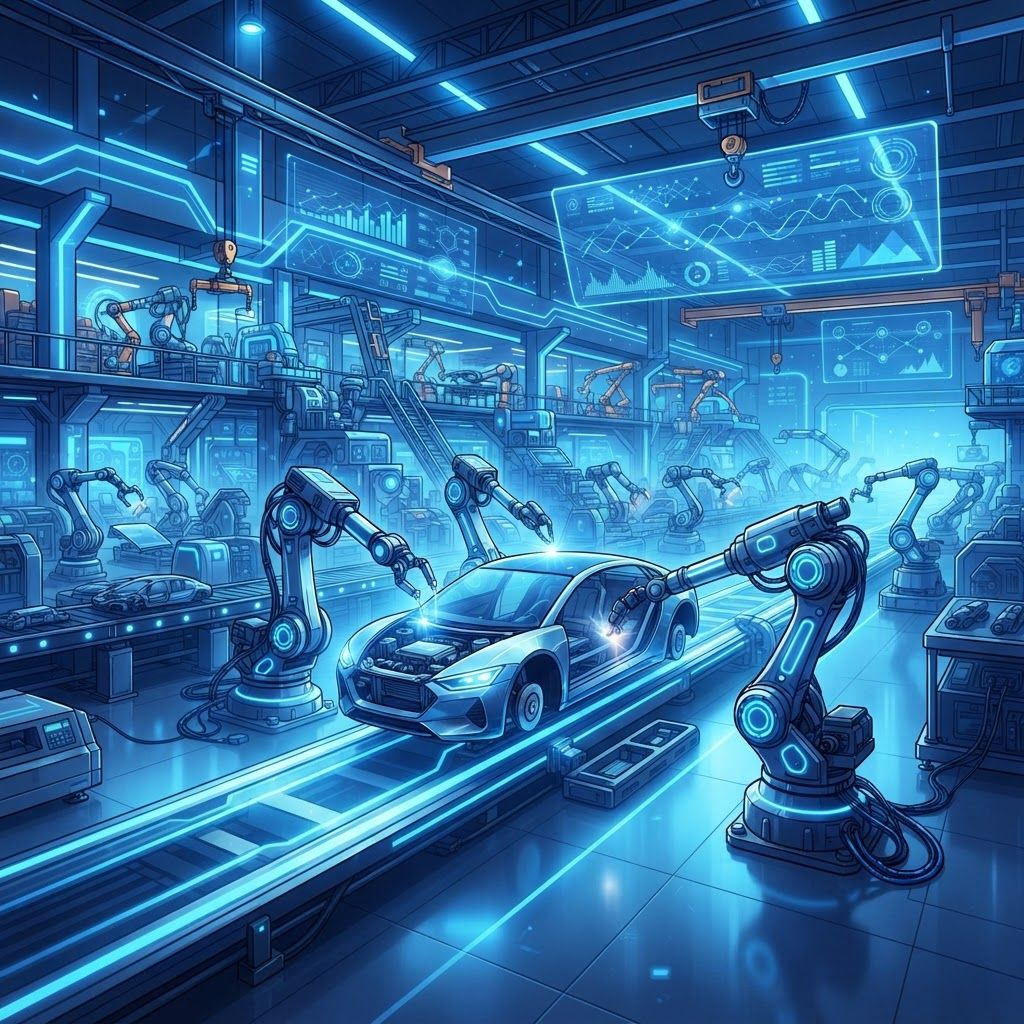
The Shape of Automotive Manufacturing in North Ayrshire
Scotland has never been a mass vehicle assembly nation in the way the West Midlands or the North East of England are, and North Ayrshire is no exception. Yet the automotive manufacturing that does exist here is substantial, technically capable and frequently overlooked. Rather than producing complete passenger cars, businesses across Irvine, Kilwinning, Stevenston, Dalry and Beith manufacture components, build specialist vehicle bodies, convert chassis into working vehicles, remanufacture assemblies and produce aftermarket parts.
This structure reflects genuine regional strengths. North Ayrshire has a deep precision engineering base, strong metal fabrication capability, established plastics and composites processing, and a workforce with generations of manufacturing experience. Those capabilities translate directly into automotive supply, and they have proven far more resilient than any single assembly plant would have been.
Categories of Automotive Manufacturing in the Region
Component and sub-assembly manufacturers produce machined parts, pressings, brackets, fasteners, gaskets, seals and moulded plastic components that feed into vehicle manufacturers and tier one suppliers across the UK and Europe. Many operate to IATF 16949, the demanding automotive quality standard, and supply on just-in-time schedules that leave no room for quality failures.
Commercial vehicle bodybuilders and converters represent a particularly strong local segment. These businesses take base chassis from manufacturers such as Mercedes-Benz, Iveco, DAF, Ford and Volkswagen and build them into refrigerated vans, tippers, dropsides, curtainsiders, welfare units, tail-lift vehicles, recovery trucks and mobile workshops. Given the agricultural, construction, marine and utilities activity around Ayrshire, demand for purpose-built commercial vehicles is consistent.
Specialist and emergency vehicle builders produce ambulances, fire appliances, police vehicles, mobile clinics and highway maintenance units. This work demands rigorous certification, electrical systems expertise and compliance with sector-specific standards.
Trailer and towed equipment manufacturers serve agriculture, plant hire, marine and general haulage, producing everything from livestock trailers to plant transporters and boat trailers suited to Clyde coast use.
Remanufacturing and reconditioning specialists rebuild engines, gearboxes, turbochargers, starter motors, alternators and hydraulic assemblies to original specification. Remanufacturing is genuinely circular manufacturing, recovering the embedded energy in core components while offering customers substantial savings against new parts.
Aftermarket and performance parts producers manufacture exhausts, suspension components, roll cages, intercoolers and bespoke fabrications for motorsport and enthusiast markets.
What Separates the Best Automotive Manufacturers
Quality systems and certification define credibility in this industry. IATF 16949 certification signals that a manufacturer operates the process discipline, statistical control, traceability and continuous improvement required by vehicle manufacturers. For vehicle converters, Individual Vehicle Approval and Whole Vehicle Type Approval competence, along with National Small Series Type Approval where relevant, are essential.
Engineering and design capability distinguishes manufacturers who solve problems from those who simply cut metal. The strongest firms offer CAD design, finite element analysis for structural verification, weight distribution calculation, payload optimisation and full technical documentation.
Materials expertise matters increasingly as lightweighting drives adoption of aluminium, high-strength steels and composites. Manufacturers competent in aluminium welding, composite lamination and mixed-material joining access work that traditional steel fabricators cannot.
Build quality and durability ultimately determine reputation. Commercial vehicles in Ayrshire face salt-laden coastal air, winter gritting, rough farm tracks and constant loading cycles. Manufacturers who galvanise, use quality sealants, specify appropriate corrosion protection and over-engineer critical joints build vehicles that last years longer.
Aftersales support completes the proposition. Warranty responsiveness, spare parts availability, mobile repair capability and refurbishment services all factor into total cost of ownership for fleet operators.
Industry Trends Reshaping Automotive Manufacturing
Electrification is the dominant force. The transition to battery electric vans and trucks affects converters profoundly, since electric base vehicles have different weight distributions, payload constraints, power take-off arrangements and high-voltage safety requirements. Bodybuilders who have invested in high-voltage training and electric auxiliary systems, replacing engine-driven hydraulics and refrigeration with electrically powered equivalents, are capturing this market.
Lightweighting follows directly from electrification, since battery mass eats into payload. Every kilogram removed from a body structure is a kilogram of cargo regained, making aluminium and composite construction commercially compelling rather than merely technically interesting.
Telematics and connected vehicle systems are now specified as standard on commercial fleets, requiring converters to integrate sensors, cameras, tracking units and driver monitoring into their builds.
Circular economy and remanufacturing have gained real momentum as sustainability reporting obligations tighten. Remanufactured components typically use a fraction of the energy of new production while delivering equivalent performance.
Supply chain localisation has benefited UK component manufacturers following trade friction and shipping volatility, with several tier one suppliers actively seeking domestic sources.
Benefits for Local Businesses and the Community
Automotive manufacturing supports North Ayrshire with skilled, well-paid employment in welding, fabrication, auto-electrics, machining, painting and engineering design. These roles are typically accessible through apprenticeships, providing genuine career routes for young people leaving school in Irvine, Saltcoats and Ardrossan.
Local businesses benefit directly too. A Kilbirnie builder needing a tipper, an Arran hotel needing a welfare vehicle, a Largs contractor needing a mobile workshop or a Dalry farmer needing a livestock trailer can all specify exactly what they need and have it built within reasonable distance, with service support close at hand.
How to Choose an Automotive Manufacturing Partner
Define your requirement precisely, including payload, dimensions, duty cycle, operating environment and any regulatory requirements such as tachograph, operator licence or plating considerations. Ask to see comparable vehicles the manufacturer has built and, where possible, speak to operators running them after two or three years of service.
Verify type approval competence, warranty terms and what is covered on the conversion versus the base chassis. Understand lead times realistically, as base chassis availability often dictates delivery more than build time. For component supply, confirm quality certification, PPAP capability and capacity headroom.
Final Thoughts
Automotive manufacturing in North Ayrshire is a story of specialisation rather than scale. The businesses operating here build vehicles and components that mass producers cannot economically supply, tailored precisely to operator requirements and backed by accessible local support. As electrification reshapes the industry, those manufacturers investing in new skills and materials are well positioned to grow, and the region's engineering heritage gives them a strong foundation to build on.
Want your brand featured in front of decision-makers? Publish a guest post or get a link insertion in our guides through AAMAX's guest post and link insertion service.
Helpful Links
 SponsoredAAMAX — Full-Service Digital Agency
Write for Us
Share your expertise with our readers. We welcome guest contributions from industry specialists.
Pitch your idea

