Mansfield and the Midlands Automotive Cluster
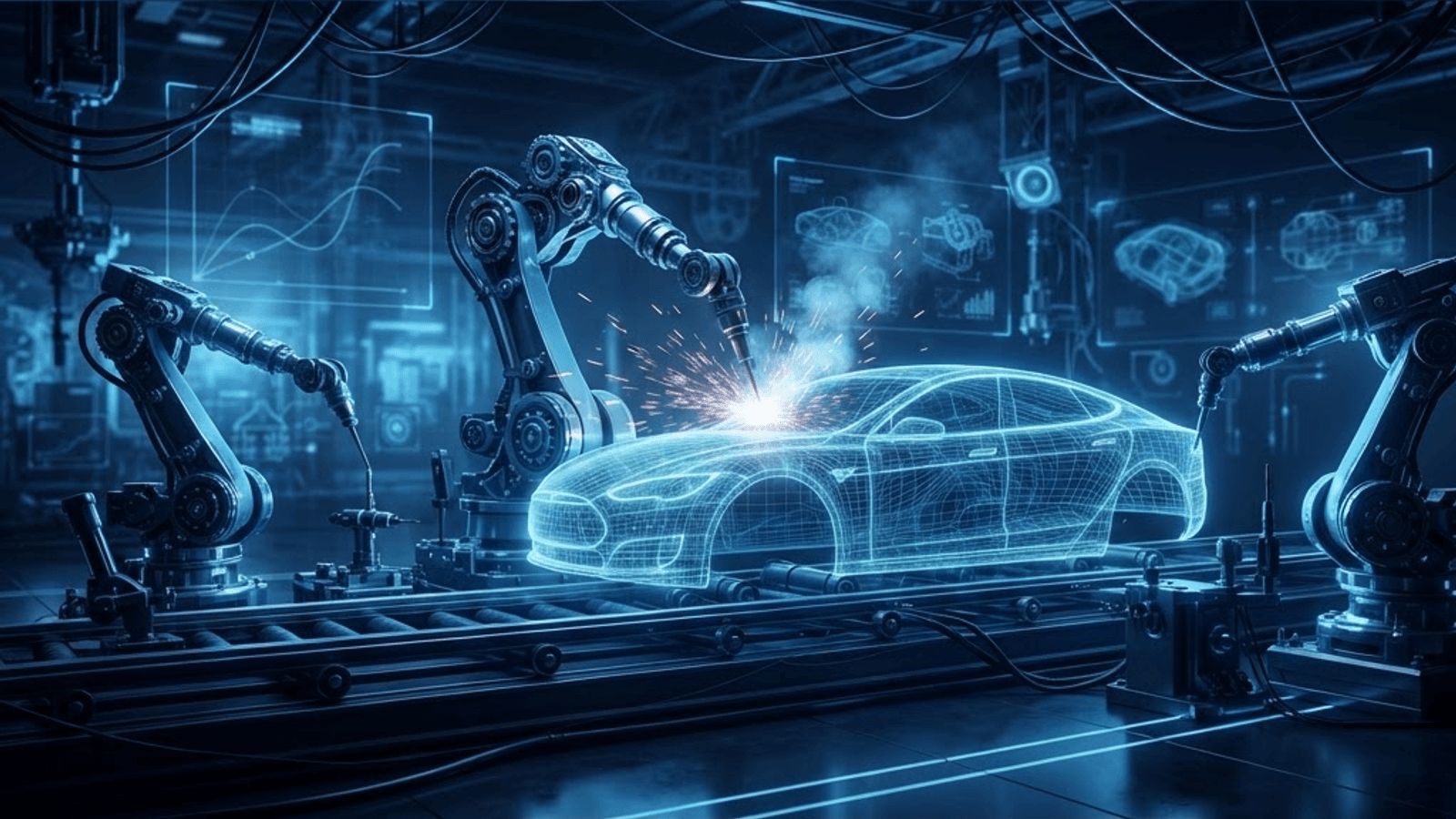
The Midlands has been the centre of British vehicle manufacturing for more than a century, and Mansfield sits comfortably within that ecosystem. While the town is not home to a large vehicle assembly plant, it hosts a substantial network of component manufacturers, precision machinists, tooling specialists, conversion businesses and aftermarket suppliers feeding into the wider regional supply chain.
This tier-two and tier-three activity is where much of the sector's engineering value actually resides. A modern vehicle contains tens of thousands of parts, and the companies producing brackets, castings, seals, harnesses, machined components and subassemblies operate to exacting tolerances under demanding quality regimes.
The Segments of Local Automotive Manufacturing
Precision component manufacturing covers machined metal parts, pressings, turned components and fabricated assemblies. These businesses typically run computer-controlled machining centres with in-process measurement and full dimensional traceability.
Tooling and fixture production supports the wider industry by making the dies, jigs and gauges that enable volume manufacturing. This is highly skilled work with long lead times and considerable intellectual value.
Vehicle conversion and specialist bodybuilding is a visible local strength, covering commercial vehicle bodies, refrigerated units, welfare vehicles, accessible transport conversions and emergency service fit-outs.
Aftermarket and remanufacturing businesses rebuild engines, gearboxes, turbochargers and electronic control units, a segment gaining importance as sustainability pressure favours refurbishment over replacement.
Top 10 Best Automotive Manufacturers in Mansfield
1. Sherwood Precision Components
A machining specialist producing high-tolerance parts for powertrain and chassis applications. Sherwood Precision Components operates to automotive quality management standards with comprehensive measurement and traceability systems.
2. Mansfield Vehicle Conversions
Builders of commercial vehicle bodies, refrigerated units and specialist conversions. Their in-house design capability allows fully bespoke solutions built to type approval requirements.
3. Portland Automotive Tooling
Designers and makers of press tools, jigs and fixtures for volume manufacturing, serving component producers across the Midlands automotive supply base.
4. Ashfield Metal Pressings
A pressing and stamping operation producing brackets, panels and structural components, with progressive die capability for higher-volume programmes.
5. Clumber Powertrain Engineering
Specialists in engine and transmission components, increasingly diversifying into electric drive unit housings and thermal management parts.
6. Rufford Remanufacturing
A remanufacturing business restoring gearboxes, turbochargers and electronic modules to original specification, offering a lower-carbon and lower-cost alternative to new units.
7. Oakleaf Electric Vehicle Systems
Focused on electrification, producing battery module housings, high-voltage cable assemblies and charging infrastructure components.
8. Bridge Street Rubber and Seals
Manufacturers of moulded rubber components, gaskets and sealing systems for vehicle and off-highway equipment applications.
9. Nottinghamshire Trim and Interiors
Producers of vehicle interior trim, upholstery and soft-touch components, supplying both original equipment and premium retrofit markets.
10. Mansfield Prototype Engineering
A rapid prototyping and low-volume production specialist supporting vehicle manufacturers and motorsport teams with quick-turn machined and additively manufactured parts.
Electrification and Its Consequences
The shift to electric vehicles is the most significant structural change the industry has faced in a century. Battery electric powertrains contain far fewer moving parts than internal combustion equivalents, which removes demand for some traditional components while creating substantial new demand elsewhere.
Growth areas include battery enclosures, thermal management systems, high-voltage connectors and busbars, power electronics housings, lightweight structures and noise insulation, the last becoming more important as engine noise disappears and other sounds become noticeable.
Companies that recognised this early have repositioned successfully. Precision machining skills transfer readily to new part families, and the underlying quality disciplines remain identical. The businesses most at risk are those wholly dependent on engine-specific components without a diversification plan.
Quality Systems and Standards
Automotive supply is governed by rigorous quality frameworks. Sector-specific quality management certification is generally mandatory for direct supply to vehicle manufacturers, and the production part approval process requires exhaustive documentation before a component enters series production. Statistical process control, measurement system analysis and failure mode analysis are routine rather than exceptional.
These requirements raise the barrier to entry considerably but also protect established suppliers, since customers are reluctant to requalify a part without strong reason.
Challenges Facing the Sector
Cost pressure from vehicle manufacturers is relentless, with annual price reduction expectations built into many contracts. Energy costs weigh heavily on energy-intensive processes such as heat treatment and casting. Skilled labour shortages affect toolmaking particularly, where training takes years. Supply chain volatility in raw materials and semiconductors continues to complicate planning.
Against that, opportunities exist in reshoring as manufacturers reassess long supply chains, in electrification-driven new part demand, and in the growing circular economy around remanufacturing.
Choosing an Automotive Supplier
Verify quality certification relevant to the intended application. Assess capacity honestly against projected volumes, including whether the supplier can scale. Review measurement and inspection capability, since dimensional capability claims should be evidenced. Discuss tooling ownership explicitly. Finally, consider financial stability, because a supplier failure mid-programme is extremely disruptive.
Final Thoughts
Mansfield's automotive manufacturers represent the engineering backbone that makes vehicle production possible. Their precision, quality discipline and increasing focus on electrification position the district well within a rapidly changing industry, and the depth of capability available locally remains a genuine regional asset.
Want your brand featured in front of decision-makers? Publish a guest post or get a link insertion in our guides through AAMAX's guest post and link insertion service.
Helpful Links
 SponsoredAAMAX — Full-Service Digital Agency
Write for Us
Share your expertise with our readers. We welcome guest contributions from industry specialists.
Pitch your idea