

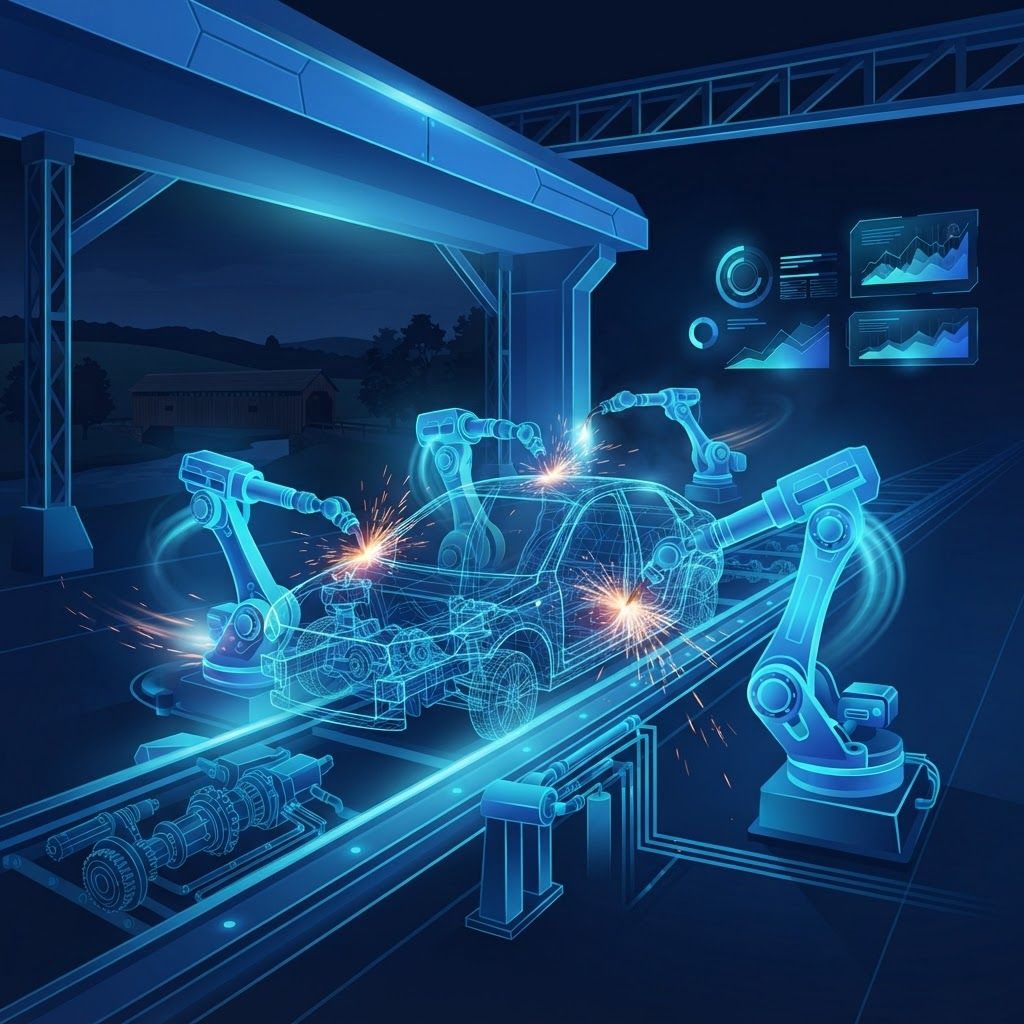
Lancaster's Place in the Automotive Supply Chain
Automotive manufacturing in Lancaster looks different from the sprawling assembly plants of Detroit or the Deep South, and that difference is its strength. Rather than final vehicle assembly, the region specialises in the components, subsystems and specialty builds that larger manufacturers depend upon. Stamped brackets, machined housings, seating assemblies, wiring, trailers, work trucks and aftermarket performance parts all flow out of Lancaster shops and into vehicles assembled across North America.
Geography plays a role. Lancaster sits within a day's drive of a large share of the United States population and of several major assembly plants, which makes just-in-time delivery practical. The county also has an unusually high concentration of small and mid-sized family owned manufacturers, many of which have served the same customers for thirty or forty years. That continuity produces the kind of process stability automotive quality engineers value.
What Automotive Buyers Look For
Automotive is among the most demanding sectors any manufacturer can serve. IATF 16949 certification is the recognised standard, and it requires far more than ISO 9001. Suppliers must demonstrate advanced product quality planning, production part approval processes, failure mode and effects analysis, measurement system analysis and statistical process control. Parts per million defect targets are measured in single digits.
Beyond quality systems, buyers evaluate capacity flexibility, tooling ownership, engineering change responsiveness and financial stability. A supplier who cannot absorb a twenty percent volume swing or who takes six weeks to implement an engineering change creates risk across the entire programme. Lancaster manufacturers have generally competed by being nimble on exactly these dimensions.
The Top 10 Automotive Manufacturers in Lancaster
1. Conestoga Vehicle Works. A specialty vehicle builder producing service bodies, utility trucks and custom chassis upfits for fleets across the mid-Atlantic. Conestoga Vehicle Works is respected for durable welded construction, thoughtful ergonomics and a willingness to engineer one-off configurations that larger upfitters decline.
2. Red Rose Precision Components. This CNC machining house produces turned and milled components for powertrain, braking and steering applications. Tight tolerance capability, in-process gauging and full PPAP documentation make it a reliable tier two supplier for larger automotive tiers.
3. Susquehanna Stamping and Fabrication. Progressive die stamping, laser cutting and robotic welding come together here to produce brackets, reinforcements and structural assemblies. Investment in servo presses has allowed the company to run complex forms that older mechanical presses could not handle reliably.
4. Pequea Trailer Manufacturing. Trailers are a Lancaster speciality, and Pequea Trailer Manufacturing builds agricultural, equipment and cargo trailers known for heavy gauge frames and long service life. Farmers and contractors across the region treat these trailers as multi-decade purchases rather than consumables.
5. Lititz Motorsport Fabrication. Lancaster County has genuine motorsport heritage, and Lititz Motorsport Fabrication serves it with chassis work, roll cages, suspension components and lightweight bodywork. The shop's tube bending and TIG welding quality is frequently cited by racing teams as best in class.
6. Ephrata Seating Systems. Producing seats, cushions and interior trim for commercial vehicles, agricultural equipment and specialty transport, Ephrata Seating Systems combines foam moulding, cut and sew operations and frame welding under one roof. Vertical integration keeps lead times short and quality consistent.
7. Manheim Driveline Products. Focused on shafts, couplings, gear components and power transmission hardware, Manheim Driveline Products serves both original equipment and replacement markets. Heat treatment and hardness verification are performed in house, which is uncommon at this scale.
8. Lancaster Coatings and Finishing. Not a parts maker but an essential link in the chain, this company provides e-coat, powder coating and specialty finishes to automotive suppliers throughout the region. Salt spray testing and film thickness verification support the corrosion warranties vehicle makers require.
9. Strasburg Restoration Coachworks. Classic vehicle restoration is a manufacturing discipline in its own right, requiring panel fabrication, metal shaping and period correct finishing. Strasburg Restoration Coachworks has built a national reputation for concours quality work on prewar and midcentury automobiles.
10. New Holland Mobility Equipment. Producing lifts, ramps and adaptive driving equipment for accessible vehicles, New Holland Mobility Equipment serves a market where safety certification and reliability are non negotiable. Its engineering team works directly with occupational therapists and end users, which shows in the usability of the finished products.
Trends Reshaping Automotive Manufacturing Locally
Electrification is the defining trend, and it touches Lancaster suppliers in unexpected ways. Machining shops that once produced engine components are pivoting to battery enclosure hardware, busbars and thermal management parts. Stampers are seeing demand for aluminium and high strength steel structures that require different tooling strategies. Suppliers who invested early in aluminium welding and dissimilar material joining are winning programmes.
A second trend is the growth of the light commercial and last mile delivery segment. Fleet electrification and e-commerce growth have created steady demand for upfitters, shelving producers and specialty body builders, all areas where Lancaster is strong. A third trend is aftermarket resilience. As vehicles stay on the road longer, replacement component demand has remained robust, benefiting local producers who serve that channel.
Choosing an Automotive Manufacturing Partner
Begin with certification alignment. If your programme requires IATF 16949, do not accept ISO 9001 as a substitute and expect a smooth PPAP. Evaluate capacity honestly by asking what percentage of available machine hours are currently committed. Review the supplier's approach to engineering changes, because in automotive those changes are constant.
Site visits remain essential. Look at gauge calibration records, tool storage conditions, housekeeping and whether operators can explain their own control plans. Finally, weigh proximity. The Lancaster manufacturers listed here compete not only on price but on the practical advantage of being close enough to send an engineer to your plant the same day a problem appears, and in automotive that responsiveness often matters more than a small unit cost difference.
Want your brand featured in front of decision-makers? Publish a guest post or get a link insertion in our guides through AAMAX's guest post and link insertion service.
Helpful Links
 SponsoredAAMAX — Full-Service Digital Agency
Write for Us
Share your expertise with our readers. We welcome guest contributions from industry specialists.
Pitch your idea

