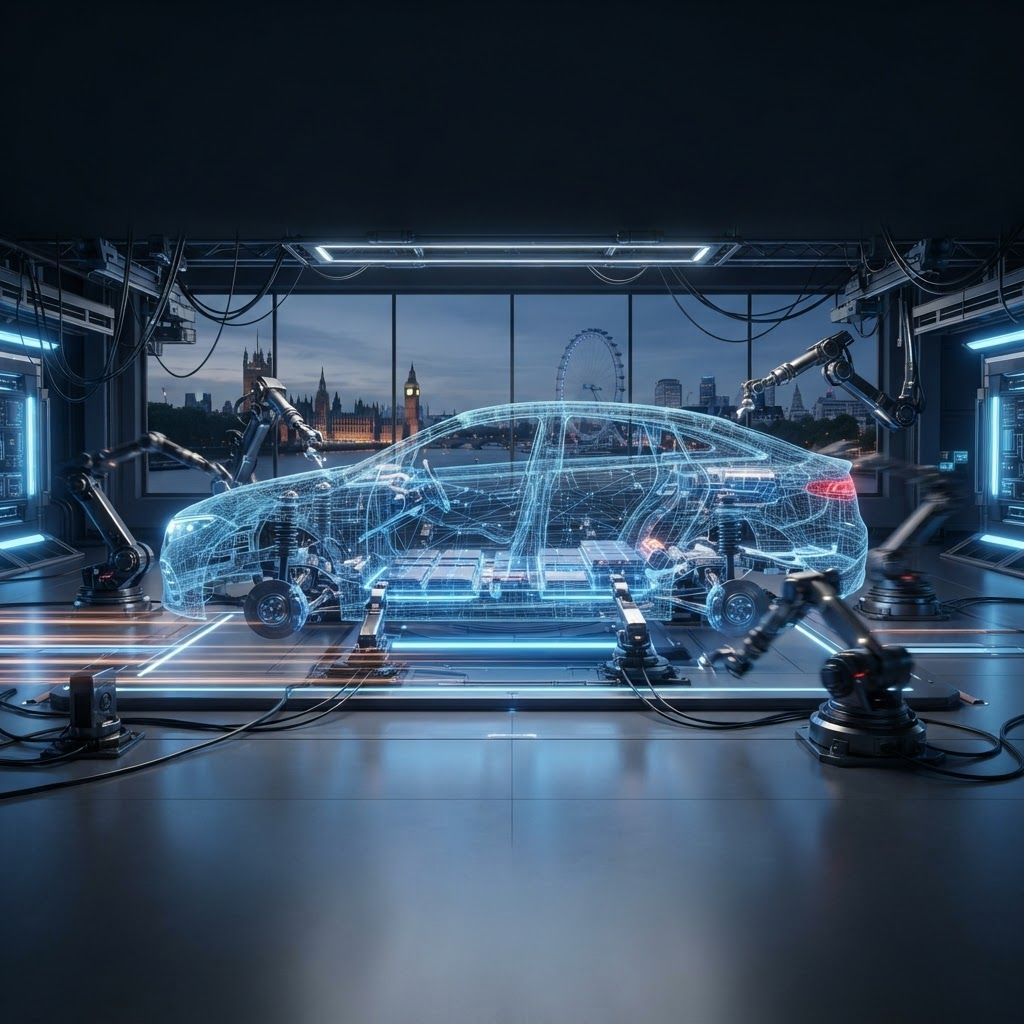
Specialist Automotive Engineering in West London
Britain's automotive strength has never rested solely on volume production. Alongside the large plants sit hundreds of specialist engineering businesses building prototypes, restoring historic vehicles, converting powertrains and producing components in small quantities to exacting standards. Hammersmith and Fulham hosts a notable concentration of this specialist end of the industry, occupying railway arches, light-industrial units and converted workshops across the borough.
The location makes commercial sense. West London sits within reach of the motorsport and high-performance engineering corridor to the west, while offering direct access to a wealthy central London client base that owns classic, performance and luxury vehicles. Add growing demand for electric conversions and fleet electrification support, and the borough's automotive businesses have a steady and increasingly technical workload.
Evaluation Approach
These companies were assessed on engineering capability, build quality, precision of fabrication and finishing, technical documentation, compliance with safety and type-approval requirements, and reputation among discerning owners and trade clients. Restoration and conversion work was judged particularly on authenticity, structural integrity and honest reporting of condition.
The Top 10 Automotive Manufacturers in Hammersmith and Fulham
1. Hammersmith Motor Works
Hammersmith Motor Works is the borough's leading specialist manufacturer, producing low-volume vehicle assemblies, bespoke chassis components and prototype builds for automotive clients and design studios. Its combination of fabrication, machining and assembly capability under one roof allows tight control over tolerances, and its engineering records are unusually thorough for a business of its size.
2. Fulham Classic Restorations
Restoration at the highest level is closer to manufacturing than repair, and Fulham Classic Restorations rebuilds historic vehicles from the shell upwards. It fabricates unavailable panels, remanufactures obsolete parts and re-trims interiors using period-correct materials. Owners value its photographic documentation of every stage, which supports both provenance and resale value.
3. West London Electric Conversions
This engineering business converts combustion vehicles to electric drive, covering motor selection, battery pack design, thermal management, control integration and safety systems. It works on classic cars, light commercial vehicles and specialist platforms, and it takes a rigorous approach to structural loading and certification rather than treating conversion as a simple swap.
4. Riverside Performance Engineering
Riverside Performance Engineering develops and manufactures performance components including suspension assemblies, braking upgrades, cooling systems and engine internals. It supports track and competition users as well as fast road applications, and it validates its own products rather than relying purely on supplier claims.
5. Broadway Coachbuilding
Continuing a genuinely British tradition, Broadway Coachbuilding produces bespoke bodywork, panel fabrication and custom interior structures. Its craftspeople work in aluminium, steel and composites, shaping panels by hand where tooling would be uneconomic. The company also undertakes accident repair on rare vehicles where standard panels simply do not exist.
6. Parsons Green Automotive Trim
Interior manufacturing demands its own skill set, and Parsons Green Automotive Trim produces upholstery, headlining, carpet sets and dashboard finishes to original or bespoke specification. Its material knowledge covers period-correct hides and modern technical fabrics, and its pattern-making capability allows accurate reproduction of discontinued interiors.
7. Shepherd's Bush Commercial Vehicle Solutions
Serving London's fleet operators, this business manufactures and installs commercial vehicle conversions: racking systems, refrigeration housings, welfare units, tail lifts and livery-ready panel modifications. It understands weight distribution and payload compliance, which protects operators from regulatory problems.
8. White City Prototype Automotive
Working with design consultancies and mobility startups, White City Prototype Automotive builds concept vehicles, styling models and test mules. It moves quickly between digital design and physical build, using rapid fabrication and additive manufacturing to compress development timelines.
9. Fulham Precision Components
This machining specialist manufactures automotive components to tight tolerance, including hubs, brackets, housings and remanufactured obsolete parts. Reverse engineering is a core service: when a part is unobtainable, it measures, models and reproduces it with material specifications appropriate to the application.
10. Thameside Vehicle Electronics
Modern vehicles are defined by their electrical architecture, and Thameside Vehicle Electronics manufactures wiring harnesses, control modules and instrumentation upgrades. Its work includes discreet integration of modern systems into classic vehicles, preserving original appearance while improving reliability and safety.
Trends Shaping the Sector
Electrification dominates. Demand for conversions has grown steadily as low emission zone requirements tighten across London and owners look to keep cherished vehicles usable. This has raised the technical bar considerably, since high-voltage systems demand proper design discipline, battery safety engineering and thorough validation.
Digital manufacturing is another significant shift. Three-dimensional scanning, computer-aided design and additive manufacturing have transformed the economics of producing single components, allowing specialists to recreate obsolete parts affordably. Meanwhile, sustainability has entered restoration practice through material choices, waste reduction and the fundamental argument that maintaining an existing vehicle can be less carbon-intensive than replacing it.
Skills remain the sector's greatest constraint. Panel beating, hand trimming and precision fitting take years to master, and the strongest local businesses invest deliberately in apprenticeships to protect these capabilities.
Choosing an Automotive Specialist
Ask to see completed work in person and examine the details that are easy to get wrong: panel gaps, weld quality, wiring routing and finish consistency. Request references from clients whose projects resemble yours in scope and value. For electric conversions, insist on clarity about battery certification, insurance implications and any type-approval or notification requirements.
Establish written scope, staged costs and change-control procedures before work begins, since specialist projects almost always evolve. Confirm insurance cover for vehicles held on site. Above all, choose engineers who tell you what a project will genuinely involve rather than what you hope to hear, because in specialist automotive manufacturing candour is the clearest indicator of competence.
Want your brand featured in front of decision-makers? Publish a guest post or get a link insertion in our guides through AAMAX's guest post and link insertion service.
Helpful Links
 SponsoredAAMAX — Full-Service Digital Agency
Write for Us
Share your expertise with our readers. We welcome guest contributions from industry specialists.
Pitch your idea