

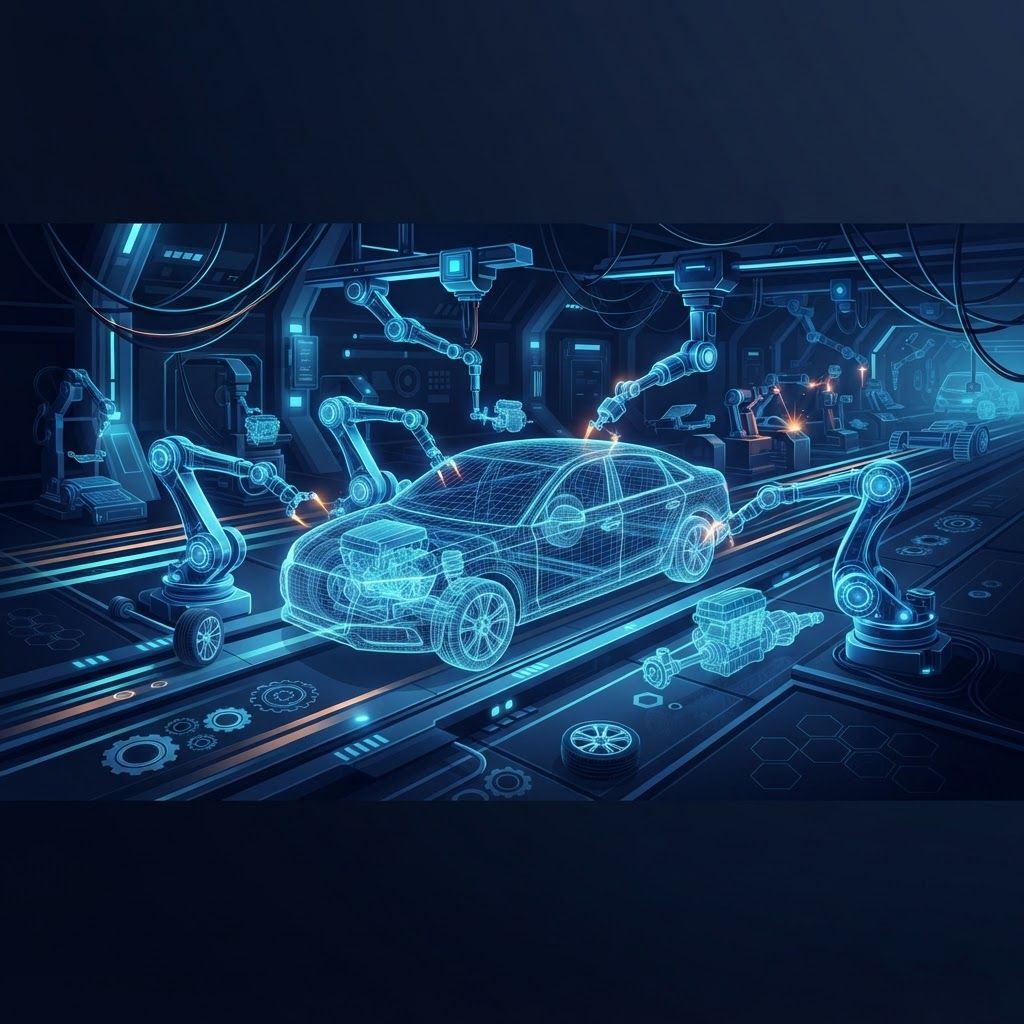
Automotive Engineering in Gloucestershire
Gloucester may not host a volume car plant, but the surrounding region has a genuine and distinguished automotive presence. The county sits within reach of the Midlands manufacturing heartland, the motorsport valley running through Oxfordshire and Northamptonshire, and the specialist vehicle cluster of the South West. That positioning has produced a local sector characterised by specialist vehicles, performance engineering, precision components, and increasingly electrification.
The city's own contribution lies substantially in supply chain manufacturing, machining, fabrication, hydraulics, electrical systems, and testing services, supported by an industrial base with deep engineering roots stretching back through aircraft, railway carriage, and agricultural machinery production.
Specialist and Low-Volume Vehicle Manufacture
Low-volume specialist manufacturing is where British automotive engineering excels, and the West Country is a stronghold. Producers in this segment build sports cars, commercial conversions, emergency service vehicles, off-road platforms, and bespoke bodywork.
Unlike volume production, these operations rely on skilled manual assembly, small batch tooling, and close customer collaboration. Type approval for low-volume manufacturers provides a proportionate regulatory route, and the sector benefits from Britain's accumulated expertise in composite construction, chassis engineering, and vehicle dynamics.
Leading Automotive Companies Serving the Gloucester Region
Morgan Motor Company, based at Malvern within easy reach of Gloucester, is among the most distinctive vehicle manufacturers in the world, hand-building sports cars combining traditional craftsmanship with modern platforms and engineering.
Aston Martin operates its main production facility at Gaydon and its sports car plant in Wales, drawing on a supply chain that extends into Gloucestershire for machined components and specialist services. Jaguar Land Rover similarly sources from regional suppliers across the West Midlands and South West corridor.
Renishaw supplies metrology and additive manufacturing technology used extensively in automotive development and production, particularly in motorsport and prototype work. Delphi Technologies and BorgWarner operations in the wider region contribute powertrain and electrification components.
Hyperbat and AMTE Power style battery specialists represent the electrification wave, while Williams Advanced Engineering provides battery and electric drivetrain engineering that regional manufacturers draw upon.
Dennis Eagle, producing refuse collection vehicles, and Ford Components operations in South Wales sit within the commercial vehicle supply orbit serving Gloucestershire customers. Bailey of Bristol and other leisure vehicle manufacturers in the South West contribute to the broader vehicle building ecosystem.
Locally, Gloucester's precision machining firms, hydraulic specialists, wiring harness producers, and surface treatment businesses supply components and services into all of these customers, forming the practical backbone of the county's automotive economy.
Electrification and Its Consequences
The transition to electric vehicles represents the most fundamental change the industry has faced in a century. Internal combustion powertrains contain thousands of moving parts; electric drivetrains contain a fraction of that. Suppliers whose business depends on engine and transmission components face existential pressure, while opportunities open in batteries, power electronics, thermal management, and lightweight structures.
Gloucestershire suppliers have responded with varying strategies. Some have diversified into aerospace, rail, or industrial markets where their machining and fabrication skills transfer directly. Others have targeted electric vehicle components including battery enclosures, busbars, cooling systems, and high-voltage connectors. Testing and validation services have grown as new systems require extensive qualification.
Motorsport and Performance Engineering
Britain's motorsport sector is a global leader, and its influence extends into Gloucestershire through component suppliers, composite specialists, and engineering consultancies. Motorsport demands extreme precision, rapid iteration, and lightweight construction, capabilities that transfer readily into high-performance road cars, aerospace, and increasingly into electric vehicle development.
The rapid prototyping culture of motorsport, combining additive manufacturing, CNC machining, and simulation, has influenced how the wider automotive supply chain operates, shortening development cycles significantly.
Quality, Standards, and Customer Expectations
Automotive supply demands rigorous quality systems. IATF 16949 certification is the sector standard, building on ISO 9001 with automotive-specific requirements around defect prevention, variation reduction, and supply chain management. Production part approval processes, advanced product quality planning, and failure mode analysis are standard practice.
Traceability requirements have intensified, particularly for safety-critical and high-voltage components. Suppliers must be able to identify material batches, process parameters, and inspection records for every part produced, often for many years after delivery.
Skills and Workforce
The sector faces a substantial reskilling challenge. High-voltage systems require specific electrical qualifications and safety training that traditional vehicle technicians do not hold. Software and systems engineering competence has become as important as mechanical expertise.
Gloucestershire's training providers and manufacturer apprenticeship schemes are adapting, with growing provision in electric vehicle technology, mechatronics, and embedded systems. The county's aerospace workforce provides a useful talent pool given the overlap in precision manufacturing disciplines.
Supply Chain and Sourcing Considerations
Buyers seeking automotive manufacturing partners in the Gloucester area should evaluate certification status, capacity and capability for their volume band, engineering support for design optimisation, and financial stability given the long programme lifecycles involved.
Increasingly, carbon reporting is part of supplier assessment. Original equipment manufacturers are pushing emissions reduction through their supply chains, and suppliers able to demonstrate credible measurement and reduction plans hold an advantage in tendering.
Prospects
Gloucestershire's automotive sector is unlikely to compete on volume, and does not need to. Its future lies in specialist vehicles, precision components, performance engineering, and electrification technologies where engineering depth matters more than scale. On those terms the region remains genuinely competitive.
Want your brand featured in front of decision-makers? Publish a guest post or get a link insertion in our guides through AAMAX's guest post and link insertion service.
Helpful Links
 SponsoredAAMAX — Full-Service Digital Agency
Write for Us
Share your expertise with our readers. We welcome guest contributions from industry specialists.
Pitch your idea

