

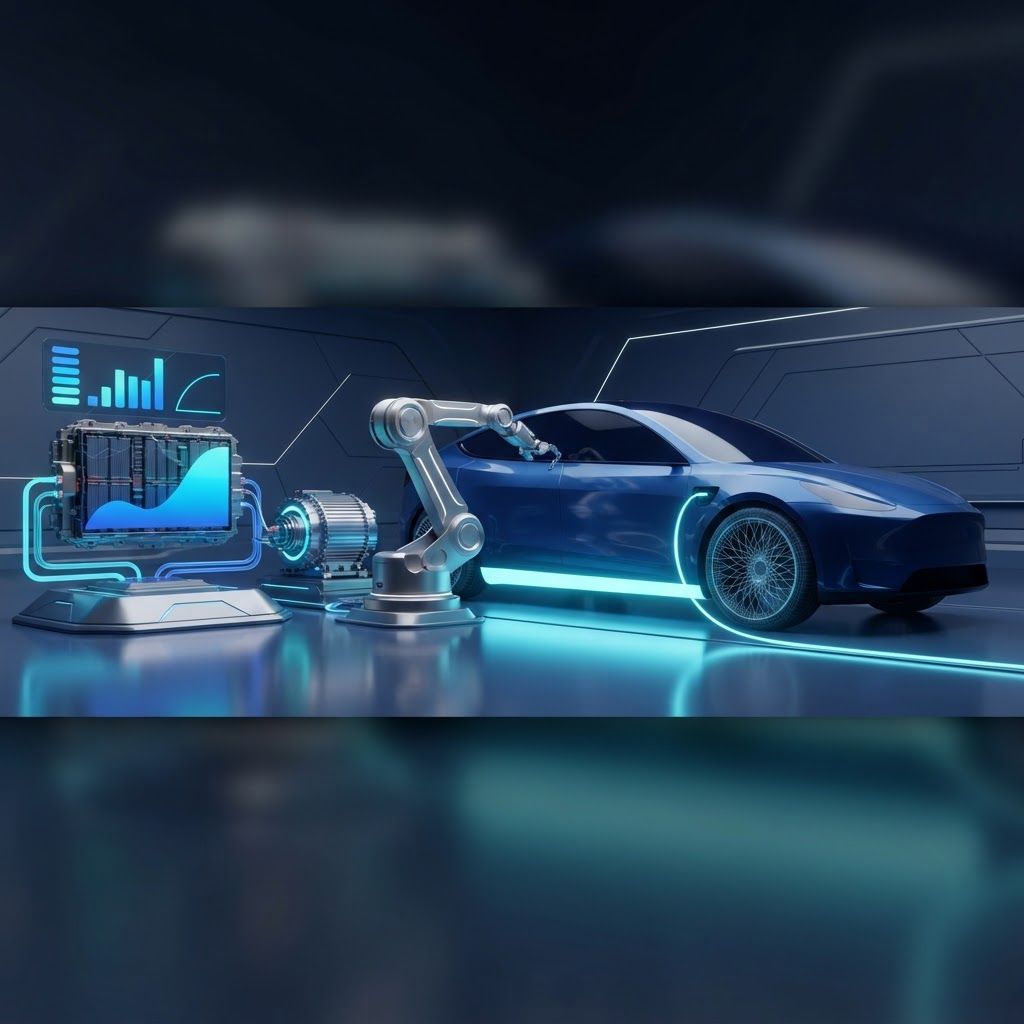
Automotive Engineering in a Dense Urban Borough
Nobody builds cars at volume in Camden, and nobody ever will. What the borough does host is a cluster of automotive engineering, design and specialist manufacturing businesses whose work is intellectual, prototype-based or highly bespoke. This includes electric powertrain development, battery engineering, vehicle conversion, motorsport components, design consultancy and light commercial vehicle adaptation.
The logic is straightforward. Modern automotive value is concentrated in software, electrification, controls, materials and design rather than in stamping and welding, and those disciplines are performed by engineering teams that benefit from urban locations with access to talent, universities and clients. Camden's proximity to research institutions and to central London fleet operators has made it a practical base for this work.
How These Businesses Were Assessed
Assessment considered engineering depth, quality of prototype and low-volume manufacturing, safety and homologation competence, electrification expertise, testing capability and evidence of delivered projects. Businesses combining design capability with the ability to build and validate physical hardware were rated most highly.
1. Camden Automotive Engineering
A multidisciplinary engineering firm covering vehicle systems design, chassis and suspension development, thermal management and validation testing. Camden Automotive Engineering supports manufacturers and converters that need engineering resource without maintaining permanent in-house teams.
2. King's Cross Electric Vehicle Systems
Specialists in electric powertrains: motor selection and integration, inverter and controller development, high-voltage architecture, charging systems and vehicle control software. King's Cross Electric Vehicle Systems works on both new platforms and conversions of existing vehicles to electric drive.
3. Bloomsbury Battery Technologies
Developers of battery packs and management systems: cell selection, module design, thermal control, structural integration and safety validation. Bloomsbury Battery Technologies focuses on the discipline that most determines electric vehicle cost, range and safety, and it supports certification testing.
4. Euston Commercial Vehicle Conversions
Manufacturers of specialist bodies and conversions for vans and light trucks: refrigerated units, welfare vehicles, mobile workshops, accessible transport and last-mile delivery configurations. Euston Commercial Vehicle Conversions serves fleet operators working under London's emissions and access restrictions.
5. Kentish Town Motorsport Components
Producers of high-performance components: suspension parts, lightweight structures, cooling systems, composite panels and precision machined assemblies. Kentish Town Motorsport Components operates to the tight tolerances and rapid iteration cycles that competition engineering demands.
6. Somers Town Vehicle Design Studio
A design consultancy covering exterior and interior concept development, ergonomics, human machine interface design, digital modelling and physical mock-ups. Somers Town Vehicle Design Studio works for manufacturers and mobility startups defining new vehicle categories.
7. Regent's Park Autonomous Systems
Engineers developing driver assistance and automation technology: sensor fusion, perception software, control algorithms, simulation environments and validation frameworks. Regent's Park Autonomous Systems benefits from access to the machine learning and robotics research concentrated nearby.
8. Holborn Classic Vehicle Restoration
Craft manufacturers restoring and remanufacturing historic vehicles: panel fabrication, engine rebuilding, trim and upholstery, electrical rewiring and sympathetic electric conversion of classic cars. Holborn Classic Vehicle Restoration combines traditional metalworking skills with modern engineering analysis.
9. Primrose Hill Micromobility Manufacturing
Producers of light electric vehicles: cargo bikes, electric bicycles, delivery trikes and compact utility vehicles designed for congested urban environments. Primrose Hill Micromobility Manufacturing addresses the segment growing fastest in inner London, where full-size vehicles are increasingly impractical.
10. Camden Vehicle Testing and Homologation
A testing and approvals partner handling type approval documentation, individual vehicle approval, brake and emissions testing coordination, safety assessment and regulatory strategy. Camden Vehicle Testing and Homologation guides small manufacturers and converters through a compliance process that is often the largest barrier to bringing a vehicle to market.
The Shift to Electrification
Electrification has changed the engineering balance fundamentally. Powertrain complexity has moved from mechanical systems with hundreds of moving parts to electrical and software systems with fewer components but far greater integration demands. Battery engineering, thermal management, high-voltage safety and control software now dominate development effort and cost.
This shift favours the kind of businesses found in Camden. Software, controls, power electronics and systems integration can be developed in urban engineering offices and validated in laboratories, whereas the manufacturing footprint required is much smaller than for traditional engine production. Conversion work has also grown, since many commercial fleets find repowering existing vehicles more economic than replacement.
Trends Shaping Automotive Engineering
Software-defined vehicles have become the industry norm, with functionality delivered through updates and vehicle behaviour controlled centrally rather than by discrete modules. Cybersecurity and software update integrity are now regulated concerns, adding formal process requirements to development.
Urban policy is another powerful force. Emissions zones, weight and access restrictions, kerbside management and delivery consolidation all shape which vehicles are commercially viable in London, driving demand for smaller electric commercial vehicles and cargo bikes. Materials and circularity considerations have grown too, with battery second-life and recycling becoming part of product planning rather than an afterthought.
Working With Automotive Engineering Firms
Define the deliverable precisely. A concept design, a functional prototype, a validated system and a homologated production vehicle represent vastly different scopes and budgets, and confusion between them is the most common cause of project overrun. Address compliance early, since approval requirements often constrain design choices in ways that are expensive to retrofit.
Ask about testing and validation capability specifically, because unvalidated engineering is not usable in a road vehicle. Clarify intellectual property ownership over designs and software before work begins. For electrification projects, request evidence of high-voltage safety competence and battery validation experience, as these are the areas where inadequate expertise creates genuine hazard rather than merely poor performance.
Final Thoughts
Camden's automotive businesses reflect where the industry's value now sits: electrification, software, design, specialist manufacturing and urban mobility. For fleet operators, mobility startups and manufacturers needing engineering capability, the borough offers a concentration of expertise well matched to the transition underway across the sector.
Want your brand featured in front of decision-makers? Publish a guest post or get a link insertion in our guides through AAMAX's guest post and link insertion service.
Helpful Links
 SponsoredAAMAX — Full-Service Digital Agency
Write for Us
Share your expertise with our readers. We welcome guest contributions from industry specialists.
Pitch your idea

