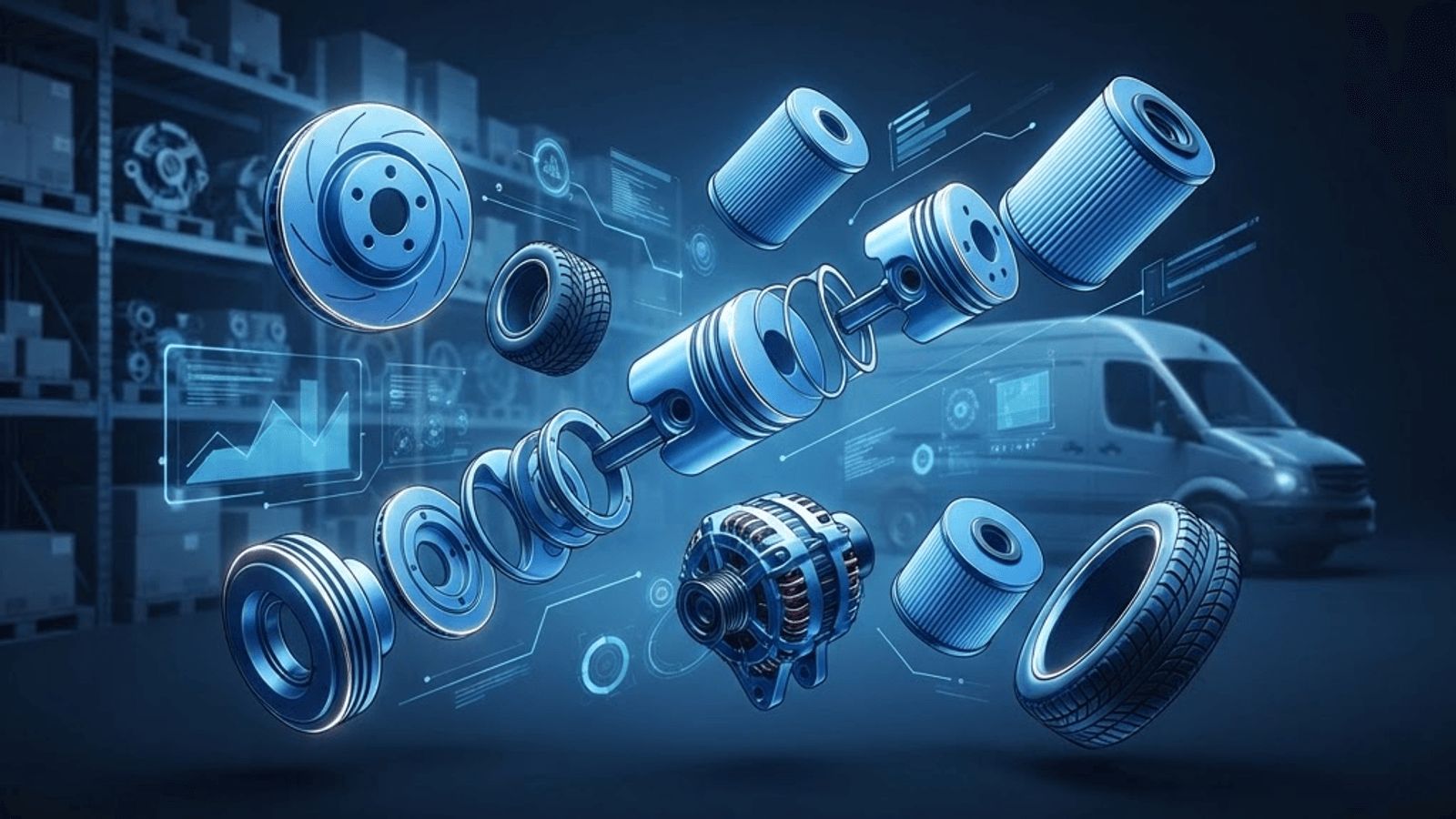
Norwich and the Aftermarket Parts Trade
Norwich sits at the centre of a large rural county where car ownership is not optional. Public transport thins out quickly beyond the city, so households, farms and businesses across Norfolk depend heavily on vehicles, and those vehicles are often kept on the road far longer than the national average. That creates a substantial independent repair sector and, behind it, a busy auto parts wholesale network.
The economics of a garage are decided largely by parts supply. A workshop with a vehicle on a ramp is burning labour capacity every minute it waits for a component. Wholesalers therefore compete not just on price but on delivery frequency, catalogue accuracy and the ability to identify the right part first time. In Norwich, most established motor factors run multiple daily van deliveries into the city and out to the surrounding towns.
How to Evaluate a Parts Supplier
Cataloguing accuracy is the single most important criterion. Modern vehicles have huge numbers of variants, and a supplier whose system works from registration lookup, VIN interpretation and original equipment cross-referencing will dramatically reduce wrong-part returns. Ask how their catalogue is maintained and whether counter staff can interpret it rather than simply read it.
Quality tiering is the second consideration. Aftermarket parts range from original equipment manufacturer supply, through recognised quality brands, down to budget imports. A good wholesaler explains the difference openly and lets the garage choose based on the customer's needs, rather than disguising a cheap part as a premium one. For safety-critical items such as brakes, steering and suspension, insist on parts with proper approvals and traceable manufacture.
Then look at logistics and returns. Multiple daily deliveries, a late order cut-off, a local trade counter and a fair, fast returns policy for cores and mis-identified parts are what keep a workshop productive. Technical support rounds it out: access to repair data, torque specifications, fitting instructions and diagnostic advice adds real value, particularly on newer systems.
The Top 10 Auto Parts Wholesalers in Norwich
1. Norwich Motor Factors
A long-established general factor supplying service parts, brakes, filtration, clutches, steering and suspension components. Frequent van rounds across the city and clear quality tiering make it a reliable backbone supplier for independent garages.
2. Anglia Commercial Vehicle Parts
Specialising in light and heavy commercial vehicles, including brake systems, air components, lighting and trailer parts. With Norfolk's agricultural haulage and distribution activity, workshop customers value the depth of stock on vans and trucks that general factors often treat as secondary.
3. City Auto Electrical Supplies
Alternators, starters, sensors, wiring, lighting and diagnostic consumables, with in-house testing and refurbishment. Electrical faults are increasingly common on modern vehicles, and a supplier who can test a unit before you fit it saves considerable diagnostic time.
4. Broadland Tyre and Wheel Distribution
Wholesale supply of tyres across budget, mid-range and premium brands, along with wheels, valves, weights and fitting consumables. Fast replenishment matters here because tyre demand is unpredictable, and the supplier's coverage of agricultural and van sizes suits the local mix.
5. Wensum Diesel and Injection Services
A specialist in diesel fuel systems: injectors, pumps, turbochargers and emissions components, with testing and reconditioning capability. Norfolk's high proportion of diesel vans, tractors and older cars keeps this niche busy, and remanufactured units offer a cost-effective alternative to new.
6. Castle Vehicle Body Parts
Panels, bumpers, lighting units, mirrors and trim for accident repair work. Paint supply, primers, abrasives and masking materials are stocked alongside, allowing body shops to source a complete job from one order and one delivery.
7. Yare Garage Equipment and Tools
Ramps, tyre machines, air tools, diagnostic scanners, calibration equipment and workshop consumables, with installation and servicing. As advanced driver assistance systems become standard, camera and radar calibration equipment has moved from optional to essential for many workshops.
8. Norfolk Classic Car Parts
Supplying restoration components, gaskets, trim, bushes and hard-to-find spares for older vehicles. Norfolk has an active classic car community, and this type of supplier keeps vehicles running that mainstream catalogues abandoned decades ago.
9. Fine City EV and Hybrid Components
Focused on the growing electrified fleet: high-voltage cabling, service parts, thermal management components, charging accessories and appropriate insulated tooling. Training guidance on safe high-voltage isolation makes this supplier valuable to garages transitioning their capability.
10. East Anglia Lubricants and Chemicals
Engine oils, transmission fluids, coolants, brake fluid, AdBlue, cleaning chemicals and workshop consumables in bulk and pack sizes. Correct specification matters enormously on modern engines, and technical support on manufacturer approvals prevents costly warranty disputes.
Trends Reshaping the Parts Sector
Electrification is the defining shift. Battery electric vehicles need fewer service parts but different ones, and wholesalers are rebalancing stock towards cabin filters, tyres, brake components with different wear patterns, coolant systems and high-voltage consumables. Garages that build capability early are securing work that dealer networks cannot absorb.
Vehicle complexity is the second trend. Advanced driver assistance systems mean that replacing a windscreen or adjusting a suspension component may require sensor recalibration. Suppliers who provide the equipment, the data and the training around this are becoming partners in workshop development rather than simple stockists.
Remanufacturing is the third. Rising material costs and sustainability pressure have made properly remanufactured units, from turbochargers to steering racks, an attractive middle path between new original equipment and budget replacements. Core exchange schemes are now a standard part of how Norwich factors operate.
Getting Supply Right in Your Workshop
Use at least two factors so that a stock gap never idles a ramp. Record your return rate by supplier, because catalogue accuracy has a bigger effect on profitability than headline discount. Standardise on quality tiers for safety-critical work and explain that policy to customers, since transparency builds trust and reduces comebacks.
Finally, keep learning. The parts wholesalers in Norwich sit on top of an enormous amount of technical data and practical experience with local vehicle patterns. Workshops that engage with their suppliers' training and technical helplines fix cars faster, waste fewer parts and adapt more smoothly to a market that is changing more rapidly than at any point in the last fifty years.
Want your brand featured in front of decision-makers? Publish a guest post or get a link insertion in our guides through AAMAX's guest post and link insertion service.
Helpful Links
 SponsoredAAMAX — Full-Service Digital Agency
Write for Us
Share your expertise with our readers. We welcome guest contributions from industry specialists.
Pitch your idea