Automotive Supply in a Motoring County
Bridgend has a deep automotive connection. The county borough was for decades home to major engine manufacturing, and while the industrial landscape has changed, the automotive skills base and supply culture remain embedded in the area. That legacy supports a healthy network of motor factors, parts distributors and specialist suppliers serving independent garages, fast-fit centres, bodyshops, fleet operators, commercial vehicle workshops and the DIY market.
The economics of parts distribution are unusual. A garage with a vehicle on a ramp needs the correct part within hours, not days, because a car occupying a bay without progressing is lost revenue. Distributors therefore compete primarily on availability and delivery speed, with several local factors running multiple daily delivery rounds to workshops across the region.
Motor Factors and the Distribution Model
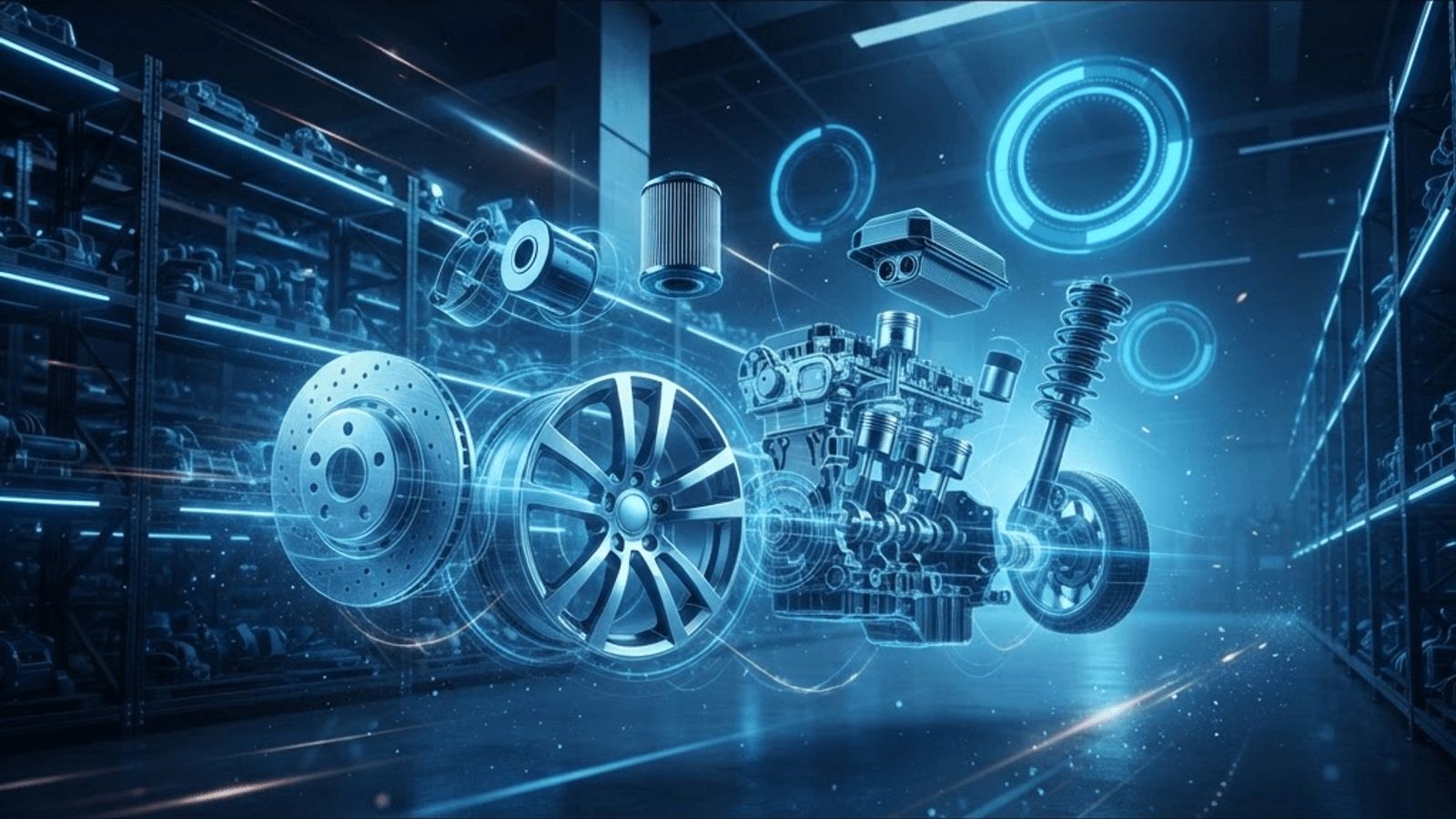
The traditional motor factor holds broad stock across service and repair categories: filters, brake components, clutches, suspension parts, steering components, belts, batteries, lubricants, exhausts, cooling system parts and electrical items. Behind the local branch usually sits a regional hub and often a national distribution centre, creating a tiered system where common parts ship immediately from local stock and rarer items arrive next morning from further up the chain.
Cataloguing is critical and frequently underestimated. Modern vehicles have enormous variation within a single model range, with different parts fitted according to engine variant, build date, market and even factory. Distributors using accurate identification systems driven by registration number lookup and VIN validation reduce the wrong-part deliveries that waste workshop time.
OE, OEM and Aftermarket Explained
Terminology in this sector confuses many buyers, and the distinctions have genuine cost and quality implications.
Original equipment parts are supplied in vehicle manufacturer packaging through franchised dealers, carrying the highest price and generally guaranteed fitment. OEM parts are produced by the same manufacturer that supplies the vehicle maker but sold in that component maker's own packaging, frequently identical in specification at a significantly lower price. Aftermarket parts are produced by independent manufacturers to their own specification, ranging from excellent quality equalling or exceeding original specification down to poor imitations best avoided entirely.
Block exemption regulation protects the right of independent garages to use matching quality parts without invalidating a vehicle warranty, which is why the independent sector can compete credibly with franchised dealers. Workshops should nonetheless choose parts appropriate to the application. Economy brake pads may be perfectly adequate on a low-mileage city car but inappropriate on a heavily loaded van, and the reputational cost of a comeback far exceeds the margin saved.
Commercial Vehicle and Fleet Supply
Commercial vehicle parts represent a distinct specialism. Trucks, vans, trailers and plant require different components, different tooling and different technical knowledge. Downtime cost is also dramatically higher, as an off-road HGV can cost an operator hundreds of pounds a day in lost revenue plus penalties for missed deliveries.
Distributors serving this market typically hold air brake components, suspension parts, lighting, tachograph consumables, filtration for large diesel engines, and trailer parts. Many offer out-of-hours availability and rapid delivery precisely because the cost of waiting is so high for their customers.
Fleet operators benefit from consolidated supply arrangements, negotiated pricing, managed stock at their own workshops and consistent parts specification across a vehicle fleet, which simplifies maintenance planning and technician familiarity.
Bodyshop and Collision Repair Supply
Collision repair supply covers panels, lighting units, bumpers, radiators, glass, and the extensive consumables that a bodyshop uses: abrasives, fillers, primers, basecoats, clearcoats, masking materials and PPE.
Paint supply is a specialist business in its own right, involving colour matching systems, mixing schemes and technical support. Modern vehicle finishes, particularly tri-coat pearls and complex metallics, demand accurate colour formulation and skilled application. Distributors supporting bodyshops typically provide mixing equipment, colour retrieval systems, training and technical troubleshooting alongside product.
Insurance work imposes additional requirements around parts sourcing, with insurers increasingly specifying green or recycled parts for certain repairs, creating demand for graded salvage components alongside new supply.
Tools, Equipment and Workshop Consumables
Beyond parts, distributors supply the equipment that makes a workshop function: vehicle lifts, diagnostic systems, tyre changers, wheel balancers, air conditioning service units, brake testers, welding equipment and hand tools.
Diagnostic capability has become the defining investment for independent garages. Modern vehicles contain dozens of electronic control units, and repairs frequently require coding, programming or calibration that cannot be performed without appropriate equipment and access to manufacturer technical data. Advanced driver assistance systems have added a further layer, with camera and radar calibration now required after seemingly routine work such as windscreen replacement or wheel alignment.
The Electric Vehicle Transition
Electrification is reshaping the parts sector fundamentally. Electric vehicles eliminate large categories of traditional consumable demand: no oil filters, no spark plugs, no clutches, no exhaust systems, and dramatically reduced brake wear thanks to regenerative braking.
New demand categories are emerging in their place: high-voltage cabling and connectors, battery thermal management components, specialist coolants, charging hardware, and the insulated tooling and PPE required to work safely on high-voltage systems. Technician training carries formal qualification requirements for high-voltage work, and distributors who help their customers navigate that transition build considerable goodwill.
The transition will be gradual. The UK's existing vehicle parc contains millions of internal combustion vehicles that will need servicing for years, so conventional parts demand will decline slowly rather than collapse. Distributors are positioning for both realities simultaneously.
Choosing a Parts Supplier
Availability and delivery frequency should top the assessment for any workshop. Ask how many daily delivery rounds serve your area, what the cut-off times are, and what the realistic fill rate is on first request.
Assess cataloguing accuracy, because wrong parts cost more in wasted labour than they save in price. Evaluate returns policy, particularly for electrical items and parts ordered in error, as terms vary considerably.
Consider technical support. A distributor with knowledgeable staff who can help identify an unusual part or advise on a fitment question saves genuine time. Look at warranty terms on the brands supplied, and check whether labour claims are covered on premature failures, as this varies significantly between manufacturers.
Looking Ahead
Parts distribution in Bridgend and across South Wales faces consolidation pressure, digital disruption from online sellers, and the structural change of electrification. The distributors thriving are those combining genuine local stock with fast delivery, accurate cataloguing and technical knowledge that an online marketplace cannot replicate.
For garages and fleet operators, building strong relationships with two or three complementary suppliers, rather than chasing the lowest price on every line, remains the most reliable route to keeping vehicles moving and customers satisfied.
Want your brand featured in front of decision-makers? Publish a guest post or get a link insertion in our guides through AAMAX's guest post and link insertion service.
Helpful Links
 SponsoredAAMAX — Full-Service Digital Agency
Write for Us
Share your expertise with our readers. We welcome guest contributions from industry specialists.
Pitch your idea