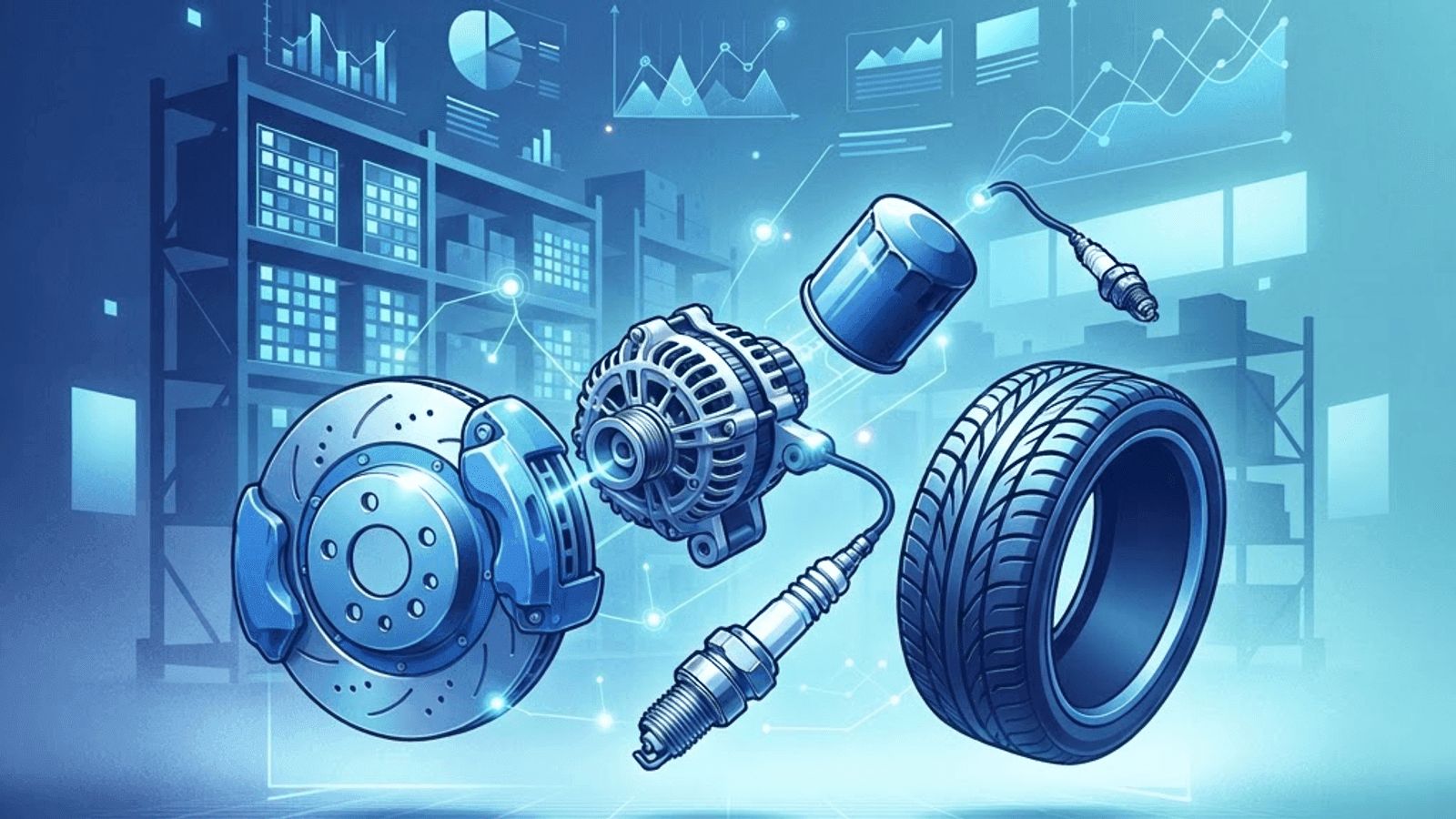
Why Parts Supply Matters in Rural Sussex
In a district as spread out as Wealden, parts availability determines how long a vehicle sits off the road. A garage in Uckfield or Heathfield that can collect a component the same morning finishes a job in a day; one waiting three days on a national courier leaves a customer without transport. That practical reality has produced a strong local parts economy, combining trade counters, motor factors, national retail chains, online specialists and niche suppliers serving classic, agricultural and performance requirements.
Demand is broad. Wealden has a large population of high-mileage commuter cars, a substantial trades fleet of vans and pickups, working agricultural vehicles, a thriving classic car and motorcycle scene, and a growing number of hybrids and electric vehicles. Each requires a different supply route.
The Ten Parts Supply Options Wealden Uses
Euro Car Parts is the most widely used national factor in the region, combining a large catalogue, trade and retail supply, and rapid local delivery to garages. Its breadth across service items, brakes, clutches, suspension and consumables makes it the default first call for many workshops.
GSF Car Parts operates a comparable model with strong trade relationships and reliable stock depth on common service and repair items. Workshops frequently maintain accounts with both to hedge against availability gaps.
Halfords serves the retail end effectively, particularly for batteries, bulbs, wiper blades, oils, tools, roof bars and accessories, with the convenience of fitting services for drivers who prefer not to do the work themselves.
Independent motor factors in Uckfield, Hailsham and the surrounding towns remain vital. These local businesses offer counter knowledge that no catalogue replicates, identifying the right part from a chassis number or a description of a symptom, and often sourcing unusual components within hours.
Franchised dealer parts departments supply genuine manufacturer components, which matter for newer vehicles, electronic modules, body panels and anything requiring exact fitment or coding. They also provide reliable identification through vehicle identification number lookup, avoiding costly mis-ordering.
Agricultural and plant parts suppliers serving the district occupy a distinctly Wealden niche, providing filters, hydraulics, belts, bearings, PTO components and heavy-duty consumables for tractors, telehandlers and utility vehicles used across local farms and estates.
Classic car and motorcycle parts specialists support a sizeable enthusiast community. Suppliers of British classic components, reproduction trim, period-correct fittings and hard-to-find mechanical parts are used heavily by restorers across the district, often ordering nationally but relying on local expertise for fitting.
Tyre suppliers and mobile fitting operators form their own supply chain, holding stock across common sizes and offering roadside and home fitting, which is invaluable in villages far from a fast-fit centre.
Online parts platforms and marketplaces including large catalogue retailers and manufacturer-specific specialists give access to an enormous range at competitive prices. For non-urgent repairs, planned restoration work or discontinued components, these are frequently the only realistic source.
Vehicle dismantlers and green parts suppliers in Sussex and Kent complete the list. Salvaged panels, lights, mirrors, engines and interior components are far cheaper than new and increasingly used by insurers and bodyshops. For older vehicles where new parts exceed the car's value, recycled parts often keep a usable vehicle on the road.
How to Judge a Parts Supplier
Identification accuracy is the most important quality measure. A good supplier confirms fitment using the vehicle identification number rather than the model name, because engine variants, facelifts and mid-year changes cause the majority of returns and wasted labour.
Understand part quality tiers clearly. Genuine parts come in manufacturer packaging, original equipment equivalent parts are made by the same producers without the badge, and aftermarket quality ranges from excellent to poor. For safety-critical components such as brakes, steering and suspension, quality economy is a false saving.
Returns and warranty policy deserve scrutiny. Look for clear terms on incorrect orders, electrical part returns, warranty periods and whether labour is covered if a part fails prematurely. Suppliers who resist returns on their own mis-identification should be avoided.
Finally, weigh availability and delivery realistically. For a vehicle needed daily, a supplier with local stock or same-day delivery beats a cheaper option arriving in a week. For planned work, price and range matter more.
Trends in the Parts Sector
Electrification is reshaping demand. Traditional lines such as exhausts, clutches, spark plugs and oil filters are declining in volume, while demand grows for battery cooling components, high-voltage cabling, brake components suited to regenerative systems and specialist tyres for heavier electric vehicles.
Green and recycled parts have gained legitimacy, driven by cost pressures and sustainability commitments. Insurers increasingly authorise their use for cosmetic repairs, and quality-graded salvage supply has become far more professional and traceable.
Counterfeit parts remain a genuine risk in online channels, particularly for brake pads, filters and electrical components. Buying through established suppliers, checking packaging authenticity and treating implausibly cheap safety parts with suspicion are sensible precautions.
Digital cataloguing has improved accuracy considerably, with registration and vehicle identification number lookup now standard, while telematics and workshop management software increasingly automate parts ordering directly from diagnostic reports.
Practical Buying Advice
Always have the registration and, ideally, the vehicle identification number to hand, along with the engine code where relevant. Photograph the old part before ordering, since visual comparison catches variant differences that catalogues miss.
Buy safety-critical components from reputable brands and buy in matched sets where appropriate, such as brake pads and discs together or suspension components in pairs. For consumables, buying in volume ahead of servicing usually reduces cost significantly.
For rural drivers, keeping a small stock of essentials is worthwhile: correct-specification oil, a spare bulb set, screenwash, a tyre inflator and a jump pack. Breakdowns on unlit country lanes are considerably more inconvenient than in town, and simple preparation avoids most of them.
If a repair is complex or safety-related, discuss parts choice with your garage before ordering yourself, since many workshops will not warrant labour on customer-supplied components, and a mis-ordered part can cost more in wasted labour than it saved.
Final Thoughts
Wealden's parts network is stronger than its rural character might suggest, spanning national factors with rapid trade delivery, knowledgeable independent counters, dealer genuine parts departments, agricultural and classic specialists, and increasingly professional recycled parts suppliers. The buyers who avoid frustration are those who identify parts precisely, understand quality tiers, check returns policies and weigh availability against price according to how urgently the vehicle is needed.
Want your brand featured in front of decision-makers? Publish a guest post or get a link insertion in our guides through AAMAX's guest post and link insertion service.
Helpful Links
 SponsoredAAMAX — Full-Service Digital Agency
Write for Us
Share your expertise with our readers. We welcome guest contributions from industry specialists.
Pitch your idea