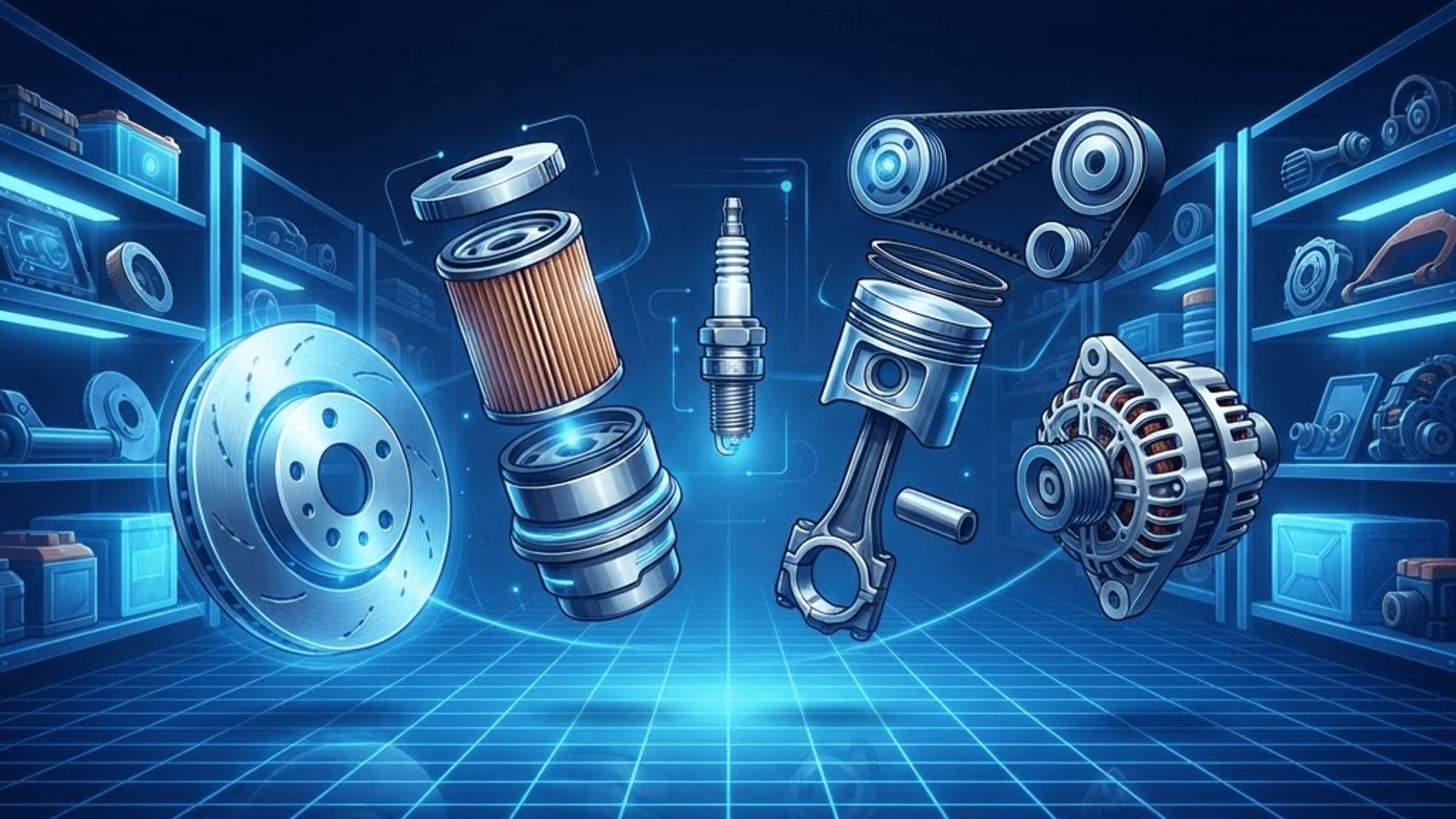
The Auto Parts Supply Chain Around Gedling
Gedling borough and the surrounding Nottingham area support a substantial motor factor and parts retail sector. This reflects both the density of independent garages in the area and a strong tradition of home mechanics, particularly in the more established residential areas of Arnold, Carlton and Netherfield.
The supply chain has several distinct tiers, and understanding them helps both trade buyers and private motorists get better value. At the top sit the manufacturer parts networks supplying franchised dealers. Below them are the national motor factor groups with local branches, then independent factors, then retail chains, then the online market which has grown enormously and now accounts for a large share of private purchases.
Motor Factors and Trade Suppliers
Motor factors are the backbone of the independent repair sector. They hold extensive stock of service items, brake components, suspension parts, filters, electrical components, fluids and consumables, and crucially they offer multiple deliveries per day to garages in their area. A garage in Carlton can order a part at nine in the morning and have it before lunch, which is what makes independent repair economically viable.
The major national factor groups operate branches throughout the Nottingham area, with sophisticated cataloguing systems that identify the correct part from a registration number. Their strength is breadth of stock and reliability of supply. Independent factors compete on service, local knowledge and flexibility, and often build extremely loyal customer bases among smaller garages.
Most factors serve trade primarily but will supply retail customers, sometimes at a higher price tier. For private buyers undertaking their own repairs, a local factor is frequently a better source than a retail chain because the staff know the products and can advise on fitment.
Retail Chains and High Street Outlets
National motoring retail chains have branches accessible from across the borough, stocking consumables, accessories, batteries, bulbs, wiper blades, oils and a range of common service parts. Their advantage is accessibility, extended opening hours and fitting services for items such as batteries and bulbs.
Pricing on commodity items is generally competitive, particularly during frequent promotional periods, though specialist and less common parts are usually better sourced elsewhere. For a motorist who needs a battery on a Sunday morning, these outlets fill a genuine gap.
Main Dealer Parts Departments
Franchised dealer parts departments supply genuine manufacturer components. For certain applications this matters considerably: body panels where fit and corrosion protection are critical, electronic modules requiring specific software, and components on vehicles still under warranty where non-genuine parts could complicate a claim.
Genuine parts carry a price premium, sometimes a substantial one. The important nuance is that many genuine parts are manufactured by the same original equipment supplier that sells the identical component under its own brand at a significantly lower price. A knowledgeable buyer can often obtain the same physical part for considerably less by identifying the actual manufacturer.
Specialist and Performance Suppliers
Specialist suppliers serve particular vehicle types and applications. Classic car parts suppliers cover the remanufactured and new old stock market for older vehicles, which is essential given the strong classic vehicle scene across Nottinghamshire. Performance parts suppliers handle suspension, braking, induction and exhaust upgrades. Commercial vehicle factors serve the van and light truck market that supports the borough's trade businesses.
Vehicle dismantlers and salvage operators form another important source, particularly for body panels, interior trim, glass, engines and gearboxes where new parts are prohibitively expensive. Modern dismantlers operate to environmental standards, catalogue their stock electronically and can locate a specific part nationally through shared inventory networks. For an older vehicle, a good used part is frequently the only economically sensible option.
Understanding Parts Grades
This is where most buyers go wrong. Parts fall into several categories, and the terminology is used loosely.
Genuine parts are supplied in manufacturer packaging through the dealer network. Original equipment parts are made by the same supplier to the same specification but sold under the supplier's own brand, typically at a lower price. Matching quality aftermarket parts are produced by reputable manufacturers to equivalent or sometimes superior specification. Budget aftermarket parts occupy the lowest tier and vary enormously in quality.
For safety-critical components, the grade matters enormously. Brake friction material, suspension components, steering parts and tyres are areas where economising has real consequences. For items such as cabin filters, wiper blades and bulbs, quality aftermarket is entirely adequate.
Counterfeit parts are a genuine problem in the market, particularly for brake pads, filters and electrical components sold through unverified online channels. Buying from established suppliers with traceable supply chains is the reliable defence.
Buying Online Safely
The online parts market offers excellent value and enormous range, but requires care. Verify fitment precisely: many components vary by engine variant, build date, gearbox type and trim level, and a registration lookup is more reliable than a model name match. Check the returns policy before ordering, especially for electrical parts which many suppliers will not accept back once fitted.
Read the brand name rather than just the price. An unbranded listing at a fraction of the market rate for a braking component should be treated with suspicion. Established online factors with proper cataloguing and technical support are a different proposition from anonymous marketplace listings.
Trends Affecting Parts Supply
Electrification is reshaping demand. Electric vehicles require no oil filters, spark plugs, cambelts or exhaust components, and their regenerative braking dramatically extends brake pad life. Factors are adapting by expanding into high-voltage components, thermal management parts and electric vehicle-specific consumables.
Right to repair remains a live issue, covering access to diagnostic data, software and technical information that independents need to compete with dealer networks. The outcome affects what independent garages and parts suppliers can offer.
Remanufacturing has grown substantially, with alternators, starters, turbochargers, steering racks and even engines and gearboxes rebuilt to original specification at significant savings and with lower environmental impact than new manufacture.
Practical Advice for Buyers
Always have the vehicle identification number available, as it is the most reliable identifier for parts lookup. For trade buyers, establishing an account with one or two factors secures better pricing and priority delivery. For private buyers, comparing a local factor against online options often reveals the local price is closer than expected once delivery is included, with the advantage of immediate availability and returns handled in person.
Final Thoughts
Parts supply around Gedling is well developed, with motor factors, retail chains, dealer departments, specialists and dismantlers all accessible. The critical discipline is matching parts grade to application: never economise on safety-critical components, use quality aftermarket confidently for routine consumables, and verify fitment carefully before buying anything online.
Want your brand featured in front of decision-makers? Publish a guest post or get a link insertion in our guides through AAMAX's guest post and link insertion service.
Helpful Links
 SponsoredAAMAX — Full-Service Digital Agency
Write for Us
Share your expertise with our readers. We welcome guest contributions from industry specialists.
Pitch your idea