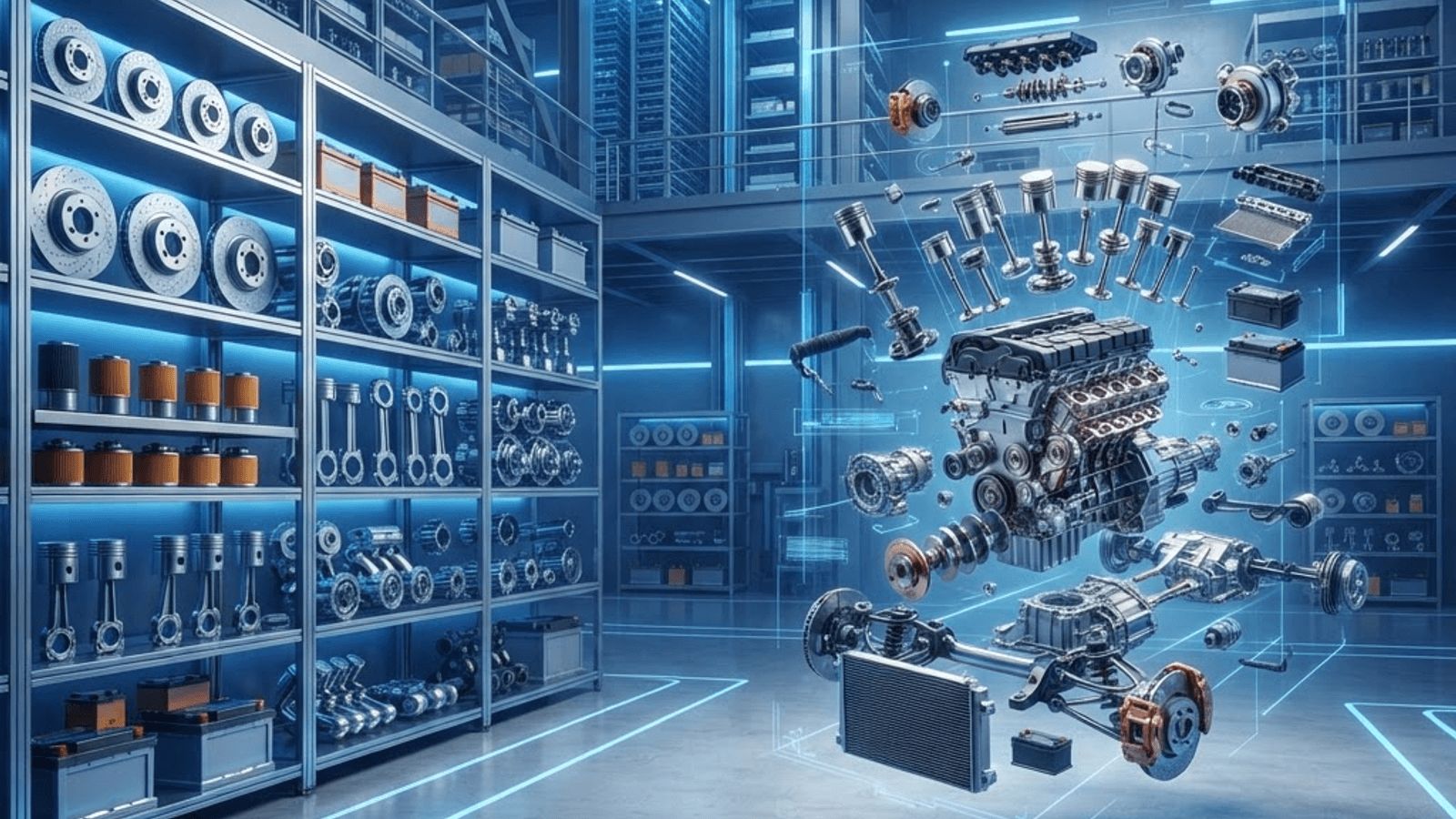
The Parts Supply Network Serving East Ayrshire
Behind every functioning garage and every successful driveway repair sits a parts supply chain that most drivers never think about. In East Ayrshire, that network is unusually well developed for a region of its size, reflecting both the area's engineering heritage and the sheer necessity of car ownership across a largely rural council area.
Supply operates on several levels. Trade factors deliver to garages several times a day, retail chains serve the public from high street and retail park locations, main dealer parts departments supply genuine components, specialist breakers provide used parts for older vehicles, and online retailers ship next day to anywhere in the region. Each channel has a distinct role, and knowing which to use for a given job saves both money and time.
The Main Supply Channels
National motor factors form the trade backbone. Businesses such as Euro Car Parts, GSF Car Parts, Motor Parts Direct and Andrew Page operate branch networks across Scotland with multiple daily deliveries to trade customers. They stock filters, brake components, clutches, suspension parts, belts, electrical items and consumables across a huge vehicle range, and they sell to the public as well as the trade. Their strength is availability: a garage in Kilmarnock can often have a part in hand within two hours.
Retail chains such as Halfords serve the consumer market with bulbs, wipers, batteries, oils, tools, cleaning products and accessories, plus fitting services for many items. They are convenient and accessible but generally more expensive than trade factors on mechanical components.
Independent local factors continue to thrive in Ayrshire. These businesses survive against national competition through counter knowledge, the ability to identify obscure parts from a chassis number and a description, and a willingness to chase down components for older or unusual vehicles. For anyone maintaining a classic or a long-discontinued model, they are invaluable.
Main dealer parts departments supply genuine manufacturer components. These cost more but are correct by definition, which matters for body panels, trim, electronic modules, and anything where fit and software compatibility are critical.
Vehicle dismantlers and breakers across Ayrshire supply used parts, and for certain items they are the only sensible option. Body panels, interior trim, lights, mirrors, doors, engines and gearboxes for older vehicles are frequently available at a fraction of new prices. Reputable dismantlers operate as authorised treatment facilities with proper environmental compliance and parts warranties.
Online specialists including Car Parts 4 Less, Autodoc, Mister Auto and the large marketplace sellers offer wide catalogues and competitive pricing with next-day delivery. The saving is real but so is the risk of ordering the wrong component, and returns take time that a vehicle off the road does not have.
Understanding Part Grades
One of the most common sources of confusion, and of wasted money, is the distinction between part types.
Genuine parts are supplied in manufacturer packaging through dealer networks. They are guaranteed correct and carry a manufacturer warranty, and they cost the most.
Original equipment parts are made by the same supplier that produced the component for the vehicle manufacturer, but sold in the supplier's own packaging. Functionally identical to genuine parts in most cases, and often thirty to fifty per cent cheaper. For braking, filtration, suspension and electrical components this is usually the sweet spot for value.
Quality aftermarket parts come from established manufacturers with strong reputations in specific categories. Many meet or exceed original specification, and for consumable items they represent excellent value.
Budget aftermarket parts vary enormously. For non-critical items the risk is low. For brake components, steering, suspension and safety-related parts, the false economy can be severe: cheap brake discs that warp within months, or pads that fade under load, cost more in repeat labour than the original saving.
Used parts make sense for body panels, glass, trim, wheels and mechanical assemblies on older vehicles where new prices exceed the car's value. Always ask about the donor vehicle's mileage and history, and confirm the warranty period.
Getting the Right Part First Time
Ordering errors are the most frequent frustration in parts buying, and they are largely avoidable.
Use the vehicle identification number. Registration lookup is convenient but imperfect, particularly for vehicles with mid-production changes, imported models or previous major repairs. The VIN identifies the exact build specification.
Check the old part before ordering where possible. Removing the component first, noting the manufacturer's part number stamped on it, and matching that number eliminates almost all ambiguity.
Be aware of variant differences. Engine size, gearbox type, trim level, brake size, suspension specification and even production date can all change the correct part. Two apparently identical cars can require different components.
Buy matched sets. Brake discs and pads, suspension components and belts should be replaced in pairs or as kits. Mixing new and worn components across an axle creates uneven performance and premature failure.
Maintenance Items That Matter Most in Ayrshire
Local conditions shape which parts wear fastest. Brake components suffer heavily from salt corrosion, with discs pitting and calipers seizing more readily than in drier climates. Brake and fuel lines corrode and are a common MOT failure locally. Suspension bushes, springs and shock absorbers take punishment from rural road surfaces. Batteries fail disproportionately in cold weather. Wiper blades and lighting matter more than usual given short winter daylight and frequent rain.
Underbody protection products and cavity wax treatment are worth considering for vehicles the owner intends to keep long term, and several Ayrshire specialists offer professional application.
Tools and the Home Mechanic
The region has a strong culture of self-maintenance. Anyone building a home workshop should prioritise a good socket set, torque wrench, axle stands, a trolley jack, and a basic diagnostic code reader. Torque wrenches in particular are non-negotiable for safety-critical fasteners such as wheel bolts, suspension components and cylinder head bolts.
An affordable Bluetooth diagnostic dongle paired with a phone app now provides fault code reading and live sensor data that was once dealer-only, and it transforms the ability to diagnose problems before spending money on parts.
Buying Well
The sensible approach is to match the part grade to the job. Use original equipment or quality aftermarket components for anything affecting safety or reliability, genuine parts where fit and electronics are critical, used parts for cosmetic and non-critical items on older vehicles, and budget options only where consequences of failure are minor.
Build a relationship with a local counter team who know their catalogue. In East Ayrshire, the accumulated knowledge behind a good parts counter, particularly for older and unusual vehicles, remains worth more than a few pounds saved on an online order that turns out to be the wrong variant.
Want your brand featured in front of decision-makers? Publish a guest post or get a link insertion in our guides through AAMAX's guest post and link insertion service.
Helpful Links
 SponsoredAAMAX — Full-Service Digital Agency
Write for Us
Share your expertise with our readers. We welcome guest contributions from industry specialists.
Pitch your idea