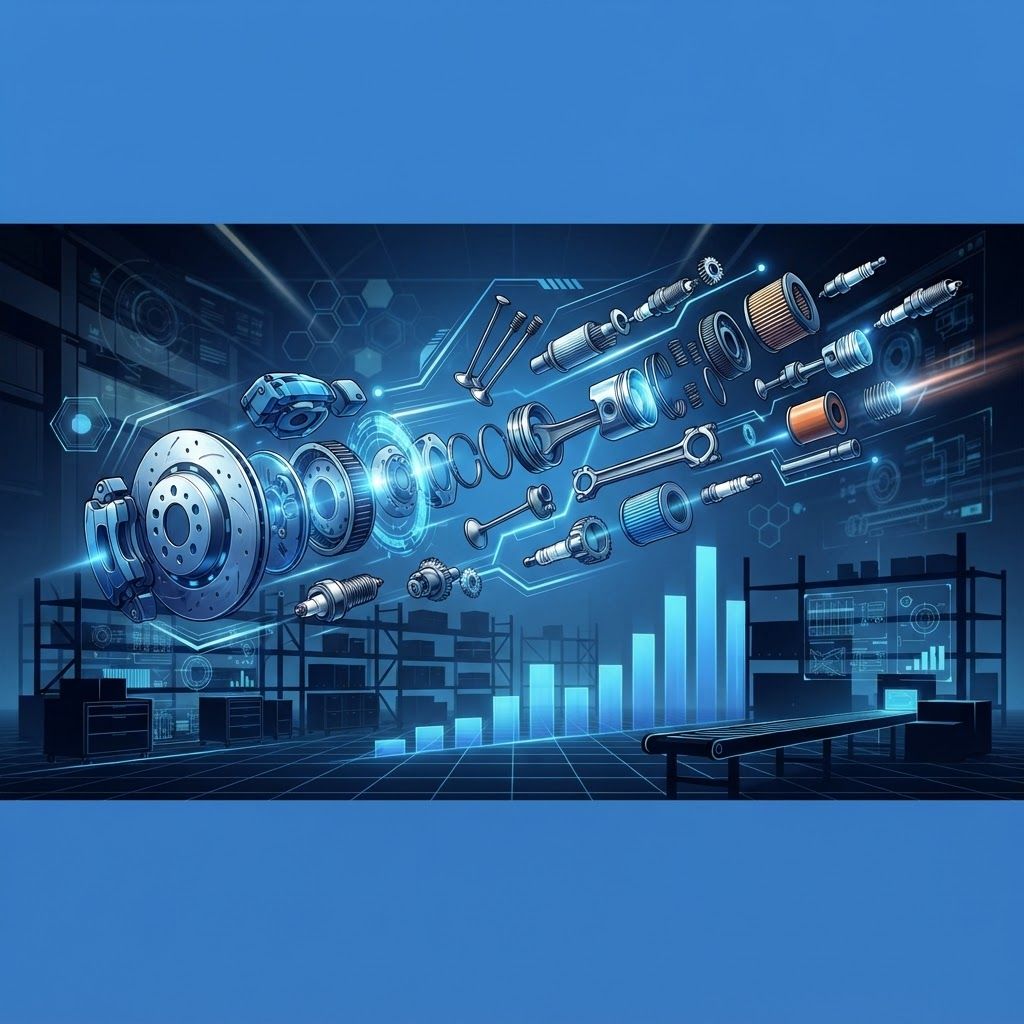
The Parts Supply Chain Behind Every Repair
Every successful vehicle repair in the Causeway Coast and Glens depends on a supply chain that most drivers never see. Behind each garage in Coleraine, Ballymoney or Limavady sits a network of factors, distributors and specialist suppliers who can deliver the correct component, often within hours. In a rural borough where the nearest alternative supplier might be an hour's drive away, the strength of that network directly determines how quickly a vehicle returns to the road.
The parts market has changed considerably in recent years. Online distribution has increased choice and price transparency, but it has also flooded the market with components of wildly varying quality. Meanwhile, vehicles have become more complex, with coded electronic modules and manufacturer-specific fluids that cannot simply be substituted. Understanding the supplier landscape helps both trade buyers and private owners avoid costly mistakes.
The Ten Supplier Categories Serving the Borough
1. Trade Motor Factors
Motor factors are the workhorses of the industry, supplying garages with filters, brake components, clutches, belts, bearings and consumables on trade accounts with same-day or next-day delivery. Their value lies in breadth of stock and catalogue accuracy, allowing a technician to phone through a registration number and receive the correct part without guesswork. Established factors serving the North Coast typically run multiple delivery vans daily around the borough.
2. Franchised Dealer Parts Departments
Main dealer parts counters supply genuine manufacturer components with full warranty backing. For items where fit and function must be exact, such as engine management sensors, body panels, trim clips and safety-critical electronic modules, genuine parts remain the safest option. Dealer departments also handle software coding requirements and can confirm whether a part number has been superseded by an updated revision.
3. Online Parts Retailers and Marketplaces
Digital platforms have transformed access for home mechanics across rural areas of the Glens where physical suppliers are distant. The advantages are price comparison, extensive catalogues and detailed fitment filters. The risks are counterfeit branding, inaccurate listings and complicated returns. Buyers should verify part numbers against their vehicle rather than relying solely on a compatibility checker.
4. Vehicle Dismantlers and Recycled Parts Yards
Authorised treatment facilities and salvage yards supply used components at a fraction of new prices, and for older vehicles they are sometimes the only realistic source. Body panels, doors, mirrors, alternators, gearboxes and interior trim are commonly sourced this way. Recycled parts also carry a genuine environmental benefit, reducing manufacturing demand and landfill. Reputable dismantlers provide warranties and record donor vehicle details.
5. Commercial Vehicle and Agricultural Parts Specialists
Given the borough's strong farming and construction sectors, suppliers focused on vans, trucks, tractors and plant equipment play a significant role. They stock heavy-duty filtration, hydraulic hoses and fittings, PTO components, braking systems and electrical items suited to demanding use. Rapid availability matters enormously here, since idle machinery during harvest or a construction phase is expensive.
6. Tyre Wholesalers and Distributors
Tyre distribution operates as its own ecosystem, supplying fitting centres with everything from budget passenger tyres to premium winter and all-season compounds, agricultural tyres and commercial casings. The growth of all-season tyres has been notable in Northern Ireland, offering a sensible compromise for a climate with frequent rain, occasional ice and rare deep snow.
7. Auto Electrical and Battery Specialists
Batteries, alternators, starter motors, wiring, lighting and increasingly complex sensor components form a specialist category of their own. Suppliers in this area advise on correct battery specification, which matters greatly for vehicles with stop-start systems requiring AGM or EFB technology. Fitting a standard battery to a stop-start vehicle is a common and expensive error.
8. Performance and Tuning Parts Suppliers
The region's motorsport culture, driven by the North West 200 and a healthy rally and track day scene, supports suppliers of uprated brakes, suspension, exhaust systems, induction kits and engine internals. These businesses often provide technical advice alongside the product, which is essential when modifying a vehicle that must remain road legal and insurable.
9. Body Panel, Glass and Paint Suppliers
Accident repair centres rely on suppliers of aftermarket and genuine panels, bonding adhesives, automotive glass and colour-matched refinishing systems. Modern paint supply involves computerised colour matching against the vehicle's paint code, accounting for factory variance and fading. Suppliers who provide accurate mixing support materially affect the quality of a finished repair.
10. Reconditioned Component Remanufacturers
Remanufactured engines, gearboxes, turbochargers, DPFs, steering racks and injectors offer a middle path between new and used. Proper remanufacturing involves complete disassembly, replacement of all wear components and testing to original specification, which distinguishes it from simple refurbishment. For a ten-year-old family car in the borough, a remanufactured turbo can be the difference between a viable repair and a scrapped vehicle.
Understanding Parts Quality Tiers
Component quality generally falls into recognisable tiers. Original equipment parts are made by the manufacturer's contracted supplier and carry the vehicle maker's branding. OE-equivalent parts come from the same factory but in the supplier's own packaging, often at lower cost with identical specification. Quality aftermarket brands manufacture to their own engineering standards, sometimes exceeding original specification in areas such as brake friction material. Budget aftermarket parts vary enormously and should be approached cautiously for anything safety related. Counterfeit parts, which imitate established branding, represent a genuine safety hazard and should be avoided entirely by buying from established suppliers.
Practical Buying Guidance
Always quote your vehicle identification number rather than just the model and year, since manufacturers frequently change specifications mid-production. Photograph the old component before removal to compare connector types and mounting points. Keep receipts and packaging, as most warranties require proof of purchase and professional fitting for certain items. For electronic modules, confirm before purchase whether coding or programming is required, as an uncoded module is useless without dealer-level software.
Sustainability and the Local Parts Economy
There is growing awareness across the borough of the environmental value in repairing rather than replacing vehicles. Every recycled panel and remanufactured component reduces material demand and keeps serviceable vehicles on the road longer. Local suppliers who support this circular approach contribute meaningfully to both household budgets and regional sustainability goals, while keeping skilled trade employment within the Causeway Coast and Glens.
Want your brand featured in front of decision-makers? Publish a guest post or get a link insertion in our guides through AAMAX's guest post and link insertion service.
Helpful Links
 SponsoredAAMAX — Full-Service Digital Agency
Write for Us
Share your expertise with our readers. We welcome guest contributions from industry specialists.
Pitch your idea