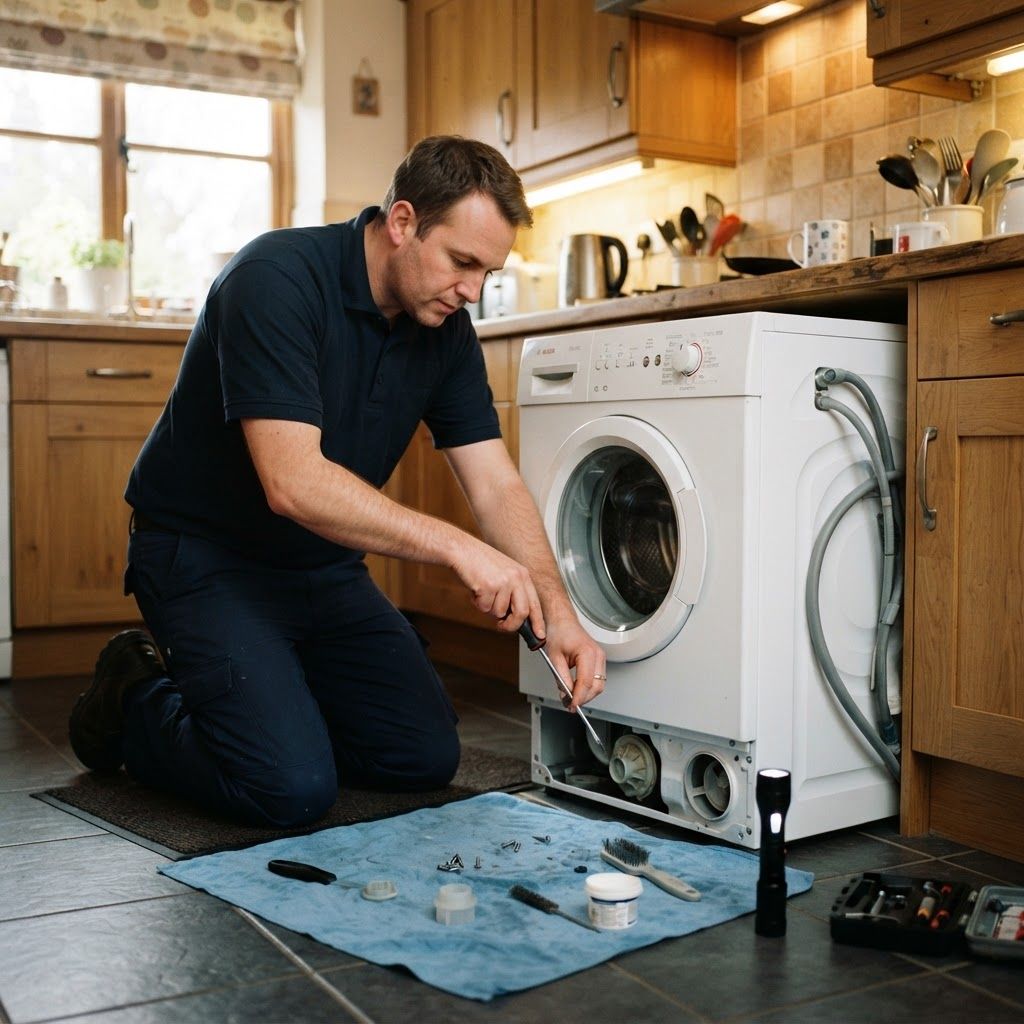
The Renewed Case for Repair
For a period, replacing a failed appliance felt easier than fixing it. That calculation has shifted. Appliance prices have risen, delivery and installation add cost, and awareness of the environmental impact of discarded white goods has grown considerably. A washing machine that fails at six years old may have another six in it for the price of a pump and a couple of hours of labour.
Barnsley has a healthy repair sector, ranging from long-standing independent engineers to manufacturer-approved specialists. What unites the best of them is diagnostic honesty: a willingness to tell you when a repair is not economic, rather than replacing parts speculatively until the bill approaches the cost of a new machine.
Qualifications and Safety Considerations
Appliance repair spans several regulatory areas. Any work on gas cookers, hobs or gas-fired tumble dryers must be undertaken by a Gas Safe registered engineer holding the relevant appliance category. Repairs to refrigeration circuits involving refrigerant handling require F-Gas certification. Electrical repairs demand competence in safe isolation, insulation resistance testing and earth continuity verification before an appliance is returned to service.
Manufacturer approval is worth noting too. Some brands restrict certain diagnostic tools, firmware and genuine spare parts to accredited engineers. For appliances still under warranty, using a non-approved repairer can invalidate cover, so it is always worth checking before booking.
Ten Appliance Repair Specialists in Barnsley
Barnsley Appliance Repairs is a broad-scope independent covering washing machines, dryers, dishwashers, ovens, hobs and refrigeration. It carries a substantial parts stock, which improves first-visit fix rates, and offers a fixed diagnostic fee that is credited against the repair if you proceed.
Oakwell White Goods Service focuses on laundry appliances. Bearing replacement, drum shaft repair, pump and motor faults and control board diagnosis form the bulk of its work, and it is often recommended for machines other engineers have declared beyond repair.
Dearne Valley Oven & Cooker Repairs specialises in cooking appliances, both electric and gas, with Gas Safe registered engineers for gas hobs and range cookers. It also undertakes professional oven cleaning, which frequently resolves the intermittent faults that carbon build-up causes on sensors and fans.
Penistone Refrigeration Services handles fridges, freezers, American-style units and wine coolers, holding F-Gas certification for sealed system work. It covers the western villages where the smaller domestic-only firms often will not travel.
Silkstone Integrated Appliance Care concentrates on built-in and integrated appliances. Removing, repairing and reinstating an appliance housed within fitted furniture without damaging kitchen units is a distinct skill, and this firm's careful approach is valued by owners of higher-end kitchens.
Worsbrough Dishwasher & Laundry Repairs works across the water-using appliance categories, dealing with leaks, drainage faults, heating element failures and blocked filtration. Its engineers are known for explaining causes clearly so problems do not simply recur.
Cudworth Small Appliance Workshop serves a segment many overlook, repairing vacuum cleaners, coffee machines, microwaves, food processors and similar items on a workshop basis. For quality kitchen equipment, repair is often far more sensible than replacement.
Royston Appliance Installations combines repair with correct installation and commissioning. Improper installation is a surprisingly common root cause of premature failure, from unlevelled washing machines to inadequate tumble dryer ventilation, and this firm addresses both.
Stairfoot Commercial Catering Repairs supports Barnsley's hospitality sector, maintaining commercial ovens, dishwashers, refrigeration and extraction. Response speed is critical for businesses, and its priority callout arrangements reflect that.
Barugh Green Domestic Appliance Care completes the list as a well-regarded local independent offering repair alongside annual servicing plans, which appeal particularly to landlords wanting to reduce mid-tenancy breakdowns.
Repair or Replace? A Practical Framework
A useful rule of thumb is to weigh the repair cost against the appliance's age and remaining expected life. If a repair costs less than a third of a comparable replacement and the appliance is within its typical lifespan, repair usually makes sense. Where a major component such as a sealed refrigeration system or a compressor has failed on an older unit, replacement is often the better decision.
Energy efficiency deserves consideration but is frequently overstated. A modern appliance may use less electricity, yet manufacturing a new machine carries a significant embodied carbon cost. For appliances used moderately, repair generally remains the lower-impact choice overall.
Parts availability is the practical constraint. Regulations have improved the situation, requiring manufacturers to supply certain spares for a defined period, but availability still varies considerably by brand. A good engineer will tell you quickly whether parts are obtainable.
Extending Appliance Life
Most premature failures trace back to maintenance rather than manufacturing. Washing machines benefit from a monthly high-temperature maintenance wash to clear detergent residue and biofilm, and from having filters checked regularly. Overloading accelerates bearing wear more than almost anything else.
Dishwashers need filters cleaned, spray arm jets kept clear and salt and rinse aid maintained in hard water areas. Tumble dryers require lint filters cleared after every cycle and condenser units cleaned periodically; restricted airflow is both an efficiency and a fire risk issue. Refrigeration units need condenser coils kept dust-free and adequate ventilation clearance, which built-in installations frequently lack.
Trends in the Repair Sector
The right-to-repair movement has had a tangible effect, improving spare parts availability and repair documentation. Alongside this, appliance electronics have become more sophisticated, meaning modern repair increasingly involves fault code interpretation, firmware updates and control board diagnostics rather than purely mechanical work.
Connected appliances are beginning to change service delivery too, with some machines able to report faults remotely so an engineer arrives with the correct part. Locally, there is also growing demand for repair-inclusive service plans, particularly among landlords and larger households seeking predictable costs rather than unexpected bills.
Booking a Repair Sensibly
Have the model and serial number ready; it is usually on a rating plate inside the door or on the rear. Describe the symptoms precisely, including any error codes, as this helps the engineer bring likely parts. Ask about the diagnostic charge, whether it is credited against repair, and what guarantee applies to parts and labour.
Confirm the engineer holds the appropriate certification for your appliance type, particularly for gas and refrigeration work. And be realistic: a competent engineer who advises against a repair is giving you valuable information, not losing a sale. That honesty is the clearest sign you have found a repairer worth keeping.
Want your brand featured in front of decision-makers? Publish a guest post or get a link insertion in our guides through AAMAX's guest post and link insertion service.
Helpful Links
 SponsoredAAMAX — Full-Service Digital Agency
Write for Us
Share your expertise with our readers. We welcome guest contributions from industry specialists.
Pitch your idea