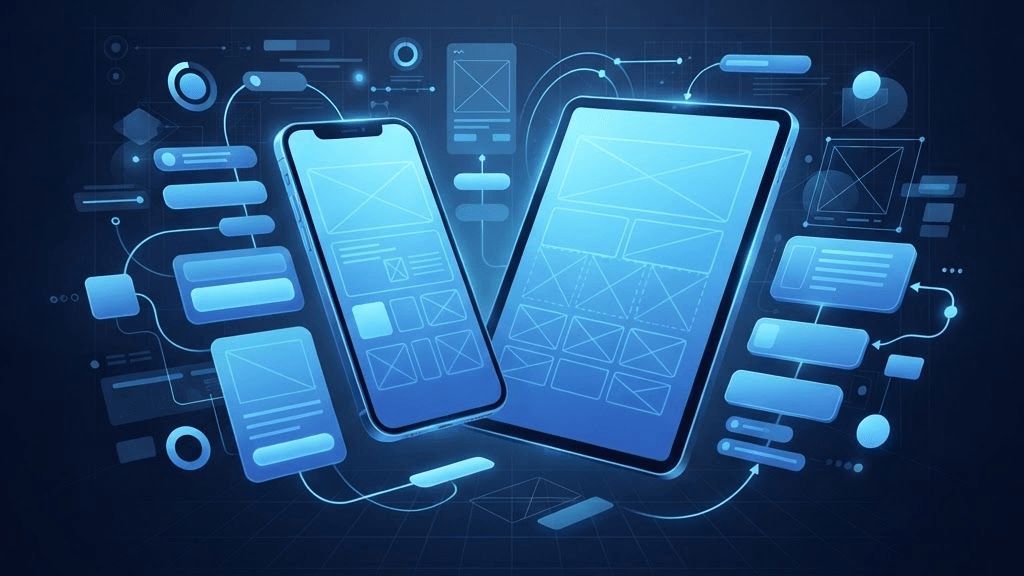
Mobile Applications for East Lothian Businesses
App development has matured considerably. Where once every business wanted an app regardless of purpose, the question now is more disciplined: does this organisation need a dedicated application, or would a well-built mobile website serve better? In East Lothian, genuine app use cases have emerged across several sectors — golf club membership and tee booking, hotel and restaurant loyalty, farm and estate operations, community and event services, and health and fitness programmes.
The county benefits from strong development capability nearby in Edinburgh alongside a growing population of independent mobile developers working remotely from East Lothian towns. Together they cover everything from small utility apps to complex multi-platform products with backend infrastructure.
1. Waracle
Waracle is one of Scotland's most established mobile development companies, delivering native iOS and Android applications for clients in financial services, energy, healthcare and consumer sectors. Its strength lies in handling complex, regulated projects with proper attention to security, accessibility and long-term maintainability — relevant for East Lothian organisations building products that handle sensitive data or must meet compliance standards.
2. Screenmedia
Screenmedia combines digital product design with development, emphasising user research and service design before building. This approach reduces the common failure mode where apps are technically sound but poorly matched to actual user needs. For East Lothian clients investing significant budget, front-loading discovery consistently improves outcomes.
3. Storm ID
Storm ID delivers digital products across web and mobile with notable experience in public sector and health applications. Organisations building apps that must meet accessibility regulations, integrate with established systems or serve diverse user groups benefit from teams accustomed to those constraints.
4. Whitespace
Whitespace blends brand and creative capability with technical delivery, producing applications where design quality and brand consistency are priorities alongside functionality. For consumer-facing East Lothian brands in hospitality, tourism and retail, where the app forms part of the overall customer experience, this combination is valuable.
5. Eyekiller
Eyekiller provides digital development services including mobile-focused web applications and progressive web apps. For many smaller East Lothian businesses, a progressive web app delivers most of the benefits of a native application — offline capability, home screen presence, push notifications — at substantially lower cost and without app store approval processes.
6. Cross-Platform Development Specialists
Studios specialising in cross-platform frameworks build applications that run on both iOS and Android from a shared codebase. This typically reduces development and maintenance costs considerably compared with maintaining two native applications. For East Lothian businesses where the app is an operational tool rather than a performance-critical consumer product, cross-platform is usually the pragmatic choice.
7. Independent Mobile Developers in East Lothian
Experienced independent iOS and Android developers live and work across the county, many having built careers at larger technology companies before relocating. They take on focused projects directly, offering senior expertise, direct communication and pricing well below agency rates. For a defined app with clear requirements, this route frequently produces excellent results.
8. Hospitality and Golf App Providers
Specialist providers build applications for hotels, restaurants and golf clubs — covering booking, loyalty, mobile ordering, digital membership cards, course guides and scoring. Given East Lothian's exceptional concentration of golf courses and hospitality venues, buying into an established platform is often faster and cheaper than commissioning bespoke development, while still allowing branding and configuration.
9. Backend and API Development Partners
Most apps are only as good as the systems behind them. Backend specialists build the databases, application programming interfaces, authentication systems and integrations that apps depend upon, connecting mobile front ends to booking engines, payment processors, customer databases and operational software. Underinvesting here is a frequent cause of apps that work initially then fail as usage grows.
10. No-Code and Low-Code Platform Consultants
For straightforward requirements, no-code and low-code platforms allow functional applications to be built without traditional development, at a fraction of the cost and timeline. Consultants specialising in these platforms serve East Lothian community organisations, small businesses and startups testing concepts. The trade-off is reduced flexibility and platform dependency, but for validating an idea before committing to custom development, it is often the sensible first step.
Do You Actually Need an App?
An honest assessment saves considerable expense. Apps make sense when customers interact frequently — daily or weekly rather than annually; when offline functionality is required; when device features such as camera, location or notifications are central; or when the app serves internal operations for staff. Where the primary need is information, occasional booking or one-off transactions, a fast mobile-optimised website usually serves better and reaches more people, since it requires no download.
The Development Process
A well-run project follows recognisable stages: discovery establishing user needs and business requirements; design covering user flows, wireframes and visual interface; technical architecture defining platform, backend and integrations; iterative development with regular reviewable builds; testing across devices, operating system versions and real-world conditions; app store submission and review; launch; and ongoing maintenance. That final stage is routinely underestimated — operating system updates alone require periodic work to maintain compatibility.
Budgeting Realistically
App costs vary enormously with complexity. A simple informational or booking app built on existing platforms sits at the lower end. A custom application with user accounts, payments, backend systems and integrations costs substantially more. Beyond initial build, budget for hosting, third-party services, app store fees, support and at least annual maintenance. Organisations that plan only for initial development frequently find themselves with an app that degrades within two years.
Driving Adoption After Launch
Building the app is typically easier than getting it used. Successful launches include clear communication of the benefit to users, straightforward onboarding, incentives for initial download where appropriate, staff training so teams actively promote it, and ongoing value that justifies keeping it installed. Apps offering genuine convenience — skipping a queue, accessing a membership, tracking an order — retain users; apps that simply replicate a website do not.
Conclusion
East Lothian organisations have access to capable app development partners at every scale, from Scotland's leading mobile studios to independent developers and platform specialists within the county. The most successful projects begin with honest assessment of whether an app is the right solution, followed by disciplined attention to user needs, backend quality and long-term maintenance.
Want your brand featured in front of decision-makers? Publish a guest post or get a link insertion in our guides through AAMAX's guest post and link insertion service.
Helpful Links
 SponsoredAAMAX — Full-Service Digital Agency
Write for Us
Share your expertise with our readers. We welcome guest contributions from industry specialists.
Pitch your idea