

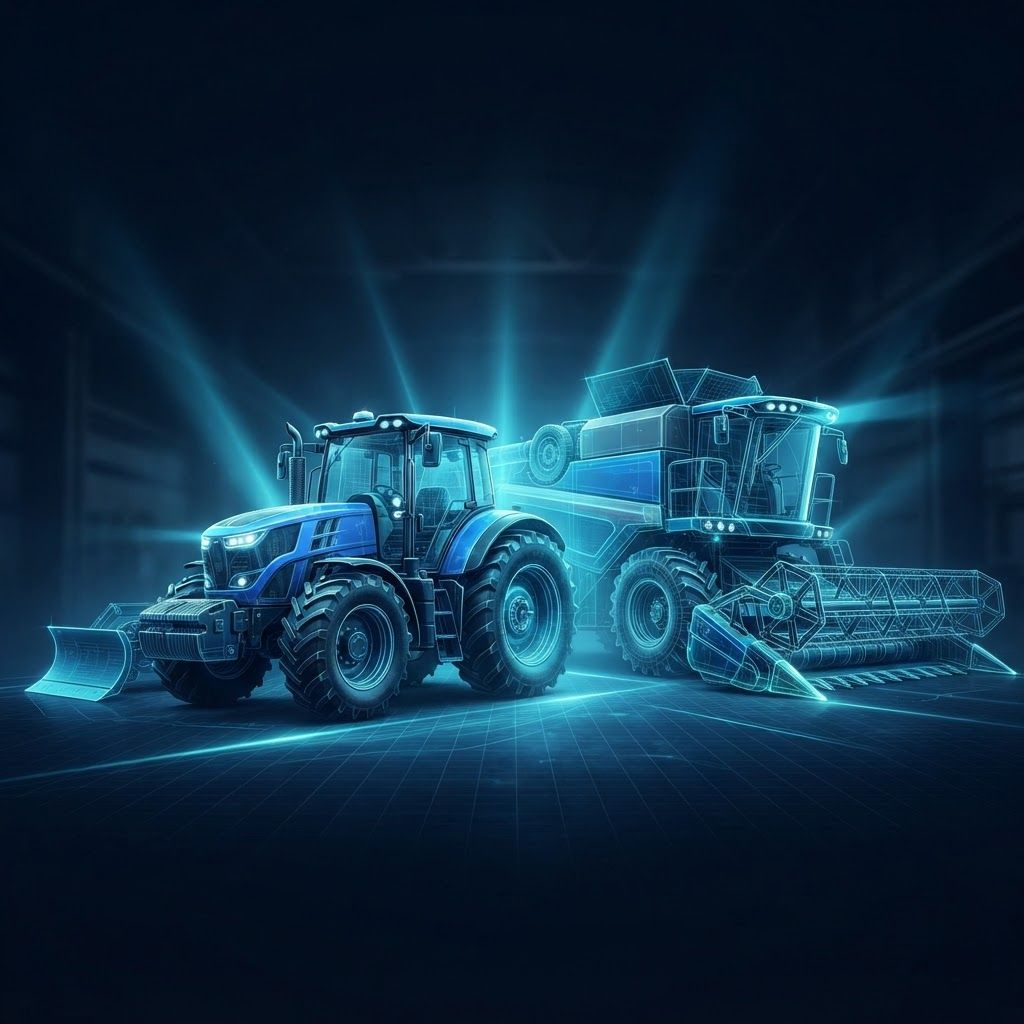
Machinery Matters More Than Ever
Around York, where heavy clays sit alongside light sandy loams and weather windows can close without warning, machinery decisions carry real financial weight. A tractor or combine is rarely just a purchase, it is a multi-year commitment involving finance, service intervals, parts availability, operator training and eventual residual value. Farmers in the Vale of York tend to be pragmatic buyers, weighing dealer proximity and backup as heavily as headline specification.
The equipment landscape has also changed character. Machines are now software platforms as much as mechanical assemblies, with guidance systems, telematics, section control and data connectivity influencing performance as much as horsepower or working width.
How to Evaluate an Agricultural Equipment Brand
Four considerations dominate sensible machinery selection. Dealer support comes first, because a highly capable machine with a distant dealer and slow parts supply will cost more in downtime than it saves in efficiency. Second is fitness for local conditions, particularly weight, tyre options and flotation on soils prone to compaction. Third is technology openness, since proprietary systems that refuse to communicate with other brands create long-term friction. Fourth is residual value, which quietly determines the true cost of ownership.
Ten Agricultural Equipment Brands Prominent Around York
1. John Deere
Widely present across the Vale of York, John Deere is known for build quality, cab ergonomics and one of the most developed precision farming ecosystems in the industry. Its guidance, documentation and telematics platforms are mature and well supported, and residual values remain consistently strong. The trade-off is a relatively closed ecosystem and premium pricing.
2. New Holland
New Holland has a long-established following in Yorkshire, particularly for combines and mid-range tractors. The brand offers strong value, straightforward serviceability and a good spread of models for mixed farms. Its combine harvester range in particular has a solid reputation on the region's cereal ground.
3. Case IH
Case IH is respected for high-horsepower tractors and its continuously variable transmission offerings, making it a common choice for large arable operations running wide cultivation and drilling equipment. Operators frequently praise the visibility and control layout.
4. Massey Ferguson
With deep historical roots in British farming, Massey Ferguson remains popular for its practicality and value. The brand suits livestock and mixed farms particularly well, offering robust, uncomplicated machines that are economical to maintain and simple for a range of operators to use confidently.
5. Fendt
Fendt occupies the premium end of the tractor market, with sophisticated transmissions, exceptional fuel efficiency under load and refined operator environments. Uptake around York has grown among larger businesses where high annual hours justify the initial cost through lower running expenses.
6. Claas
Claas is strongest in harvesting and forage equipment. Its combines and forage harvesters are widely used by contractors serving the York area, and the brand's balers and mowers have a strong reputation for throughput and consistent bale density.
7. Kuhn
Rather than tractors, Kuhn focuses on implements, and does so with considerable engineering depth. Ploughs, power harrows, seed drills, fertiliser spreaders, mowers and diet feeders all feature in its range. Build quality and precise setting adjustment make Kuhn implements a common sight behind tractors of every colour.
8. Amazone
Amazone has built its reputation on application accuracy, particularly in fertiliser spreaders and sprayers. For farms under pressure to justify every kilogram of nitrogen, spread pattern consistency and boom stability translate directly into agronomic and environmental performance.
9. Vaderstad
Cultivation and drilling specialists, Vaderstad machines are widely used across the Vale of York's arable ground. The brand's disc cultivators and precision drills suit high-output establishment work, and its equipment has adapted well to reduced tillage systems as farmers move away from routine ploughing.
10. JCB
British engineering with genuine agricultural credibility, JCB is dominant in telescopic handlers and has a strong following for its high-speed tractors used in haulage-intensive operations. On livestock units and grain stores, the telehandler has become as essential as the tractor, and JCB's stability and lift geometry are widely trusted.
Precision Technology and Data
The most significant equipment development of recent years is not mechanical. Satellite guidance has moved from luxury to expectation, reducing overlap and operator fatigue. Section control on sprayers and spreaders trims input use at field margins and in awkward corners. Variable rate application, driven by soil scanning and yield history, allows fertiliser and seed to be matched to actual field potential.
Data portability has become a genuine purchasing consideration. Farmers increasingly want their agronomy records, machinery data and mapping to flow between systems without manual re-entry. Brands supporting open data standards are gaining favour, particularly on mixed-fleet farms, which describes most operations around York.
Sustainability and Soil Protection
Machinery weight has become a live agronomic issue. As tractors and harvesters have grown, compaction risk on the Vale's heavier soils has increased. The response has been visible, with wider tyres, lower inflation pressures, central tyre inflation systems, tracked options and controlled traffic farming layouts all gaining ground.
Alternative power is beginning to arrive. Electric telehandlers and yard equipment are practical now, and hydrogen and biomethane tractor prototypes point towards longer-term change in field operations. For most York farms, however, the nearest term gains come from reduced passes and better matched implements rather than new fuel types.
Buying, Leasing and Contracting
Ownership is no longer the default. Contract hire and lease arrangements shift maintenance risk and smooth cash flow, which appeals in volatile commodity markets. Machinery sharing between neighbouring farms is quietly common, and using contractors for peak-demand operations such as harvesting or slurry application often makes better financial sense than owning specialised kit for a fortnight's annual use.
Final Thoughts
The equipment brands with the strongest reputations around York earn them through reliability and support as much as engineering. Whether the priority is premium efficiency, dependable value or specialist implement precision, the region is well served. The best decisions come from honestly assessing annual usage, soil type and available dealer backup rather than following fashion.
Want your brand featured in front of decision-makers? Publish a guest post or get a link insertion in our guides through AAMAX's guest post and link insertion service.
Helpful Links
 SponsoredAAMAX — Full-Service Digital Agency
Write for Us
Share your expertise with our readers. We welcome guest contributions from industry specialists.
Pitch your idea

