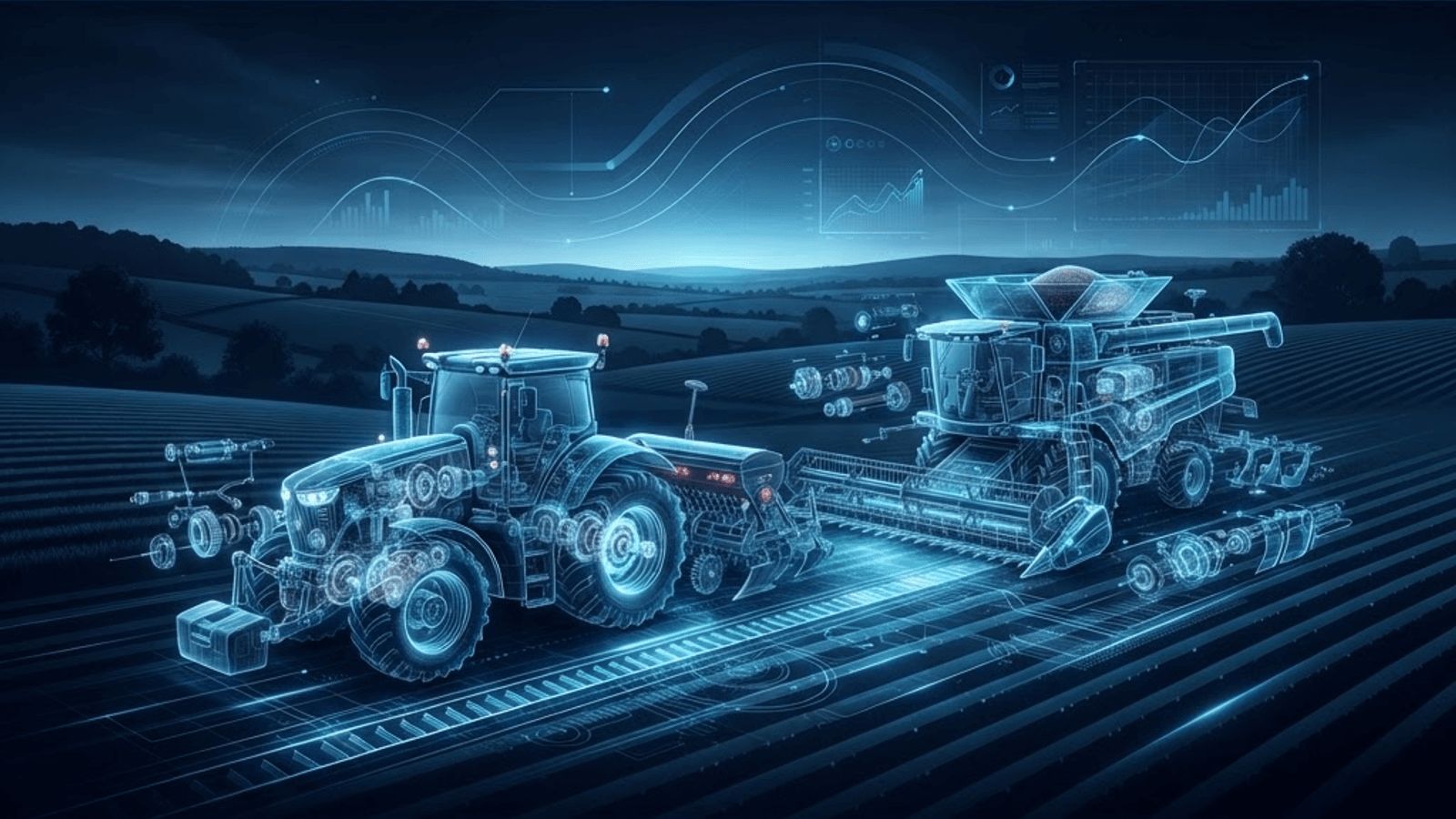
Why Machinery Choice Matters in Cotswold Farming
Farming in West Oxfordshire places particular demands on machinery. The district's brashy limestone soils are abrasive and can be unforgiving on cultivation equipment. Field sizes vary considerably, with some large open arable blocks alongside smaller, awkwardly shaped parcels bounded by stone walls and mature hedgerows. Narrow lanes between holdings restrict transport width, and undulating ground demands stability and traction.
Against this backdrop, machinery selection is a strategic decision rather than a simple purchase. Equipment represents one of the largest capital commitments a farm business makes, and the wrong choice affects timeliness, fuel efficiency, soil condition and labour requirements for a decade or more.
Technology Trends in Agricultural Machinery
Precision agriculture has become standard rather than exceptional. Satellite guidance with centimetre-level accuracy eliminates overlap on cultivation and spraying passes, reducing input use and fuel consumption. Section control on sprayers and drills prevents double application on headlands and irregular field shapes, which is particularly valuable given the varied field geometry across the district.
Data integration is advancing rapidly. Modern machinery generates detailed records of yield, soil condition, application rates and machine performance, feeding farm management systems that inform future decisions. The value lies not in the data itself but in the ability to act on field variation with precision.
Alternative power sources are emerging. Electric compact tractors and telehandlers are now practical for yard work and horticulture, while methane and biofuel-capable machines are being trialled for field operations. Full electrification of high-draught field work remains some way off, but the direction is clear.
Controlled traffic farming and reduced tillage have driven demand for wider machinery working on fixed wheelways, minimising compaction across the majority of field area and supporting the soil health objectives central to regenerative practice.
The Top 10 Agricultural Equipment Brands and Dealers in West Oxfordshire
1. Windrush Tractor and Machinery
A principal dealer serving the district with a full range of tractors from compact utility models to high-horsepower field units. Their reputation rests on service capability, with mobile engineers covering the area and an emphasis on minimising downtime during critical operational windows. Parts availability and demonstration access are consistently rated highly by local farmers.
2. Cotswold Harvesting Systems
Specialising in combine harvesters, forage harvesters and associated headers, this dealer supports the district's substantial arable sector. Pre-harvest inspection programmes and harvest-season engineer availability are central to their offering, recognising that a combine breakdown in a narrow weather window can cost a farm dearly.
3. Evenlode Cultivation Equipment
Supplying ploughs, subsoilers, discs, tines and combination cultivators, this business has deep knowledge of matching implements to Cotswold soil types. Their advice on wearing metal specification for abrasive brashy ground saves customers considerable cost over time, and they carry extensive stock of wearing parts.
4. Thames Valley Precision Drilling
Focused on seed drills including direct, minimum tillage and conventional systems, this supplier has supported many local farms through the transition to reduced cultivation. Their technical setup service ensures accurate seed placement and even establishment, which is critical when direct drilling into varied residue conditions.
5. Chipping Norton Sprayers and Application Technology
Providing self-propelled and trailed sprayers, fertiliser spreaders and application control systems, this dealer combines equipment supply with calibration and testing services. Accurate application is both an economic and a regulatory matter, and their expertise helps farms achieve compliance alongside efficiency.
6. Carterton Telehandler and Loader Supply
Materials handling equipment is indispensable on modern farms, and this supplier offers telehandlers, loaders, attachments and handling accessories. Their machines serve everything from grain and bale handling to construction work on farm buildings, and their attachment range allows a single machine to perform many roles.
7. Oxfordshire Grassland and Forage Machinery
Serving livestock producers with mowers, tedders, rakes, balers and wrapping equipment, this business understands the tight timing of silage and hay making. Machine reliability during short weather windows is the primary consideration, and their service response during the forage season is structured accordingly.
8. Burford Livestock Handling Systems
Supplying cattle crushes, sheep handling systems, weighing equipment, feed barriers and housing fittings, this supplier focuses on safety and animal welfare. Well-designed handling equipment reduces stress for stock and injury risk for operators, while improving the practicality of routine health management.
9. Witney Agricultural Technology and Guidance
Specialising in GPS guidance, autosteer, yield mapping, telematics and farm management software integration, this business retrofits precision capability to existing machinery as well as supplying new systems. Their training support helps farms realise value from technology rather than simply owning it.
10. Wychwood Used Machinery and Refurbishment
Not every farm needs new equipment, and this dealer supplies inspected, refurbished machinery with warranty cover. For smaller holdings and contractors managing capital carefully, quality used machinery offers a practical route to capability at substantially lower cost.
How to Choose Agricultural Equipment
Match machinery to your actual acreage and operational window rather than aspiration. Oversized equipment carries unnecessary capital and running costs, while undersized machinery creates timeliness penalties that damage yield. Calculate required work rates honestly, allowing for realistic field efficiency and travel time between parcels.
Dealer support frequently matters more than brand. Assess engineer availability, parts stockholding, response times during peak season and the quality of setup and training. A slightly less prestigious brand with excellent local backup usually outperforms a premium machine with distant support.
Consider total cost of ownership including depreciation, fuel, repairs, wearing parts and residual value. Also evaluate whether ownership, hire or contracting is the right model. For operations performed only a few days each year, contracting almost always represents better value than purchase.
The Outlook for Farm Machinery in the District
Expect continued advances in automation, with autonomous and semi-autonomous field operations moving from trial to practical application. Precision technology will become more affordable and more deeply integrated with agronomic decision-making. For West Oxfordshire farms, machinery that supports soil health, reduces input use and performs reliably in variable conditions will deliver the strongest returns.
Want your brand featured in front of decision-makers? Publish a guest post or get a link insertion in our guides through AAMAX's guest post and link insertion service.
Helpful Links
 SponsoredAAMAX — Full-Service Digital Agency
Write for Us
Share your expertise with our readers. We welcome guest contributions from industry specialists.
Pitch your idea