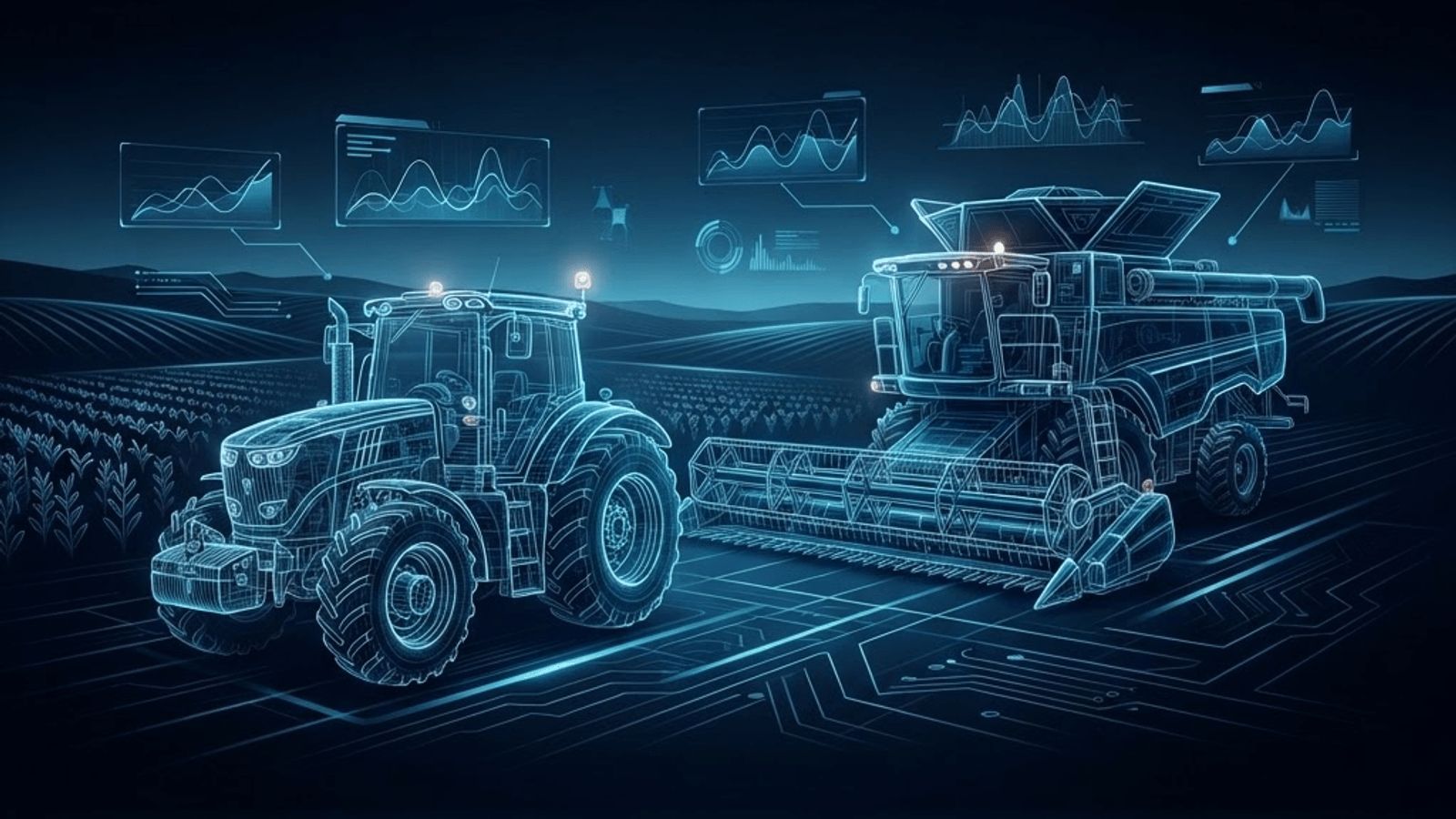
Machinery for a Difficult Landscape
Machinery choice in the High Weald is dictated by the land. Fields around Tunbridge Wells are small and irregular, bounded by ancient hedgerows and shaws, often sloping, and frequently underlain by heavy clay that carries a short workable window in both spring and autumn. Access is via narrow sunken lanes that make oversized equipment genuinely impractical. The result is that the machinery which dominates East Anglian arable farming is often the wrong answer here.
What works instead is compact, manoeuvrable, well-built equipment with high power-to-weight efficiency and good traction. Many Wealden farms also run mixed enterprises, so versatility across grassland, livestock handling, fruit and light arable work matters more than specialised capacity. Add the substantial estate, equestrian, groundscare and smallholding market in the area, and the local dealer network supports an unusually broad spread of brands.
How Farmers Buy Machinery Locally
Purchasing decisions here are driven less by headline specification than by three practical factors: dealer proximity and parts availability, resale value, and the cost of downtime during a narrow weather window. A brand with a strong local dealer and same-day parts supply will routinely be chosen over a technically superior machine supported from two counties away. Finance structures also matter, with contract hire, lease and operating agreements now common as farms seek to convert capital expenditure into predictable annual cost.
The Top 10 Agricultural Equipment Brands Serving Tunbridge Wells
1. John Deere
John Deere remains the benchmark for full-line agricultural equipment, and its presence across the South East is well established. Its tractors are valued for operator comfort, transmission refinement and build quality, while its precision farming ecosystem, covering guidance, section control, telematics and data management, is among the most mature in the industry. For Wealden farms the mid-range and compact utility tractors are generally more relevant than the large arable models, and strong residual values make the brand a defensible financial choice.
2. New Holland
New Holland offers exceptional breadth, from compact tractors through to combines and balers, which suits mixed farms that want a single dealer relationship across the fleet. Its balers and forage equipment are particularly well regarded in grassland regions, and the brand's work on alternative fuels, including methane-powered tractors, gives it a forward-looking position as farms consider decarbonisation.
3. Massey Ferguson
Massey Ferguson has deep roots in British farming and retains strong loyalty among family farms. Its appeal lies in straightforward, serviceable engineering and accessible pricing, with mid-range models offering genuinely good value. For farms that carry out much of their own maintenance, the mechanical simplicity of certain models is a practical advantage rather than a compromise.
4. Kubota
Kubota dominates the compact and utility segment, which is precisely the segment that matters most in the Weald. Its compact tractors, groundcare machinery and mini excavators serve smallholdings, equestrian yards, vineyards, estates and contractors. Reliability, low running costs and a manoeuvrable footprint suited to narrow gateways and confined yards explain the brand's strength in the area.
5. Claas
Claas is the leading name in harvesting technology, with combines, forage harvesters and grassland equipment that set the standard in their categories. Its balers and mowers are widely used by contractors operating across Kent and Sussex, and its Arion and Axion tractor ranges have established a solid position. Build quality and harvesting throughput are the brand's defining strengths.
6. Fendt
Positioned at the premium end, Fendt is known for its continuously variable Vario transmission, sophisticated electronics and outstanding fuel efficiency. The purchase price is high, but operators cite lower running costs, exceptional resale value and reduced fatigue over long working days. For contractors and larger units where annual hours are high, the total cost of ownership case is genuinely competitive.
7. JCB
JCB is essential equipment on most livestock and mixed farms. Its telescopic handlers are the dominant machine in the category, handling bales, feed, muck and general yard work, while the Fastrac offers a distinctive high-speed tractor suited to road work and contracting. British manufacturing and an extensive dealer and parts network reinforce its position.
8. Kverneland
Specialising in implements rather than tractors, Kverneland produces ploughs, cultivators, seed drills, sprayers and grassland equipment. Its ploughs have a particularly strong reputation on heavy land, where wear parts and consistent work quality matter. The brand's ISOBUS-compatible implement control integrates well with precision systems across different tractor makes.
9. Manitou
Manitou is a materials handling specialist whose telehandlers are widely used in agriculture, particularly where lift height and reach are priorities. Its machines are common in fruit and storage operations around Kent, and the brand's focus on handling rather than general-purpose tractor work shows in the refinement of its boom and hydraulic systems.
10. Trimble
Precision agriculture technology deserves its place alongside iron. Trimble supplies GPS guidance, auto-steer, variable-rate application and field data management systems that retrofit across mixed-brand fleets. For farms running machinery from several manufacturers, a brand-agnostic precision platform avoids being locked into one manufacturer's ecosystem, and the input savings from accurate application are measurable within a season or two.
Trends in Agricultural Machinery
Autonomy and automation are advancing quickly, with autosteer now standard and genuinely driverless field operations moving from trial to early commercial use. Alternative powertrains, including electric compact tractors and methane-fuelled machines, are entering the market. Data integration and telematics are improving both maintenance planning and agronomic decision-making. Right-to-repair debates continue to influence brand perception among farmers frustrated by software-locked diagnostics. And soil compaction awareness is pushing interest towards lighter machines, controlled traffic farming and advanced tyre and track technology, which aligns well with Wealden conditions.
Choosing the Right Equipment
Start with dealer support rather than specification, because parts availability and response time determine real-world productivity. Match machine size honestly to field size and access, since oversized equipment wastes capital and damages soil. Evaluate total cost of ownership including fuel, servicing, finance and residual value. Consider whether contracting or machinery sharing makes more sense than ownership for equipment used only a few weeks each year. Finally, assess precision technology compatibility across your existing fleet before adding a new system.
Final Thoughts
The agricultural machinery market serving Tunbridge Wells reflects the demands of the Weald: compact, versatile and well supported. The farms that invest wisely are those that resist specification inflation, buy for the land they actually farm, and value dealer relationships as highly as the machines themselves.
Want your brand featured in front of decision-makers? Publish a guest post or get a link insertion in our guides through AAMAX's guest post and link insertion service.
Helpful Links
 SponsoredAAMAX — Full-Service Digital Agency
Write for Us
Share your expertise with our readers. We welcome guest contributions from industry specialists.
Pitch your idea