

Why Machinery Choice Matters in the Tees Valley
Farming in the North East of England is an exercise in working with the weather rather than against it. Autumn drilling windows can close quickly, silage cuts must be taken when grass quality peaks, and harvest often depends on a handful of dry days. In that environment, machinery reliability is not a convenience — it is the difference between a completed operation and a compromised one. Farmers around Stockton-on-Tees therefore tend to buy on the strength of dealer support, parts availability and proven durability rather than specification alone.
The borough's mix of arable land, grassland and mixed holdings means demand spans large-horsepower tractors and combines through to compact machines, grassland kit, muck handling equipment and precision guidance systems. The brands below are consistently well represented on local farms and supported by dealer networks within practical reach.
How These Brands Were Assessed
Selection considered build quality and durability, local dealer and parts support, resale value, operator comfort, fuel efficiency, technology integration and reputation among Tees Valley farmers and contractors. Because downtime cost dominates machinery economics, aftersales strength was weighted heavily.
1. John Deere
John Deere remains the benchmark for integrated agricultural technology. Its tractors and combines are known for refined transmissions, excellent operator environments and, above all, a mature precision-farming ecosystem covering guidance, section control, telematics and data management. For arable businesses running variable-rate applications and yield mapping, that integration reduces the friction of making machines from different categories work together. Strong resale values and a well-developed parts network reinforce the commercial case.
2. New Holland
Widely used across mixed and livestock farms in the region, New Holland offers a broad range from compact tractors to high-capacity combines and balers. Its reputation rests on practical usability, good visibility and competitive value, with the T-series tractors and forage equipment particularly common on Tees Valley grassland. Alternative-fuel development, including methane-powered tractor work, has also positioned the brand ahead of much of the field on decarbonisation.
3. Massey Ferguson
Massey Ferguson has a deep heritage in British farming and continues to appeal for its balance of straightforwardness and capability. Mid-range models are valued for mechanical simplicity, ease of maintenance and sensible pricing, making them a natural fit for family farms that need dependable general-purpose tractors. Loader compatibility and manoeuvrability suit yard work and livestock handling.
4. Case IH
Where high-horsepower cultivation and heavy draft work are required, Case IH is a frequent choice. Its larger tractors deliver strong pulling performance and effective traction management, while the combine range handles significant throughput in variable conditions. Farmers appreciate robust build quality on components exposed to sustained heavy loading.
5. Claas
Claas is especially strong in harvesting and forage. Its forage harvesters, balers and mowers are widely regarded as best-in-class for chop quality and throughput, which matters directly to silage feed value on dairy and beef units. Contractors covering multiple farms in tight windows often specify Claas for its combination of capacity and reliability, and the Arion and Axion tractor ranges have built a solid following.
6. Fendt
Fendt occupies the premium end of the market, and its continuously variable transmission technology, cab refinement and fuel efficiency justify that position for high-hours operations. Where a tractor is working long days across a season, reduced operator fatigue and lower fuel burn per hectare accumulate into meaningful savings. Precision integration and build quality are consistently praised.
7. Kubota
Kubota dominates the compact and utility segment, serving smallholdings, horticulture, equestrian businesses, groundcare and municipal work. Its compact tractors, RTVs and mowers are known for reliable diesel engines, tight turning circles and low ground pressure. For diversified farms managing amenity land, paddocks or visitor areas, this equipment is often more useful than large machinery.
8. JCB
Materials handling is central to modern farming, and JCB is the default name for telescopic handlers and the distinctive Fastrac high-speed tractor. Loadall telehandlers handle bales, feed, muck and general yard work with excellent lift height and visibility, while the Fastrac's suspension and road speed suit farms with dispersed land requiring frequent road travel.
9. Kverneland
Implements determine work quality as much as tractors do, and Kverneland is highly respected for ploughs, cultivators, seed drills, sprayers and grassland equipment. Its build strength on ploughs and metal-working quality on wearing parts are frequently cited, and ISOBUS-compatible electronics allow implements to integrate with precision systems on modern tractors regardless of tractor brand.
10. Trimble
Completing the list is a technology rather than a machinery brand. Trimble supplies GPS guidance, auto-steer, correction signals, variable-rate control and data platforms that can be retrofitted across mixed-age fleets. For farms unwilling to replace working machines simply to gain precision capability, this retrofit route delivers accuracy improvements, reduced overlap and input savings at a fraction of new-machine cost.
Trends Shaping Agricultural Machinery
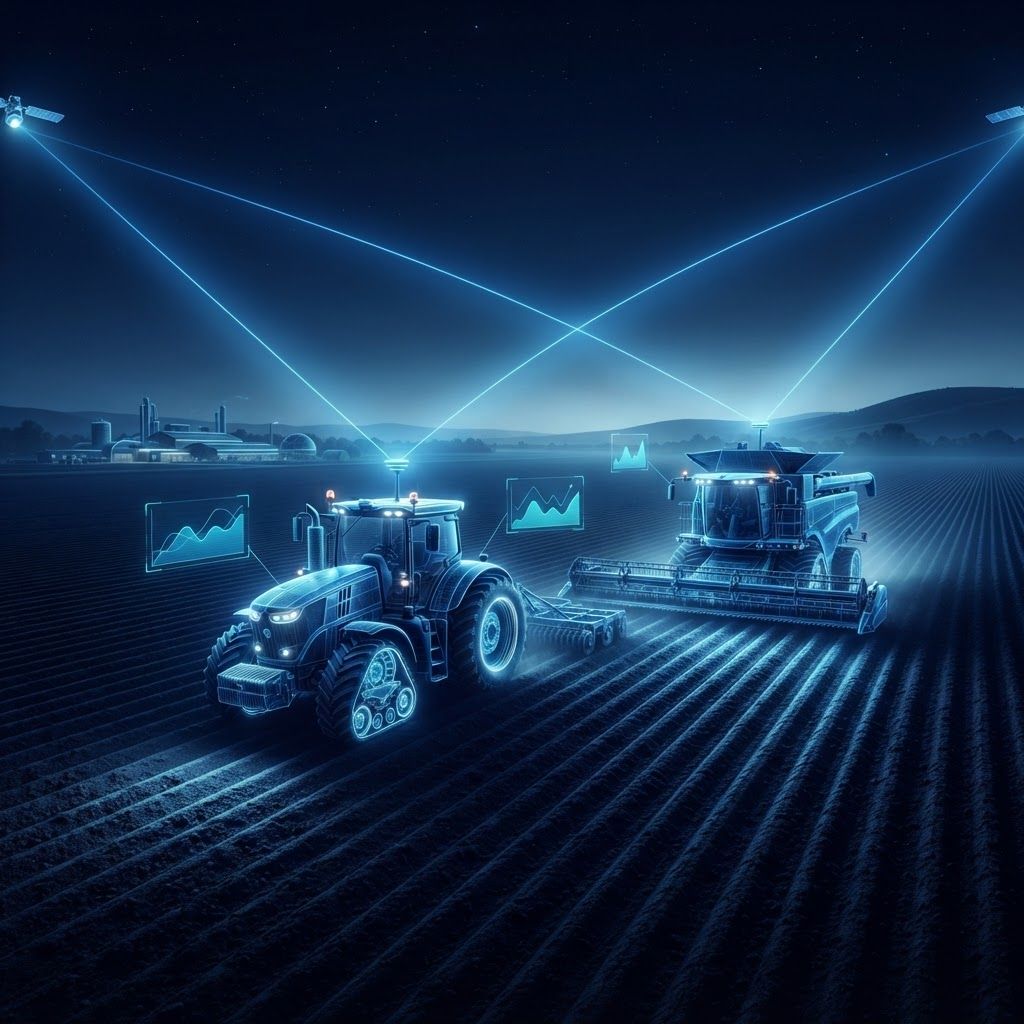
Precision agriculture is now mainstream rather than experimental, with guidance and section control considered basic equipment on new machines. Data interoperability is improving through ISOBUS and open platforms, though genuine cross-brand compatibility still requires care at purchase. Alternative powertrains — electric compact machines, methane and hydrogen research — are advancing, driven by both emissions targets and fuel cost. Soil compaction awareness is influencing tyre technology, tyre pressure control systems and machine weight decisions. Finally, autonomy and lightweight robotics are moving from demonstration to early commercial use, particularly in horticulture.
Practical Buying Advice
Match horsepower and capacity to your actual peak workload, not your largest imaginable task, since over-specification wastes capital and increases compaction risk. Investigate dealer support seriously: ask about engineer response times, parts stock and loan machine availability during harvest. Consider whole-life cost including fuel, servicing, tyres and residual value rather than purchase price alone. Check technology compatibility with equipment you already own. Finally, involve the operator in the decision, because comfort, visibility and control layout directly affect productivity and safety over long working days.
Final Thoughts
Farmers around Stockton-on-Tees have access to the full range of leading agricultural equipment brands, from precision-led global manufacturers to specialist implement and technology suppliers. The best purchasing decisions balance capability with support, and increasingly with data compatibility and emissions considerations. In a climate where working windows are narrow and margins are tight, machinery that starts, performs and can be fixed quickly remains the most valuable specification of all.
Want your brand featured in front of decision-makers? Publish a guest post or get a link insertion in our guides through AAMAX's guest post and link insertion service.
Helpful Links
 SponsoredAAMAX — Full-Service Digital Agency
Write for Us
Share your expertise with our readers. We welcome guest contributions from industry specialists.
Pitch your idea

