

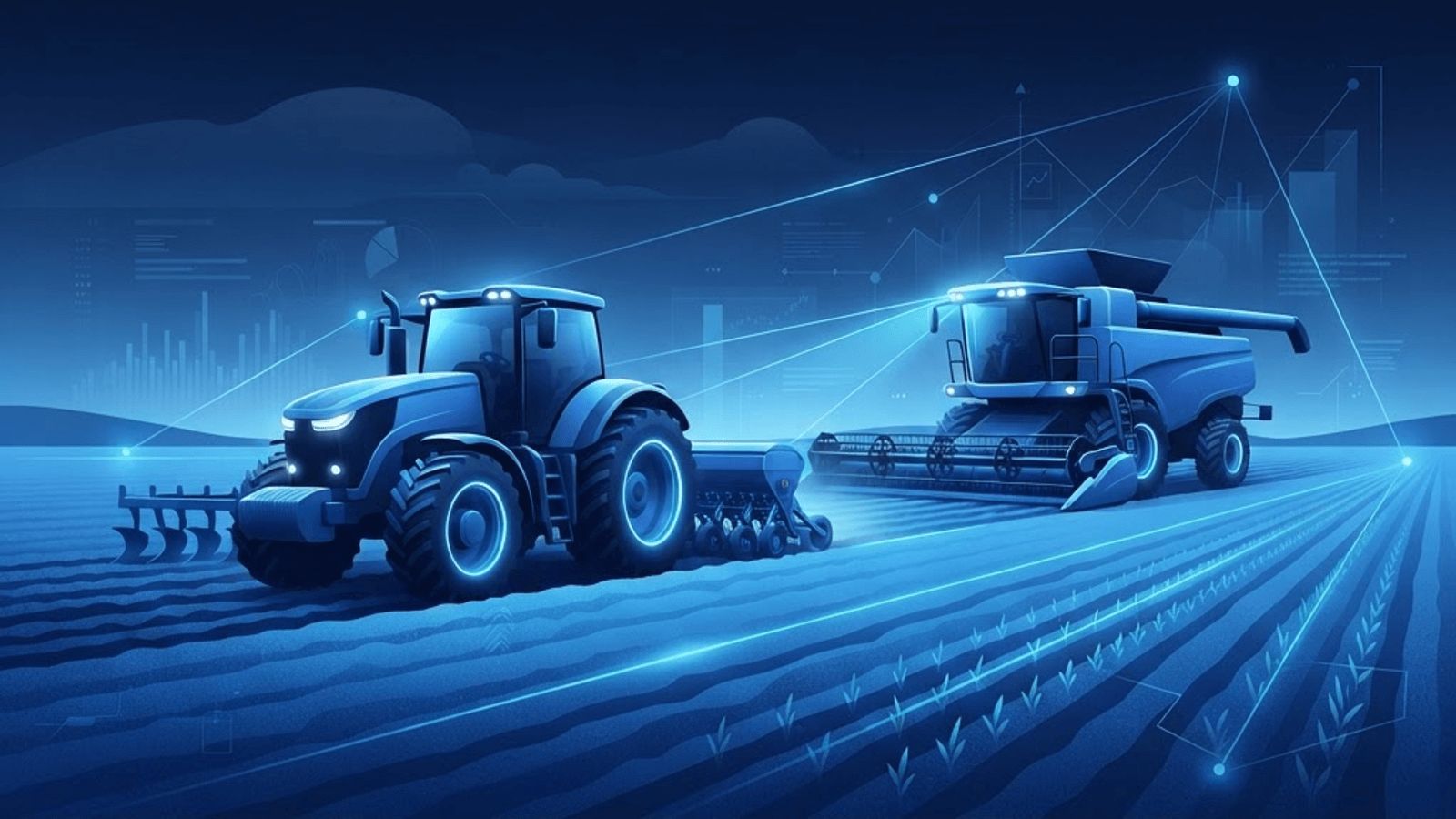
Machinery Choice in a High Cost Farming Region
Agricultural machinery represents the largest capital commitment most farm businesses make, and around Slough that decision carries extra weight. Land here is expensive, holdings are often fragmented by roads and development, and field sizes vary considerably. Machinery must be productive enough to justify its cost while remaining manoeuvrable on smaller parcels and legal on public roads used heavily by commuter traffic. A machine that suits a thousand hectare Lincolnshire block may be entirely wrong for a mixed holding on the metropolitan fringe.
Equally important is the dealer network. A brand is only as good as the support behind it, and in a region where the agricultural dealer base is thinner than in more rural counties, parts availability and engineer response time can matter more than specification. Farmers here consistently report that they buy the dealer as much as the badge, because a breakdown during a narrow harvest window is measured in lost crop rather than lost hours.
How Farm Businesses Evaluate Machinery Brands
Reliability and build quality come first. Agricultural machinery works in dust, mud, heat and vibration, often for long continuous periods. Brands with proven durability, accessible service points and robust hydraulics and transmissions cost less over a working life even at a higher purchase price.
Parts availability and dealer proximity form the second criterion. Same day or next day parts supply, mobile engineers and reasonable labour rates are decisive. Farmers should ask realistic questions about response times during harvest, not during quiet periods.
Technology integration is increasingly significant. Satellite guidance, automatic section control, variable rate application, yield mapping and telematics reduce input waste and improve records for environmental schemes. Compatibility between brands matters too, since a mixed fleet needs implements and terminals that communicate through common standards rather than proprietary systems that lock a farm in.
Residual value is the final consideration and often overlooked. Machinery from brands with strong second hand demand depreciates more slowly, which materially changes the true cost of ownership. Fuel efficiency, operator comfort and ease of maintenance all feed into the same calculation.
The Top 10 Agricultural Equipment Brands Used Around Slough
1. Thames Valley AgriMachinery
A regional tractor and implement brand known for mid horsepower machines suited to mixed farms and smaller field patterns. Their reputation rests on straightforward mechanical design that local engineers can service quickly without specialist diagnostics for every fault.
2. Berkshire Harvest Systems
Specialists in combine harvesters and forage equipment scaled for medium sized arable operations. Their contractor support programme and seasonal engineer cover during harvest are as valued as the machines themselves in a region with a short and weather dependent window.
3. Colne Valley Tillage Equipment
A cultivation equipment brand producing ploughs, subsoilers, discs and drills with an emphasis on reduced disturbance systems. Growing interest in soil health has increased demand for their direct drilling and minimum tillage options across the Thames Valley.
4. Slough Precision Agriculture Technology
Focused on guidance systems, section control, soil mapping hardware and farm data platforms rather than heavy machinery. Retrofitting precision capability to existing tractors gives farms measurable input savings without replacing whole machines.
5. Langley Livestock Handling Equipment
Producing cattle crushes, sheep handling systems, feeders, gates and mobile yards. Operator safety and stock welfare during handling are central to their design approach, which matters greatly given the injury risk associated with livestock work.
6. Datchet Irrigation and Water Systems
Supplying irrigation reels, booms, pumps, filtration and drip systems for horticultural and field vegetable production. With drier summers becoming more frequent, efficient water application has moved from optional to essential for many local growers.
7. Wexham Compact and Estate Machinery
Concentrating on compact tractors, loaders and groundcare equipment for smallholdings, equestrian yards, estates and amenity land. This category is particularly relevant around Slough where many holdings are modest in size but intensively used.
8. Iver Sprayer and Application Equipment
Manufacturing crop sprayers with accurate boom control, nozzle technology and rinsing systems supporting compliant application. Regulatory scrutiny of pesticide use and buffer zones makes precision and record keeping capability genuinely important.
9. Stoke Green Grassland Machinery
Producing mowers, tedders, rakes, balers and wrappers for hay and silage production. With significant equestrian forage demand across the region, reliable baling equipment during short weather windows is commercially critical.
10. Chalvey Agricultural Trailers and Transport
Building tipping trailers, bale trailers, low loaders and material handling attachments with road legal specification and braking compliance. Given the volume of public road movement around Slough, properly specified and maintained transport equipment is a safety necessity.
Technology Trends in Farm Machinery
Automation is advancing steadily. Guidance systems that steer to centimetre accuracy are already common, and autonomous and semi autonomous field operations are moving from trials into commercial use. Smaller, lighter autonomous units are particularly interesting for the metropolitan fringe because they reduce soil compaction and can work smaller parcels economically.
Alternative power is developing more slowly but visibly. Electric compact tractors and telehandlers are viable for yard work and lighter tasks, while hydrogen and biofuel options are being explored for heavy field operations. Emissions regulation and fuel cost will accelerate this transition.
Data integration is arguably the most immediately valuable trend. Machinery generating accurate records of application rates, yields and field operations makes environmental scheme compliance and assurance auditing far simpler, turning a regulatory burden into a routine output of normal work.
Practical Buying Guidance
Match machine size honestly to your field pattern and road access rather than aspiration. Ask dealers for realistic harvest period response times and speak to existing customers. Calculate total cost of ownership including fuel, servicing, parts and expected residual value rather than comparing list prices. Consider contractor arrangements or machinery sharing for equipment used only a few weeks each year. Ensure operators are properly trained, particularly on guidance and application technology where misuse eliminates the benefit. And confirm that implements and terminals will communicate using open standards before committing to a mixed fleet.
Final Thoughts
Agricultural machinery around Slough must satisfy demands that larger scale farming regions never face, balancing productivity against fragmented land, high costs and constant road use. The brands that succeed here combine durable engineering with genuinely responsive local support and technology that pays for itself in reduced inputs and better records. Choosing on aftercare, appropriate scale and total ownership cost rather than headline specification is what keeps machinery an asset rather than a liability.
Want your brand featured in front of decision-makers? Publish a guest post or get a link insertion in our guides through AAMAX's guest post and link insertion service.
Helpful Links
 SponsoredAAMAX — Full-Service Digital Agency
Write for Us
Share your expertise with our readers. We welcome guest contributions from industry specialists.
Pitch your idea

