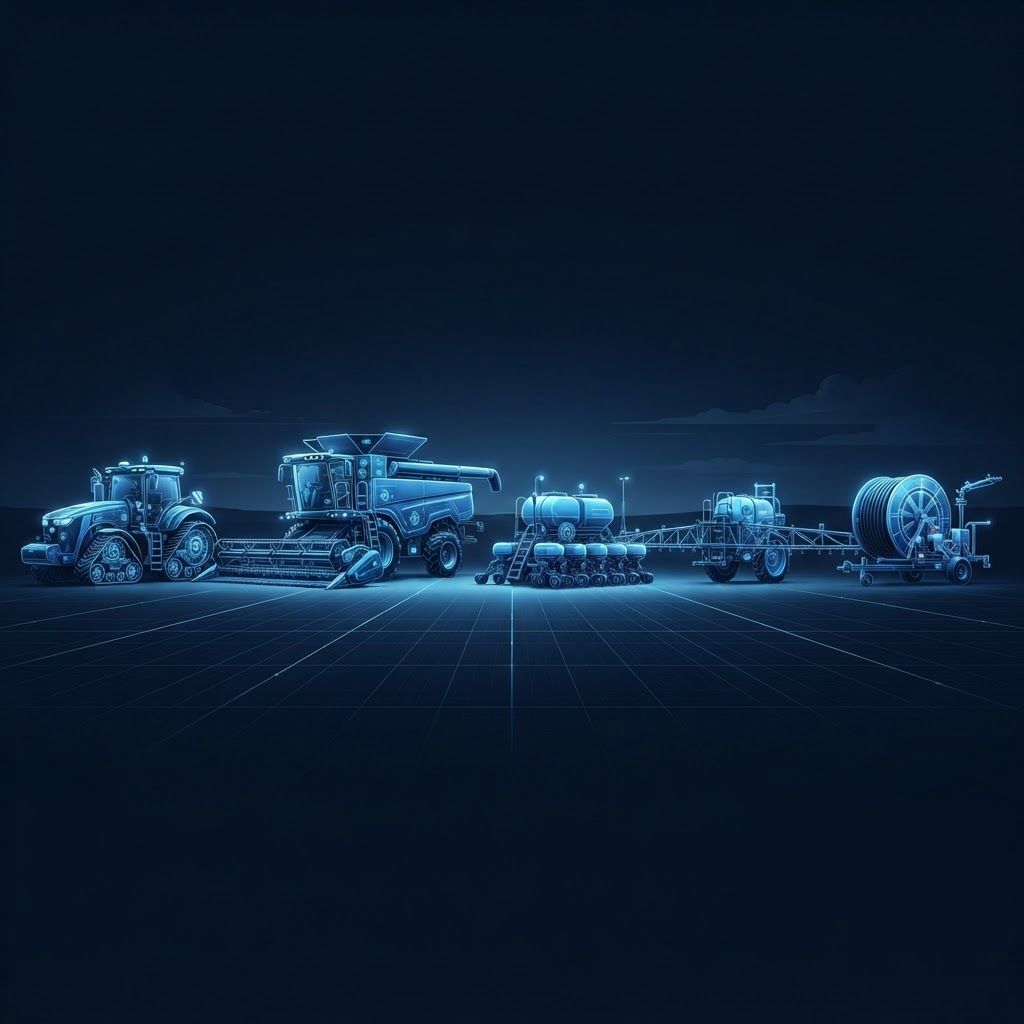
Peterborough's Agricultural Engineering Heritage
Peterborough's relationship with agricultural machinery is not a recent development. The city grew as an engineering centre serving the surrounding farmland, and generations of local workers built implements, engines, drainage equipment and processing machinery for farms across the fens and beyond. That heritage still shapes the area, both in the skills available locally and in the density of dealers, service workshops, parts suppliers and specialist fabricators operating today.
For farmers around Peterborough, brand choice is a genuinely consequential decision. Modern machines represent enormous capital outlay, run for long hours in narrow weather windows, and increasingly sit at the centre of the farm's data infrastructure. Choosing the wrong combination of brand and dealer can cost far more than the price difference on the invoice.
Tractors: The Core Investment
Tractors remain the foundation of most farm fleets, and the major manufacturers are all represented across the region through dealer networks. Buyers typically weigh horsepower and hydraulic capacity against transmission type, cab comfort, weight and traction characteristics, fuel efficiency, guidance system compatibility and residual value.
On fenland soils, weight and tyre configuration deserve particular attention. Compaction on peat and silt can cause lasting damage, which is why low ground pressure tyres, correct ballasting and controlled traffic approaches have become standard practice among careful operators. A machine perfectly suited to a limestone farm west of the city may be a poor choice on drained peat to the east.
Transmission choice divides opinion legitimately. Continuously variable transmissions offer smooth control and efficiency in mixed work, while stepped powershift units suit heavy draft operations and are often simpler to maintain. Neither is universally correct, and the honest dealer will discuss actual field tasks rather than pushing the specification with the highest margin.
Harvesting Machinery
Combine harvesters are the most concentrated capital risk on many arable farms, since a breakdown during a short harvest window can cost far more than the repair itself. Buyers assess threshing system design, grain tank capacity, unloading rate, header options, sieve losses, sample cleanliness and the realistic availability of service support during peak weeks.
Around Peterborough, root and vegetable harvesting equipment matters as much as combines. Potato and sugar beet harvesters, onion and carrot lifters, toppers, cleaners and loaders are essential to the local cropping pattern, and the brands that lead in these categories are often different from those dominating cereal harvesting. Specialist harvesting equipment tends to be supported by specialist dealers with deep, narrow expertise, which is exactly what these machines require.
Cultivation, Drilling and Crop Establishment
Establishment equipment has changed dramatically as growers have moved towards reduced tillage and improved soil management. Alongside conventional ploughs and power harrows, farms now use tine and disc cultivators, low disturbance subsoilers, strip-till units and direct drills.
Drill choice has become a strategic decision rather than a routine purchase, because it determines which establishment systems are practical. A farm committing to direct drilling needs a machine capable of coping with residue and variable moisture, while one retaining a cultivated system may prioritise output and versatility. Given the range of soil types around the city, many businesses run more than one establishment option deliberately.
Sprayers, Spreaders and Application Technology
Application equipment is where precision technology delivers its clearest returns. Modern self-propelled and trailed sprayers offer individual nozzle control, automatic boom height management, section shut-off on headlands and variable rate application driven by prescription maps. These features reduce chemical use, improve efficacy and support compliance recording.
Fertiliser spreaders have advanced similarly, with weighing systems, border spreading control and variable rate capability. For farms operating under nutrient management plans and environmental schemes, accurate application and reliable record keeping are regulatory necessities rather than refinements.
Irrigation, Drainage and Fen-Specific Equipment
Equipment categories that barely register in other regions are central around Peterborough. Irrigation reels, booms, pumps, pipework and increasingly automated scheduling systems are essential for field vegetable and potato production. Drainage equipment, trenchers, mole ploughs, laser-guided grading kit and pumping plant support the water management that fenland farming depends on entirely.
Handling and storage equipment forms another important group: telescopic handlers, loaders, conveyors, graders, box tippers, ventilation and refrigeration systems for crop stores. On vegetable enterprises, post-harvest equipment can represent as much invested capital as field machinery.
Precision Technology and Data Integration
Guidance systems, telematics, yield mapping, soil scanning and automated steering have moved from premium options to expected specification. The important consideration for buyers is compatibility. Mixed fleets can create genuine frustration when terminals, data formats and correction signals do not work together, and farms often standardise on one guidance ecosystem across brands to avoid this.
Telematics has changed service economics as well. Remote diagnostics allow dealers to identify faults before a technician travels, order the right part first time and advise operators on settings during critical work. For farms running tight harvest windows, that capability has real financial value.
Judging Brands and Dealers Together
Experienced farmers around Peterborough will often say that dealer quality matters more than the badge on the bonnet. Parts availability, technician skill, response time during harvest, workshop capacity, loan machine provision and honest advice on specification all determine what a machine actually costs over its working life.
Practical questions are worth asking directly. How many trained technicians support this model locally? What is realistic response time in August? Which parts are held in stock rather than ordered? What does a service contract include, and what does it exclude? How has residual value held for this model on comparable farms? Answers to these questions predict satisfaction far better than brochure specifications.
New, Used and Contracted Capacity
Not every requirement justifies ownership. Used machinery from reputable dealers with documented service history offers strong value for lower-hour applications. Contractors provide access to high-output equipment without capital commitment, which suits peak operations such as harvest, drilling or slurry work. Machinery sharing between neighbouring farms remains common and sensible where timing allows.
The best equipment decisions around Peterborough come from matching machines to soils, cropping and realistic workloads, then backing that choice with a dealer capable of keeping it running. Get both right and the machinery becomes an advantage rather than an anxiety.
Want your brand featured in front of decision-makers? Publish a guest post or get a link insertion in our guides through AAMAX's guest post and link insertion service.
Helpful Links
 SponsoredAAMAX — Full-Service Digital Agency
Write for Us
Share your expertise with our readers. We welcome guest contributions from industry specialists.
Pitch your idea