

Agricultural Machinery in North Hertfordshire
Agricultural machinery represents the largest capital investment most farming businesses make, and in North Hertfordshire the decision carries particular weight. The district's predominantly arable farms operate within tight seasonal windows — autumn drilling, spring establishment, harvest — and equipment that cannot deliver during those periods causes losses no discount can offset.
The local machinery landscape includes tractors, combine harvesters, cultivation equipment, drills, sprayers, handling machinery and an expanding range of precision technology. Supporting all of this is a network of dealers and service specialists whose responsiveness often matters more than the badge on the bonnet.
Technology Trends in Farm Machinery
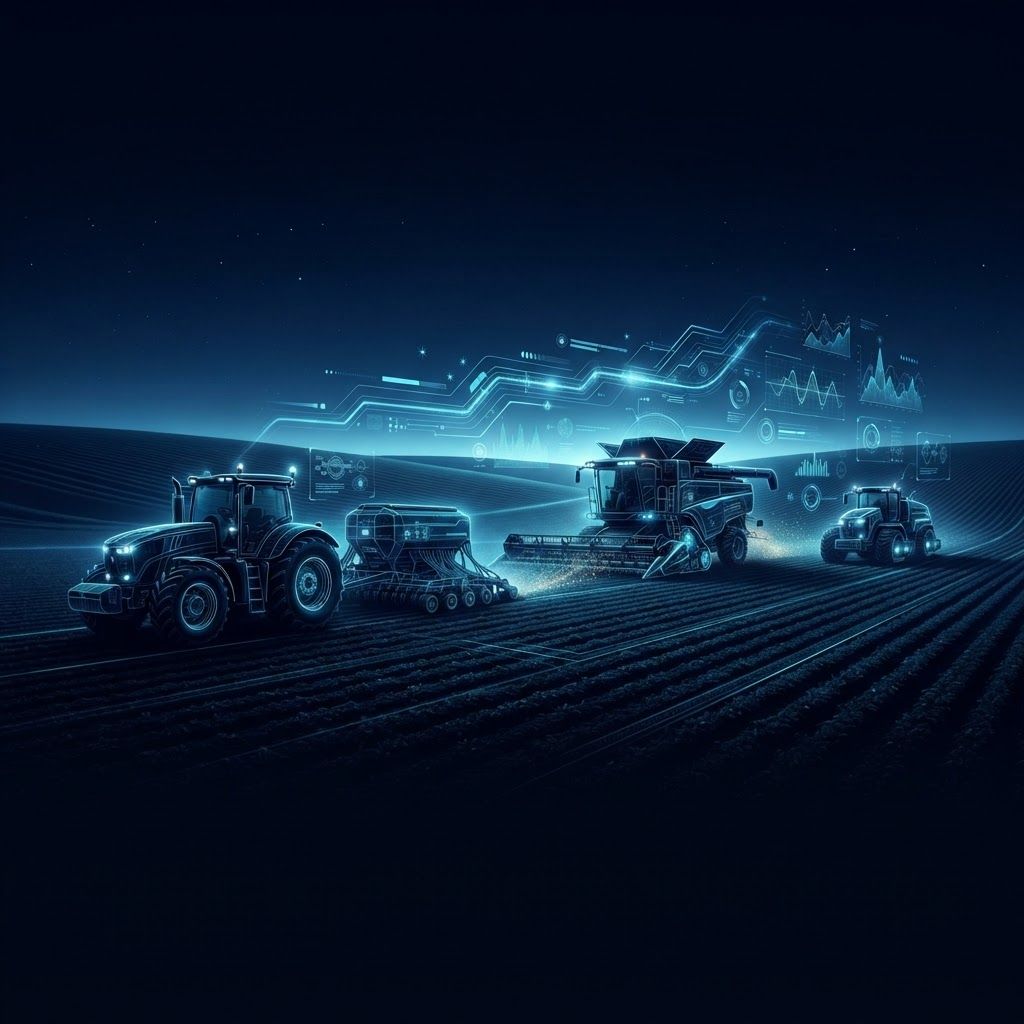
Precision agriculture has transformed what machinery does. GPS guidance with centimetre accuracy eliminates overlap, saving fuel, seed, fertiliser and chemical. Section control shuts off sprayer booms and drill coulters automatically on headlands. Variable rate application adjusts inputs across a field according to soil and yield mapping. These systems now pay for themselves within a few seasons on most arable holdings.
Data integration has become the next frontier. Modern machinery generates continuous data on yield, moisture, fuel consumption and field conditions, and farm management software consolidates it into decisions. Compatibility across brands remains imperfect, so many farms standardise on a single manufacturer's ecosystem or invest in independent software that aggregates multiple sources.
Reduced tillage equipment has grown strongly as regenerative practice spreads. Direct drills capable of establishing crops into cover crop residue and minimal disturbance cultivators are now common where power harrows and ploughs once dominated. This shift has also reduced horsepower requirements on some farms.
Autonomy and electrification are emerging rather than established. Small autonomous platforms for scouting, weeding and light cultivation are in commercial use, and battery-electric equipment is practical for yard and handling tasks, though full-scale field work remains diesel-dominated for now.
Top 10 Best Agricultural Equipment Brands and Dealers in North Hertfordshire
1. Icknield Agricultural Machinery
A long-established dealer supplying and servicing tractors and cultivation equipment across the district. Its reputation rests on parts availability and rapid field service during harvest, when a breakdown can cost thousands per day in lost output.
2. Baldock Tractor and Combine Services
Focusing on harvest machinery, this dealer supplies combines, headers and grain handling equipment. Pre-harvest inspection programmes identify wear before it causes failure, a service local growers consider essential rather than optional.
3. Hitchin Sprayer Systems
Specialising in crop protection equipment including self-propelled and trailed sprayers, nozzle technology and section control. Statutory sprayer testing and calibration are provided, ensuring both regulatory compliance and accurate application.
4. Letchworth Precision Farming Technology
Supplying GPS guidance, yield monitoring, soil scanning and farm management software. Rather than selling hardware alone, the business helps growers interpret data and translate it into agronomic decisions, which is where the return actually materialises.
5. Ashwell Drilling and Establishment Equipment
Covering conventional and direct drills, strip-till units and minimum tillage cultivators. As establishment methods diversify across the district, the ability to demonstrate different systems in local field conditions has become genuinely valuable.
6. Stotfold Materials Handling for Agriculture
Telehandlers, loaders, bale handling and grain moving equipment. These machines work year-round and accumulate hours quickly, so build quality and service backup determine total cost far more than purchase price.
7. Knebworth Grain Storage and Drying Systems
Supplying and installing grain dryers, ventilation systems, conveyors and storage infrastructure. On-farm storage lets growers market grain strategically instead of selling at harvest, and efficient drying protects quality and value.
8. North Herts Irrigation Solutions
Providing irrigation equipment, pumps, reels and water management systems for horticultural and high-value crops. In a relatively dry region with abstraction constraints, water use efficiency is both an economic and regulatory priority.
9. Therfield Livestock and Yard Equipment
Handling systems, feeders, fencing, water systems and yard machinery for the district's livestock and mixed farms. Safe, well-designed handling equipment reduces both animal stress and operator injury risk substantially.
10. Hertfordshire Agricultural Engineering Services
An independent service and repair business supporting machinery across manufacturers. Mobile engineers, fabrication capability and a pragmatic approach to keeping older equipment productive make it a valuable resource for farms not running new fleets.
Choosing Machinery Sensibly
Dealer support should weigh as heavily as the machine itself. Ask about engineer numbers, typical response times during harvest, parts stockholding and whether loan machines are available. A slightly less favoured brand with excellent local backup often outperforms a preferred brand supported from a distant depot.
Assess capacity honestly against your workload. Oversized machinery carries unnecessary capital cost, depreciation and soil compaction risk; undersized machinery creates timeliness losses that quietly exceed any saving. Calculate required work rates against realistic available working days for your soil type.
Consider acquisition method carefully. Purchase, lease, contract hire and machinery sharing each suit different situations. Contract hire provides predictable costs and modern equipment but no residual asset; ownership suits farms with high utilisation and good maintenance discipline. Machinery rings and shared ownership can make high-capacity equipment viable for medium-sized holdings.
Finally, plan for technology continuity. Guidance systems, telemetry subscriptions and software licences carry ongoing costs and compatibility constraints. Understand these before committing to an ecosystem that will shape purchases for a decade.
Outlook
Expect steady progress toward lighter, smarter and more autonomous equipment as soil health concerns and labour availability drive change. For North Hertfordshire farms, however, the fundamentals will remain the same: machinery that starts reliably on the one dry morning in a wet October is worth more than any specification sheet.
Want your brand featured in front of decision-makers? Publish a guest post or get a link insertion in our guides through AAMAX's guest post and link insertion service.
Helpful Links
 SponsoredAAMAX — Full-Service Digital Agency
Write for Us
Share your expertise with our readers. We welcome guest contributions from industry specialists.
Pitch your idea

