

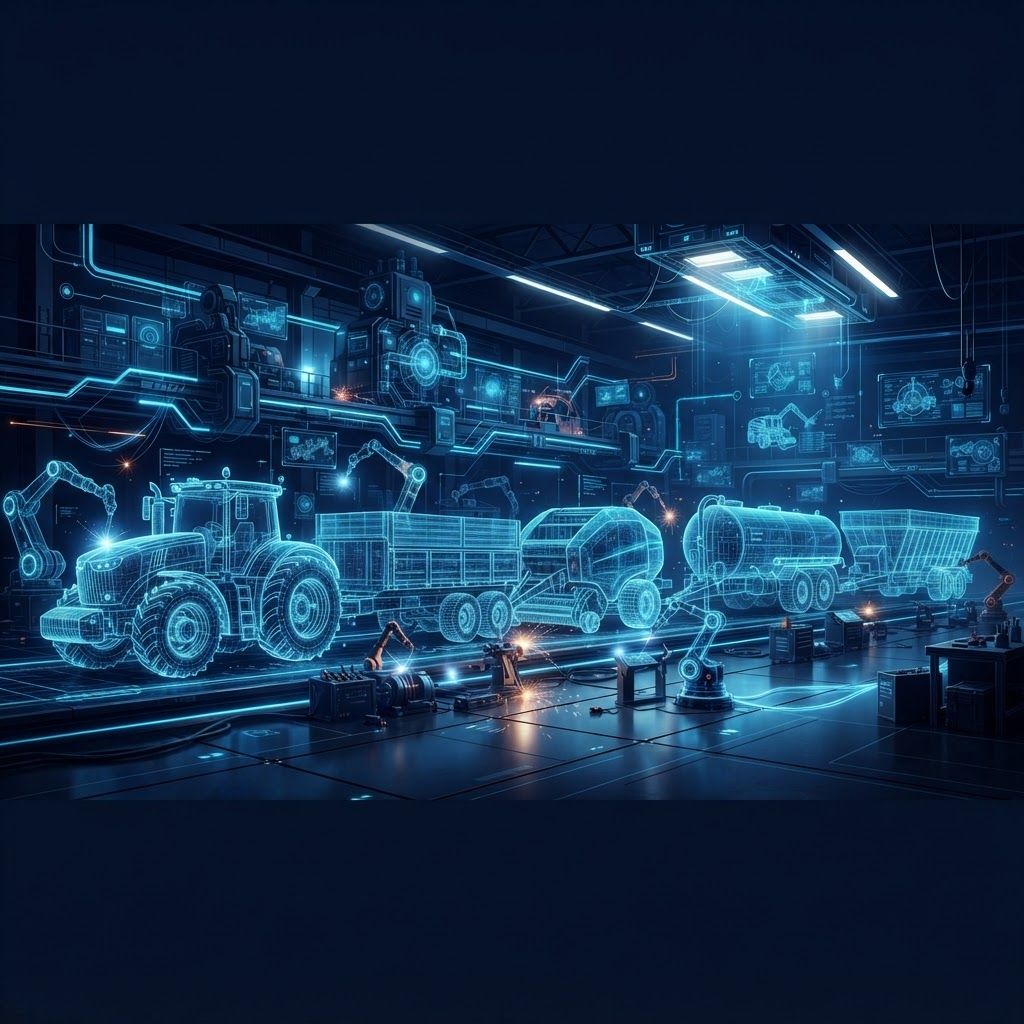
Machinery and the Antrim Farming Landscape
Farm machinery choices in Mid and East Antrim are shaped by the land itself. This is a region of high rainfall, heavy soils in places, steep drumlins, upland grazing in the Glens and a short weather window for critical operations such as silage. Equipment that performs perfectly on flat, dry arable ground in eastern England may struggle here. Local farmers consistently prioritise traction, low ground pressure, build strength and, above all, the availability of parts and service when something breaks at the wrong moment.
Northern Ireland also has a genuine reputation for building agricultural machinery. A long tradition of engineering, combined with farmers who know precisely what they need, has produced equipment manufacturers whose products are exported worldwide.
1. Tractors and Prime Movers
The tractor is the central investment on most farms. Buyers here weigh horsepower against weight, transmission type against ease of use, and cab comfort against price. Continuously variable transmissions have become popular for loader and yard work, while front linkage and suspension options improve versatility. Dealer support is the decisive factor in brand loyalty, and farmers will often choose a brand purely because the nearest dealer has a strong service reputation.
2. Grassland and Silage Equipment
Given that grass is the foundation of the local livestock economy, mowers, tedders, rakes, forage harvesters and silage trailers are critical. Conditioner type, cutting width matched to available power and the ability to work in marginal conditions all matter enormously. Silage quality determines winter feed costs, so timeliness of harvest justifies significant machinery investment or contractor spend.
3. Balers and Wrapping Systems
Round balers, combination baler wrappers and square balers are widely used across the borough, particularly for baled silage, which suits smaller fields and variable weather far better than pit silage. Bale density, film application quality and wrap integrity determine how well the crop preserves. Interest in film on film wrapping has grown for both preservation quality and recyclability.
4. Slurry and Manure Handling Equipment
Nutrient management regulation has made slurry equipment one of the most active investment areas in Northern Irish farming. Low emission spreading equipment including trailing shoe and dribble bar systems reduces ammonia loss and improves nitrogen use. Umbilical systems, separators, agitators and tankers all feature, and grant support has accelerated adoption considerably.
5. Cultivation, Drilling and Reseeding Machinery
Ploughs, power harrows, subsoilers, grass harrows and direct drills serve both arable growers and livestock farmers reseeding pasture. Reseeding is one of the highest return investments available in grassland farming, and machinery that allows it to happen quickly in a narrow window is valuable. Interest in minimum tillage and direct drilling has grown as farmers focus on soil structure and fuel cost.
6. Materials Handling and Loaders
Telehandlers, wheeled loaders, front loaders and yard scrapers are indispensable on modern farms for feeding, bedding, stacking bales and loading. Lift height, reach, visibility and attachment availability determine usefulness. Telehandlers in particular have become the second most important machine on many farms after the tractor.
7. Livestock Handling and Housing Equipment
Cattle crushes, races, gates, feed barriers, cubicles, mats, automatic scrapers and ventilation systems improve both animal welfare and operator safety. Handling injuries remain a serious risk in livestock farming, and well designed handling systems substantially reduce that risk while making routine tasks such as dosing and scanning far quicker.
8. Milking and Dairy Technology
Parlour systems, robotic milking units, automatic cluster removal, milk cooling and heat recovery equipment represent major dairy investments. Robotic milking has expanded notably in the region, valued as much for labour flexibility as for yield. Integrated herd management software linking milk data, health alerts and heat detection has become standard on larger units.
9. Trailers, Tankers and Transport Equipment
Silage trailers, grain trailers, livestock trailers, low loaders and bale trailers are built in substantial numbers by manufacturers across Northern Ireland, which has a particularly strong reputation in this category. Chassis strength, braking systems, tyre specification and road legality are the key considerations, and heavier build quality is genuinely justified on the borough's steep lanes and soft headlands.
10. Precision Farming and Digital Technology
Satellite guidance, automatic section control, variable rate application, yield mapping, soil scanning and farm management software now sit across all the categories above. The value comes from reducing overlap, targeting inputs accurately and generating the records needed for compliance and carbon accounting. Adoption is growing fastest among contractors and larger units, but entry level guidance systems have become affordable for most farms.
Choosing Equipment and a Dealer
Specification should follow the work, not the other way round. Be realistic about acres, hours and the conditions the machine will face. Consider whether contracting is more economical than owning for operations carried out only a few days a year. Evaluate the dealer as carefully as the brand, asking about parts stock held locally, number of service engineers, out of hours cover during silage and harvest, and typical response time. Ask about operator training, warranty terms and residual values, since resale strength varies considerably between brands and directly affects true cost of ownership.
Safety and Maintenance
Agriculture has one of the poorest safety records of any industry, and machinery is involved in a high proportion of serious incidents. Power take off guarding, safe stop procedures, proper use of loader locks and regular inspection of lifting equipment are basic but frequently neglected. A planned maintenance schedule, ideally arranged with the dealer during the quieter winter months, prevents both breakdowns and accidents.
Trends Shaping Farm Machinery
Emissions standards continue to drive engine development, with electric and alternative fuel prototypes emerging for lighter machines. Autonomy is advancing, initially in repetitive tasks. Data connectivity between machines, software and advisers is becoming standard. And right to repair has become a live issue, with farmers increasingly asking about diagnostic access before they buy.
Final Thoughts
Agricultural equipment in Mid and East Antrim reflects the realities of farming here: wet weather, tight windows, steep ground and a need for machinery that simply keeps working. With a strong local manufacturing tradition and dealers who understand these conditions, farmers in the borough are well placed to invest wisely.
Want your brand featured in front of decision-makers? Publish a guest post or get a link insertion in our guides through AAMAX's guest post and link insertion service.
Helpful Links
 SponsoredAAMAX — Full-Service Digital Agency
Write for Us
Share your expertise with our readers. We welcome guest contributions from industry specialists.
Pitch your idea

