

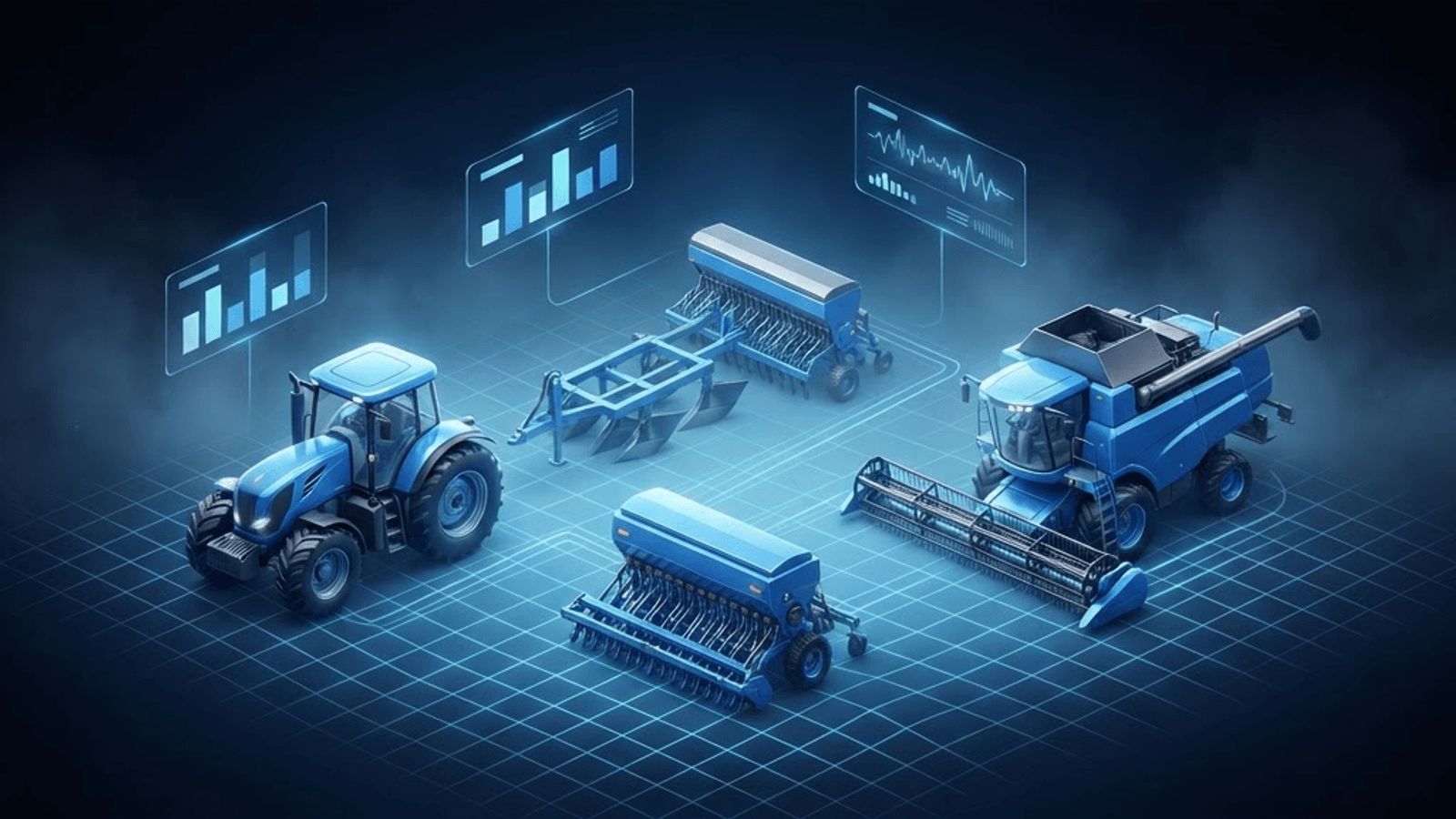
Machinery and the Modern Hampshire Farm
Agricultural equipment represents one of the largest capital commitments any farm makes. For the arable, livestock and horticultural businesses working the land around Havant and the wider South Hampshire coastal plain, machinery choice affects timeliness, fuel efficiency, soil health, labour requirements and ultimately margin. A tractor purchase is a decade-long relationship, not a transaction.
Brand selection in this region is heavily influenced by dealer support. Hampshire farms operate within tight weather windows, particularly on heavier soils where a few days of delay can cost an entire drilling opportunity. That makes local parts availability and service response time as important as the specification sheet.
1. John Deere
John Deere remains one of the most recognisable names in global agriculture and is widely used across southern England. Its reputation rests on build quality, strong resale values and a genuinely advanced approach to precision farming. The brand's integrated guidance, section control and data management systems allow farms to reduce input overlap, document field operations and analyse performance across seasons. For larger arable operations around Havant, that data capability has become a decisive factor.
2. New Holland
New Holland has a strong following among mixed and arable farms, offering tractors, combines, balers and forage equipment. The brand is particularly well regarded for its combine harvesters and for a comfortable, practical cab environment that matters during long harvest days. New Holland has also pushed notably hard on alternative fuels, including methane-powered tractors aimed at farms producing their own biogas.
3. Massey Ferguson
Massey Ferguson enjoys deep loyalty across British farming, built on decades of dependable, straightforward machinery. The brand offers a broad range from compact models suited to horticultural holdings and estate work up to high-horsepower arable tractors. Its appeal lies in practical engineering, reasonable purchase prices and a dealer network that understands smaller family farms as well as large enterprises.
4. Case IH
Case IH is respected for powerful, robust tractors and for combine technology with a strong reputation in demanding conditions. The brand's larger machines suit contractors and bigger arable units working across multiple holdings, a common arrangement in Hampshire where contract farming agreements are widespread.
5. Fendt
Fendt occupies the premium end of the market, known for continuously variable transmission technology, refined operator environments and exceptional fuel efficiency. The purchase price is high, but the economics often work for high-hours operations where efficiency gains and strong residual values offset the initial outlay. Contractors in particular gravitate toward the brand.
6. Claas
Claas is dominant in harvesting and forage equipment, with combines and forage harvesters that set benchmarks for capacity and sample quality. Its balers and grassland machinery are widely used across livestock farms in Hampshire, where silage timing directly affects winter feed quality and therefore herd performance.
7. Kubota
Kubota has built a very strong position in compact and utility machinery. Its tractors, utility vehicles and groundcare equipment suit smallholdings, market gardens, equestrian businesses, vineyards and estate maintenance — all well represented around Havant. Reliability, manoeuvrability and low ground pressure are the brand's defining characteristics.
8. JCB
JCB is a British manufacturing success story and a fixture on farms through its telescopic handlers. The Loadall has become effectively indispensable for materials handling, loading, stacking and general yard work. JCB's Fastrac tractors also occupy a distinctive niche with genuine high-speed road capability, valuable for farms working scattered parcels of land.
9. Kverneland and Amazone
Implement specialists matter as much as tractor brands. Kverneland and Amazone supply ploughs, cultivators, seed drills, sprayers and fertiliser spreaders with precision application technology. As input costs rise and environmental regulation tightens, accurate placement of seed and nutrient has become a direct profitability issue, not merely an agronomic preference.
10. Vaderstad and Precision Establishment Equipment
Establishment equipment brands focused on minimum tillage and direct drilling have grown rapidly as regenerative practices spread. These systems reduce fuel use, protect soil structure and improve moisture retention. For Hampshire farms managing both heavy clay and lighter coastal soils, the flexibility to adjust establishment method by field and season is increasingly valuable.
Technology Trends in Farm Machinery
Several developments are reshaping equipment buying. GPS guidance and auto-steer are now standard rather than premium options. Variable rate technology allows inputs to be matched to within-field soil variation. Telematics provide remote monitoring of machine health and fuel consumption, enabling predictive maintenance. Autonomous and lightweight robotic platforms are moving from trial to early commercial use, particularly in horticulture.
Alternative power is the longer-term question. Electric compact machinery is already practical for yard and horticultural work, while hydrogen and biomethane are being explored for heavier field operations. Farms making twenty-year capital plans are watching these developments closely.
Choosing Equipment Wisely
The most common mistake is buying more machine than the operation needs. Buyers should consider total cost of ownership including fuel, servicing, depreciation and downtime rather than list price alone. Dealer proximity and demonstrated parts availability during harvest deserve heavy weighting. Used equipment, contractor arrangements and machinery sharing rings all remain sensible alternatives to outright purchase for smaller holdings.
Final Thoughts
The agricultural equipment brands serving the Havant area offer genuine choice across every scale of operation. The right decision depends less on brand prestige than on honest assessment of acreage, soil type, labour availability and the quality of local support behind the badge.
Want your brand featured in front of decision-makers? Publish a guest post or get a link insertion in our guides through AAMAX's guest post and link insertion service.
Helpful Links
 SponsoredAAMAX — Full-Service Digital Agency
Write for Us
Share your expertise with our readers. We welcome guest contributions from industry specialists.
Pitch your idea

