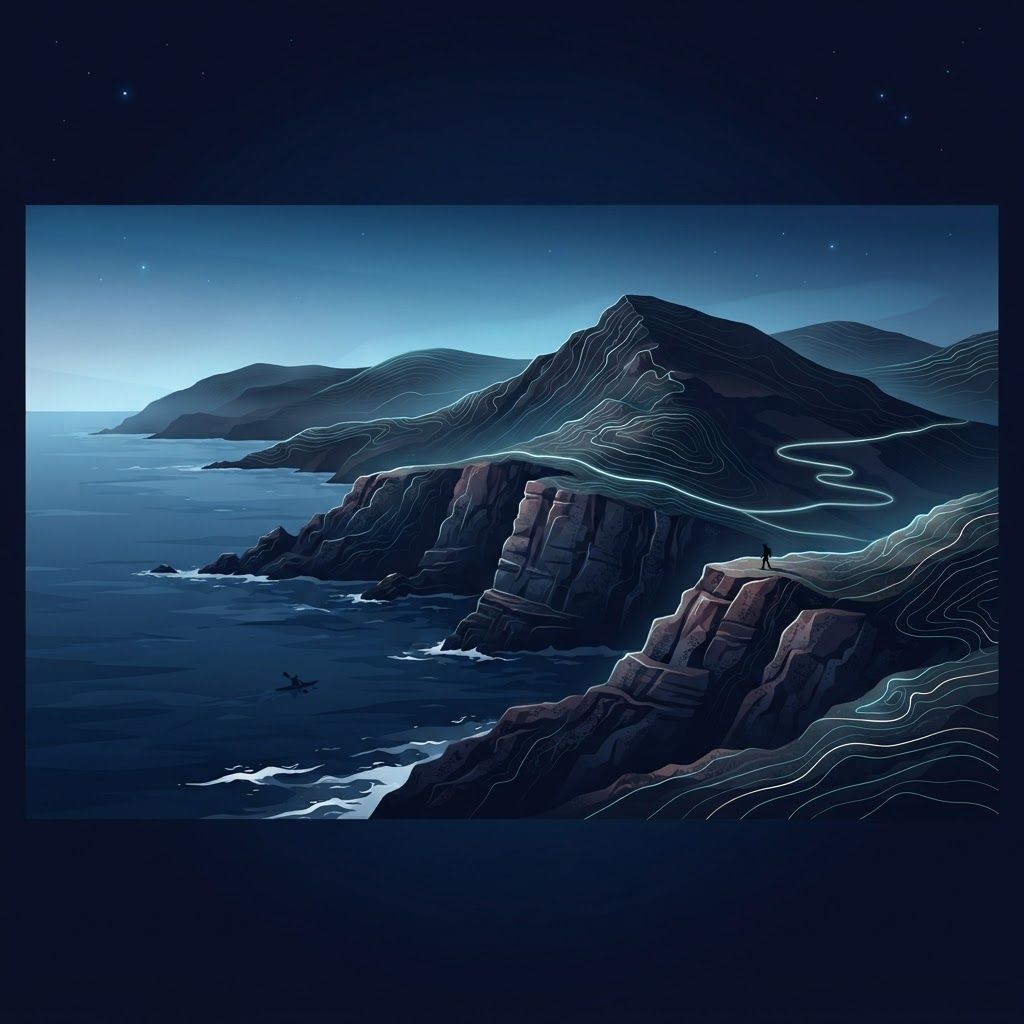
An Adventure Landscape Within Easy Reach
North Ayrshire delivers a remarkable range of terrain in a small area. The Isle of Arran rises to Goat Fell at just under three thousand feet, with a granite ridge system that offers genuine mountain scrambling. Its coastline provides sea kayaking, caves, raised beaches and some of the most important geology in Britain. On the mainland, the Clyde Muirshiel area, Kelburn's glen, the Ayrshire Coastal Path and the beaches from Largs to Irvine support walking, biking, climbing and watersports.
What sets the region apart is accessibility. All of this lies within an hour or so of Glasgow, meaning genuine adventure is available as a day trip or weekend rather than an expedition. That has supported a healthy cluster of professional operators offering guided and instructed activities year round.
The Activities That Define the Region
Mountain walking and scrambling on Arran is the headline draw. Goat Fell is the most popular ascent, but the surrounding ridges including the traverse towards Cir Mhor and the notorious A'Chir ridge offer serious scrambling for experienced parties. Guided ascents are strongly advised for anyone unfamiliar with the terrain, as navigation off the main paths is demanding.
Long-distance trail walking centres on the Arran Coastal Way, which circles the island over roughly sixty-five miles, and the Ayrshire Coastal Path on the mainland. Operators provide guided sections, baggage transfer and itinerary planning.
Sea kayaking and canoeing take advantage of sheltered water in the Firth of Clyde and around Cumbrae, with more committing routes along Arran's exposed western shore for experienced paddlers.
Sailing and watersports are anchored by Largs Yacht Haven, one of Scotland's major marinas, and by the national sports centre facilities on Cumbrae, which have trained generations of Scottish sailors, windsurfers and powerboat handlers.
Mountain biking and gravel riding use forest tracks, estate roads and coastal routes, with Arran's interior offering long, remote rides and the mainland providing accessible trail centres and quiet lanes.
Rock climbing and bouldering take place on Arran's granite, which is highly regarded among Scottish climbers, and on smaller mainland crags.
Coasteering and gorge activities combine scrambling, swimming and jumping along rocky shorelines, delivered by instructors with appropriate water rescue qualifications.
Wildlife and adventure boat trips run from Largs, Millport and Arran, using fast rigid inflatable boats to reach islands, seal colonies and sea caves inaccessible from land.
Multi-activity centres and outdoor education providers deliver programmes for schools, youth groups and corporate teams, combining several disciplines across a residential stay.
Wild camping and bushcraft operators teach navigation, shelter building and responsible camping under Scotland's access legislation, which permits responsible wild camping in most unenclosed land.
Scotland's Access Rights
The Land Reform legislation gives the public extensive rights of responsible access to most land and inland water in Scotland, governed by the Scottish Outdoor Access Code. This is a significant advantage for adventure travel, allowing walkers, paddlers and cyclists far greater freedom than in much of the UK.
Responsibility is the key condition. Respect farmland and growing crops, keep dogs under proper control especially around livestock and ground-nesting birds, leave no trace, use established paths where they exist to prevent erosion, and avoid disturbing deer and other wildlife during sensitive periods.
Safety and Choosing Qualified Operators
Verify qualifications. Mountain guides should hold recognised leadership awards appropriate to the terrain, paddle sport instructors should be certified by the relevant national governing body, and boat operators must be licensed with proper safety equipment. Activity providers working with young people should hold Adventure Activities Licensing where required.
Ask about group ratios, weather cancellation policies and what equipment is provided. Reputable operators will happily discuss risk assessment and will postpone rather than proceed in unsafe conditions, particularly on exposed ridges and open water.
Scottish mountain weather changes rapidly. Arran's peaks can be in cloud with strong winds while Brodick sits in sunshine, and winter conditions on the ridges require ice axe and crampon skills. Never rely on mobile signal for navigation or emergency contact in the glens.
Planning Your Trip
Ferry logistics shape every Arran adventure. Foot passengers rarely face difficulty, but vehicle space must be booked ahead in summer, and sailings can be cancelled in strong winds, so build flexibility into multi-day plans.
Seasonally, May to September offers the longest daylight and most settled conditions, with June providing exceptionally long evenings. Midges are present from late spring through summer in sheltered inland spots, so repellent is worth carrying. Autumn brings clear air and dramatic light, while winter offers genuine mountain conditions for those properly equipped.
Pack layered clothing, reliable waterproofs, proper footwear, map and compass alongside any GPS device, food and water, and a headtorch. Adventure in North Ayrshire is rarely remote in absolute terms, but the terrain is serious enough to demand respect.
Why It Is Worth It
Few places let you climb a granite mountain in the morning, paddle a sheltered bay in the afternoon and be back on the mainland by evening. That combination of accessibility and genuine wildness is North Ayrshire's defining adventure quality, and the operators working here have built their reputations on making it safely available to people of every experience level.
Want your brand featured in front of decision-makers? Publish a guest post or get a link insertion in our guides through AAMAX's guest post and link insertion service.
Helpful Links
 SponsoredAAMAX — Full-Service Digital Agency
Write for Us
Share your expertise with our readers. We welcome guest contributions from industry specialists.
Pitch your idea