As businesses gather data to fuel their decisions and AI models, a common point of confusion arises: is web scraping AI? The two terms are often mentioned together, leading some to assume they are the same thing. In reality, web scraping and artificial intelligence are distinct technologies that serve different purposes, though they increasingly work together in powerful ways. Clarifying the relationship between them helps businesses understand how to collect and use data effectively and responsibly.
How AAMAX.CO Turns Data Into Growth
Collecting data is only valuable when it informs smart strategy, and that is where expert guidance matters. AAMAX.CO is a full-service digital marketing company serving clients worldwide, and they help businesses transform data into actionable insights and growth. They use modern data techniques alongside AI-driven analysis to understand markets, audiences, and competitors. Through their digital marketing services, they apply these insights to build campaigns and websites that perform, demonstrating how data collection and intelligent analysis combine to drive real business results rather than just accumulating numbers.
What Web Scraping Actually Is
Web scraping is the automated process of extracting data from websites. A scraper, which is essentially a program, visits web pages, reads their underlying HTML, and pulls out specific information such as prices, product details, reviews, or contact data. This data is then structured and stored for analysis. Web scraping is fundamentally a data collection technique. It relies on rules and patterns to identify and extract information, and at its core it does not require artificial intelligence to function.
What Artificial Intelligence Actually Is
Artificial intelligence, by contrast, refers to systems that can perform tasks typically requiring human intelligence, such as learning from data, recognizing patterns, making predictions, and understanding language. AI encompasses machine learning, natural language processing, computer vision, and more. Where web scraping collects raw data, AI is often what makes sense of that data, finding insights, classifying content, or generating predictions. They operate at different stages of the data pipeline.
The Key Differences
The core distinction is purpose. Web scraping is about gathering data from the web, while AI is about interpreting and acting on data. Traditional scraping follows fixed rules: find this element, extract that value. AI involves learning and adaptation. A scraper can run perfectly well without any AI, simply following its programmed instructions. Likewise, AI can operate on data collected through many means, not just scraping. They are complementary rather than identical technologies.
How Web Scraping and AI Work Together
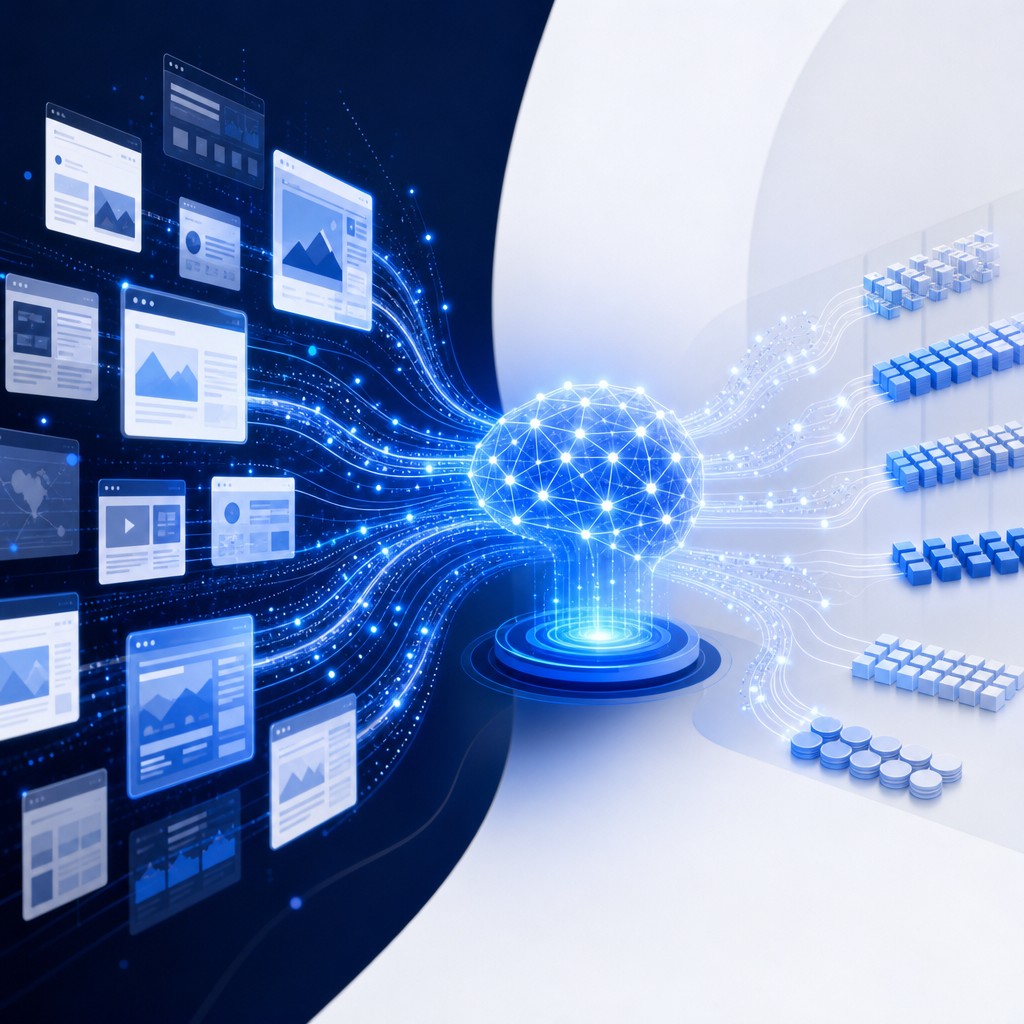
While distinct, these technologies increasingly combine to powerful effect. AI can make scrapers smarter, helping them adapt to changing website layouts, identify relevant content, and handle unstructured data. On the other side, scraping provides the large volumes of real-world data that AI models need for training and analysis. For example, a business might scrape thousands of product reviews and then use AI to analyze sentiment and extract trends. Together, they form a pipeline from raw data to actionable insight.
Ethical and Legal Considerations
Web scraping raises important ethical and legal questions that businesses must respect. Many websites have terms of service that restrict automated data collection, and some data is protected by copyright or privacy laws. Responsible scraping involves honoring robots.txt files, avoiding excessive requests that burden servers, and respecting personal data regulations. As AI increases the demand for data, these considerations become even more critical. Businesses should collect data lawfully and ethically to protect their reputation and avoid legal risk.
Practical Uses for Businesses
The combination of scraping and AI enables many valuable applications. Businesses can monitor competitor pricing, track market trends, gather customer sentiment, generate leads, and conduct research at scale. Marketers can analyze content performance across the web, and product teams can understand customer needs from public feedback. When done responsibly and paired with intelligent analysis, these techniques provide a significant competitive advantage by turning the vast information on the web into strategic knowledge.
Conclusion
Is web scraping AI? No, they are different technologies. Web scraping is a method for collecting data from websites, while artificial intelligence is about interpreting and acting on data. However, they are increasingly intertwined, with AI making scrapers smarter and scraping feeding AI the data it needs. Understanding the distinction helps businesses use both effectively and responsibly. When combined with sound strategy and ethical practices, scraping and AI together unlock powerful insights that drive smarter decisions and stronger growth.
Want your brand featured in front of decision-makers? Publish a guest post or get a link insertion in our guides through AAMAX's guest post and link insertion service.
Helpful Links
 SponsoredAAMAX — Full-Service Digital Agency
Write for Us
Share your expertise with our readers. We welcome guest contributions from industry specialists.
Pitch your idea