

The Real Impact of AI on Today's Job Market
Artificial intelligence has moved from speculative headlines into the daily reality of workplaces around the world. From automated scheduling and intelligent chatbots to advanced analytics and generative tools, AI is now woven into the fabric of how businesses operate. This widespread adoption naturally raises an important question: is AI affecting the job market? The evidence clearly shows that it is, though the effects are more nuanced than alarmist predictions often suggest.
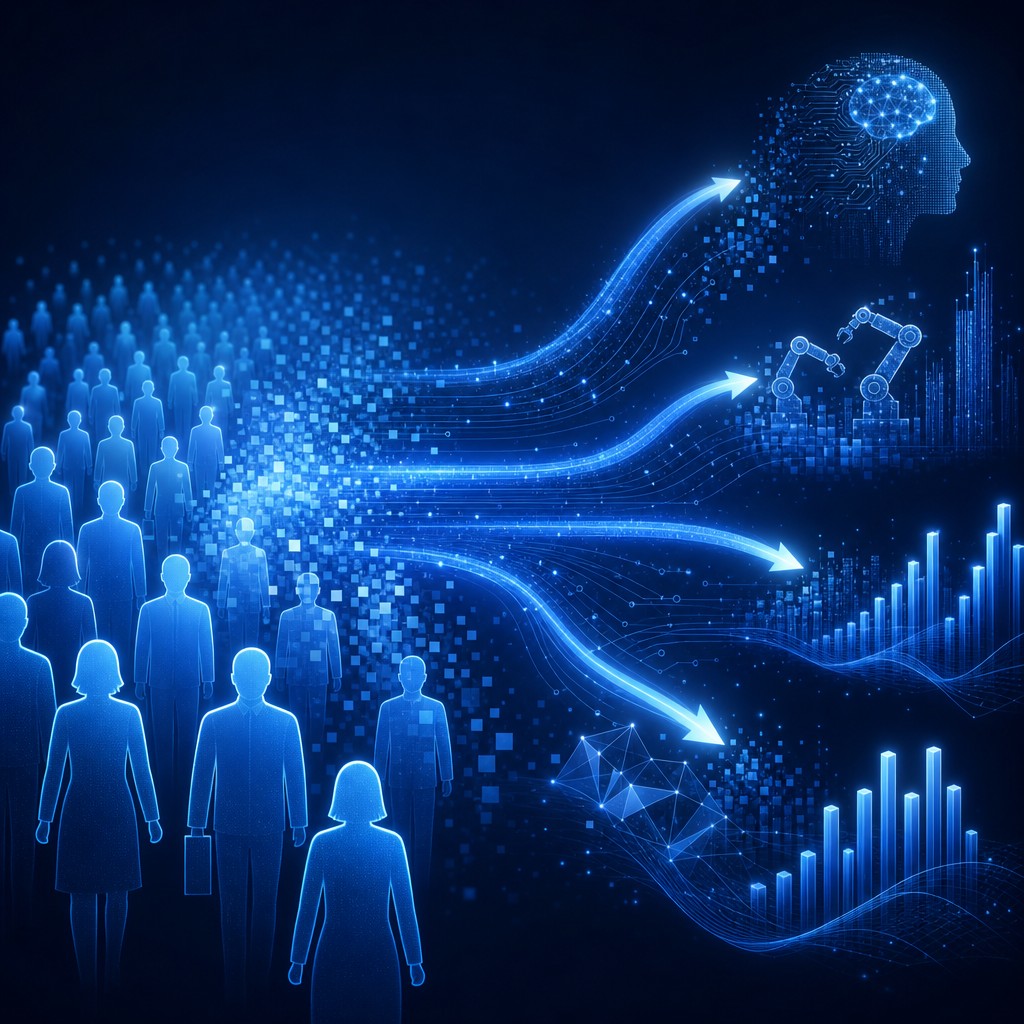
AI is reshaping the job market in three primary ways: by automating certain tasks, by augmenting human capabilities, and by creating entirely new categories of work. Understanding these forces helps workers and businesses prepare for a future that is already unfolding.
How AAMAX.CO Supports Businesses Through Workforce Change
As AI transforms how teams work, businesses need partners who can help them adapt their operations and digital presence. AAMAX.CO is a full-service digital marketing company serving clients worldwide, and they help organizations embrace AI-driven efficiency while continuing to grow their brand and reach. Their team supports companies in automating marketing workflows, strengthening their online visibility, and attracting both customers and talent in a competitive environment. Businesses navigating workforce change can hire AAMAX.CO to stay agile and forward-looking. Their digital marketing services help companies thrive even as the nature of work evolves.
Automation of Routine Tasks
The most visible effect of AI on the job market is the automation of repetitive and predictable tasks. Activities such as data entry, basic customer inquiries, invoice processing, and routine reporting are increasingly handled by intelligent systems. This automation improves efficiency and reduces costs, but it also changes the nature of jobs that previously revolved around these tasks.
Importantly, automation rarely eliminates entire jobs outright. Instead, it removes specific tasks, freeing workers to focus on more complex, creative, and interpersonal responsibilities. Roles evolve rather than vanish, though workers may need to develop new skills to remain valuable.
Augmentation: Humans and AI Working Together
Perhaps the most significant impact of AI is augmentation, where the technology enhances human capabilities rather than replacing them. Doctors use AI to analyze medical images more accurately, marketers use AI to generate ideas and analyze campaigns, and writers use AI to draft and refine content. In each case, the human remains in control while the AI accelerates and improves their work.
This collaboration boosts productivity and can make work more engaging by removing tedious tasks. Workers who learn to use AI tools effectively often become more valuable, as they can accomplish more in less time and deliver higher-quality results.
The Creation of New Roles
Every major technological shift has created new jobs, and AI is no exception. The demand for AI specialists, data analysts, automation experts, and machine learning engineers has surged. Beyond purely technical roles, new positions are emerging in AI ethics, prompt engineering, AI strategy, and human-AI collaboration design.
Many of these jobs did not exist a few years ago, illustrating how AI expands the job market even as it transforms existing roles. Businesses that adopt AI often find they need new talent to implement, manage, and optimize these systems.
Which Industries Are Most Affected
AI's impact varies across industries. Sectors with high volumes of routine, data-driven tasks such as finance, customer service, and administration are experiencing significant automation. Meanwhile, creative, strategic, and care-oriented fields are being augmented rather than automated.
Industries that rely heavily on human judgment, empathy, and complex decision making, such as healthcare, education, and skilled trades, remain resilient. Even within these fields, however, AI is changing day-to-day work by handling administrative burdens and providing data-driven insights.
Preparing Workers for an AI-Driven Future
The most effective response to AI's impact on the job market is proactive skill development. Workers who invest in digital literacy, data analysis, creativity, and adaptability position themselves to thrive. The ability to work alongside AI, interpret its outputs, and apply human judgment is increasingly valuable.
Lifelong learning is becoming the norm rather than the exception. Employers, educational institutions, and individuals all share responsibility for ensuring that the workforce can adapt to changing demands. Companies that invest in employee training not only future-proof their teams but also build loyalty and resilience.
How Businesses Should Respond
For businesses, the question is not whether to adopt AI but how to do so responsibly and effectively. Thoughtful integration of AI can boost productivity, reduce costs, and improve customer experiences. At the same time, companies must consider the human impact, investing in reskilling and maintaining a culture that values both technology and people.
Organizations that embrace AI strategically, while supporting their workforce through the transition, will be best positioned to compete. Strong digital marketing and a robust online presence further help businesses attract customers and talent in this evolving environment.
Conclusion: Adaptation Is the Key
AI is undeniably affecting the job market, but the story is one of transformation rather than wholesale destruction. Tasks are being automated, human work is being augmented, and new roles are emerging. The workers and businesses that succeed will be those who adapt, embrace continuous learning, and view AI as a powerful tool rather than a threat. With the right mindset and strategy, the AI-driven job market offers tremendous opportunity for growth and innovation.
Want your brand featured in front of decision-makers? Publish a guest post or get a link insertion in our guides through AAMAX's guest post and link insertion service.
Helpful Links
 SponsoredAAMAX — Full-Service Digital Agency
Write for Us
Share your expertise with our readers. We welcome guest contributions from industry specialists.
Pitch your idea

