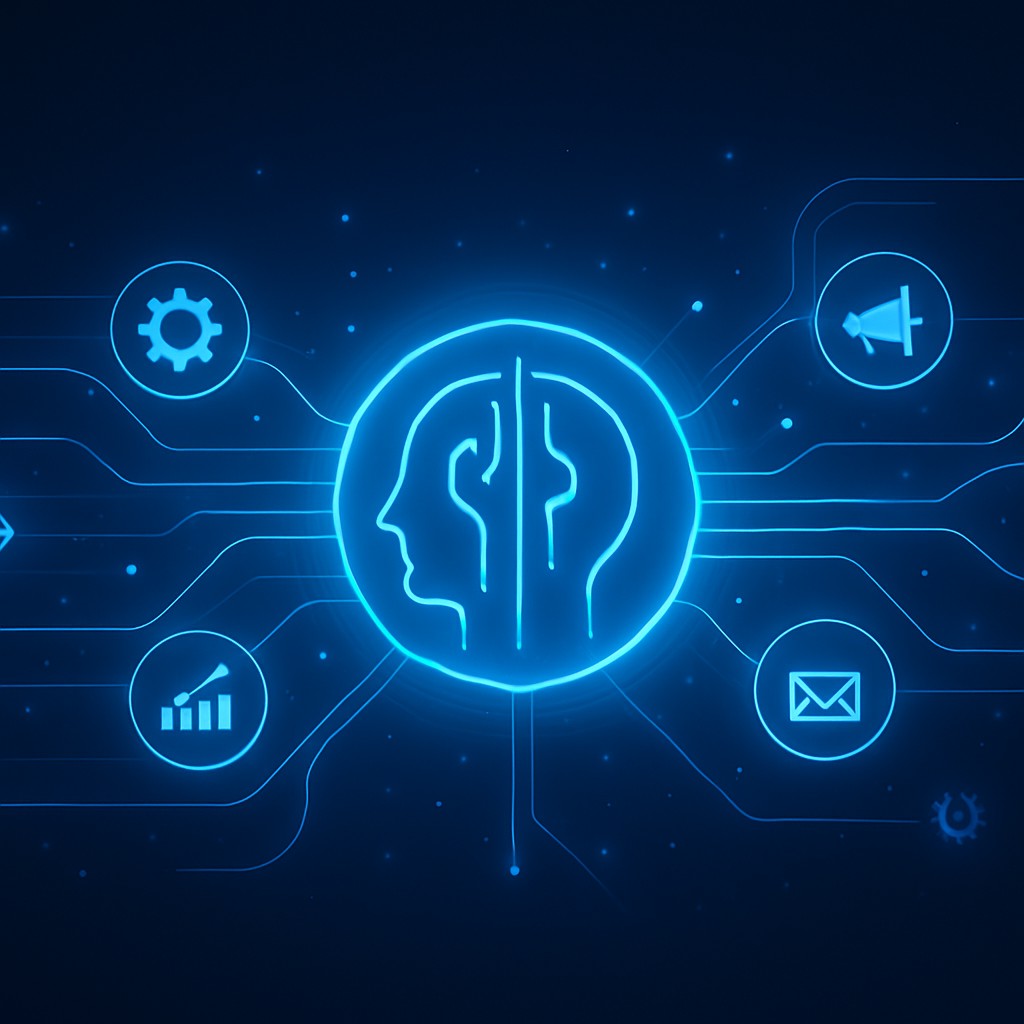
Marketing teams juggle countless moving parts, from campaign planning to customer outreach to performance analysis. AI agents, autonomous software systems that can reason, plan, and act, are emerging as powerful allies in managing this complexity. Unlike simple automation that follows fixed rules, AI agents adapt to context, make decisions, and complete multi-step tasks with minimal supervision. They can research audiences, draft and schedule content, respond to leads, and optimize spend in real time. Understanding how to deploy these agents effectively can dramatically expand what a lean marketing team can accomplish.
How AAMAX.CO Helps You Deploy AI Agents
Implementing AI agents requires careful strategy, integration, and oversight to deliver real value. AAMAX.CO helps businesses identify where AI agents can have the biggest impact and builds the infrastructure to support them. Their team blends marketing know-how with technical implementation, and their digital marketing expertise ensures agents are deployed in service of clear goals. Because they work with clients around the world, they bring practical experience across diverse industries and budgets. Their guidance helps companies adopt AI agents responsibly and effectively rather than chasing hype.
What Makes an AI Agent Different
Traditional automation executes predefined steps, while an AI agent pursues a goal by reasoning about the best path to achieve it. Given an objective like increasing newsletter signups, an agent can research tactics, draft variations, launch tests, and adjust based on results. This goal-oriented flexibility makes agents far more capable than rigid workflows. They can handle ambiguity, learn from feedback, and coordinate multiple tools to complete complex tasks. This represents a fundamental shift in how marketing work gets done.
Automating Campaign Planning and Execution
AI agents can take a campaign brief and break it into actionable steps, from audience research to creative development to scheduling. They draft copy, suggest visuals, segment audiences, and set up the necessary workflows across platforms. Once launched, the agent monitors performance and reallocates resources toward what works. This end-to-end orchestration reduces the manual coordination that typically slows campaigns down. Marketers shift from executing every detail to supervising and guiding the agent's decisions.
Personalizing Customer Outreach
Personalization at scale is one of the most compelling uses for AI agents. An agent can analyze each contact's behavior and craft tailored messages, recommend relevant products, and time outreach for maximum impact. It can manage conversations across email, chat, and social channels, responding to questions and nurturing leads around the clock. This level of responsiveness builds stronger relationships without requiring a large support team. Customers receive timely, relevant attention that feels personal rather than automated.
Continuous Optimization and Testing
AI agents excel at the relentless experimentation that drives marketing performance. They can run continuous A/B and multivariate tests, analyze results, and implement winning variations automatically. Because they operate tirelessly, agents identify improvements faster than human teams running periodic tests. This always-on optimization compounds over time, steadily improving conversion rates and reducing wasted spend. The agent becomes a tireless growth engine that refines campaigns while your team sleeps.
Gathering Insights and Reporting
Data analysis is often a bottleneck, but AI agents can synthesize performance data into clear, actionable insights. They generate reports that highlight what is working, what is not, and what to do next. Rather than drowning in dashboards, marketers receive concise summaries and recommendations. Agents can also flag anomalies and surface opportunities that might otherwise go unnoticed. This transforms raw data into a strategic asset that informs better decisions.
Keeping Humans in Control
Autonomy does not mean abandoning oversight. The most successful AI agent deployments keep humans in the loop for strategic decisions, brand voice, and ethical judgment. Setting clear guardrails, approval checkpoints, and performance thresholds ensures agents act within acceptable boundaries. Marketers should review agent outputs regularly and refine their instructions as needed. This collaborative model captures the efficiency of automation while preserving the human judgment that protects brand integrity.
Choosing the Right Tasks to Delegate
Not every task is suited for an AI agent. The best candidates are repetitive, data-heavy, or time-sensitive activities where speed and consistency matter. Strategic positioning, creative vision, and relationship building often benefit from a human touch. Start by delegating well-defined tasks with measurable outcomes, then expand as you build trust in the agent's performance. This thoughtful delegation maximizes value while minimizing risk during adoption.
Preparing Your Team for an Agent-Driven Future
As AI agents become more capable, the marketer's role evolves from executor to orchestrator. Teams that learn to direct, evaluate, and collaborate with agents will outpace those clinging to manual processes. Invest in training, establish clear governance, and start experimenting now to build organizational muscle. The businesses that master AI agents today will enjoy a significant advantage as the technology matures. With the right approach and partners, AI agents can elevate your marketing from reactive to remarkably proactive.
Want your brand featured in front of decision-makers? Publish a guest post or get a link insertion in our guides through AAMAX's guest post and link insertion service.
Helpful Links
 SponsoredAAMAX — Full-Service Digital Agency
Write for Us
Share your expertise with our readers. We welcome guest contributions from industry specialists.
Pitch your idea