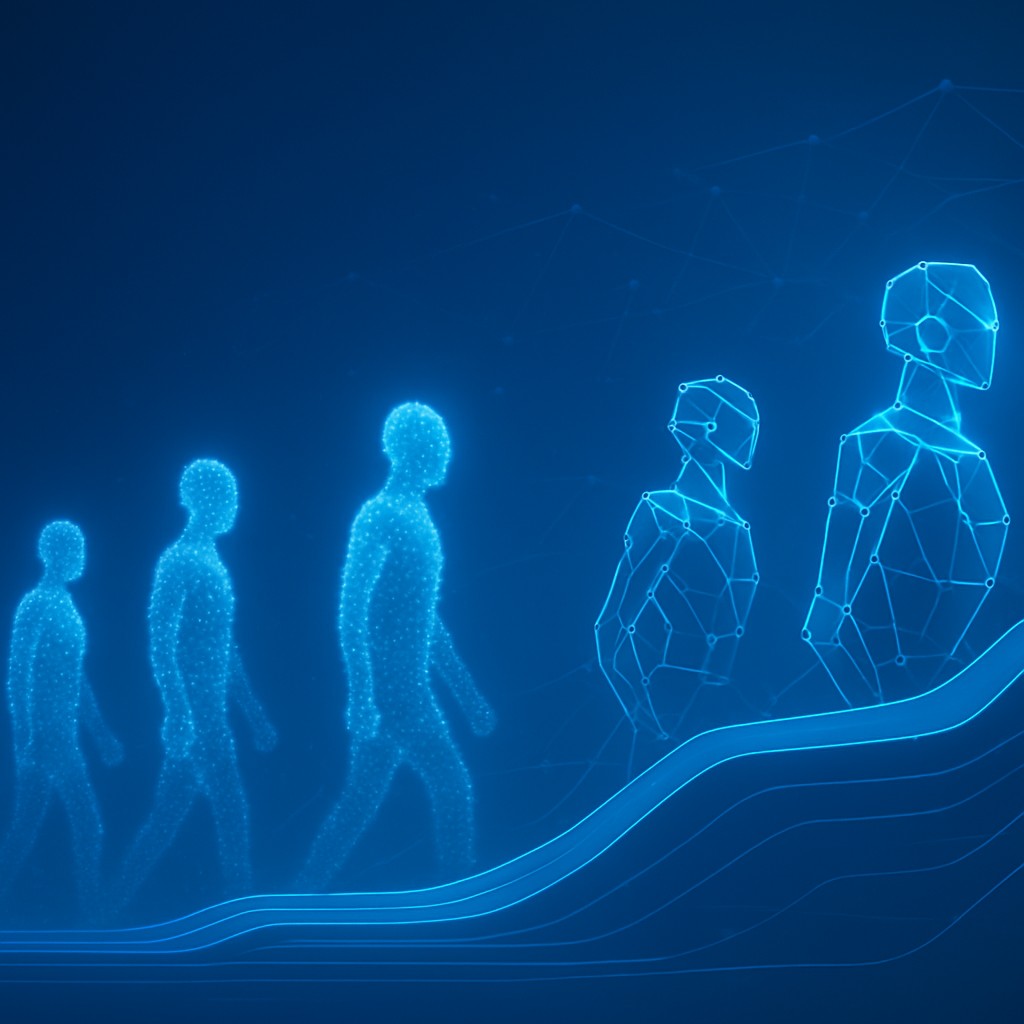
Artificial intelligence is changing the job market in significant and lasting ways, reshaping the kinds of work that are in demand, the skills employers value, and the structure of entire industries. While headlines often focus on automation and job loss, the reality is more nuanced. AI is eliminating some tasks, transforming many roles, and creating entirely new categories of work. Understanding these dynamics helps workers and businesses prepare for a future where humans and intelligent machines increasingly work side by side.
How AAMAX.CO Helps Businesses Adapt Their Teams
As AI reshapes work, businesses must rethink how their teams operate, especially in fields like marketing where the technology is advancing rapidly. AAMAX.CO is a full-service digital marketing company serving clients worldwide, and they help organizations integrate AI into their marketing operations in ways that empower employees rather than replace them. By handling the technical complexity and guiding strategy, they allow in-house teams to focus on the creative and strategic work where people add the most value.
Automation of Routine Tasks
The most immediate effect of AI is the automation of repetitive, rule-based tasks. Data entry, basic analysis, scheduling, and routine customer service are increasingly handled by intelligent systems. This automation improves efficiency and reduces costs, but it also means that roles built primarily around these tasks are changing. Rather than eliminating jobs wholesale, automation often removes the most tedious parts of a role, allowing workers to focus on higher-value activities that require judgment and creativity.
Transformation of Existing Roles
Many jobs are not disappearing but evolving. Marketers, analysts, designers, and countless other professionals now use AI tools as part of their daily work. A marketer might use AI to draft content and analyze performance, then apply human creativity and strategy to refine the results. This transformation raises the value of skills that complement AI, such as critical thinking, emotional intelligence, and the ability to interpret and act on machine-generated insights. Workers who learn to collaborate with AI become more productive and more valuable.
Creation of New Jobs
AI is also creating entirely new roles that did not exist a decade ago. Demand is growing for machine learning engineers, data scientists, AI ethicists, prompt specialists, and professionals who manage and govern AI systems. Beyond technical roles, there is rising demand for people who can bridge the gap between AI capabilities and business needs. As the technology spreads, the ecosystem of jobs supporting it continues to expand, offering new opportunities for those willing to develop relevant skills.
The Growing Importance of Skills
Perhaps the biggest change is in the skills the market rewards. Technical literacy, the ability to work with data, and comfort using AI tools are becoming baseline expectations across many fields. At the same time, distinctly human skills, creativity, communication, empathy, and complex problem-solving, are growing more valuable precisely because machines cannot replicate them. The most resilient workers will combine technical fluency with these human strengths, positioning themselves to thrive alongside AI.
Industry-by-Industry Impact
The effects of AI vary across industries. In marketing and media, AI accelerates content creation and analysis, shifting roles toward strategy and oversight. In manufacturing and logistics, automation changes the nature of physical and operational work. In healthcare, finance, and law, AI augments professionals by handling analysis while leaving judgment to humans. Each industry is finding its own balance, but the common thread is a shift toward roles that emphasize uniquely human contributions.
How Workers and Businesses Can Adapt
Adapting to this changing market requires a commitment to continuous learning. Workers should develop AI literacy, embrace new tools, and cultivate the human skills that remain in demand. Businesses, meanwhile, should invest in reskilling their teams and redesigning roles to take advantage of AI's strengths. Those who view AI as a partner rather than a threat will find the most opportunity. Proactive adaptation, rather than resistance, is the key to success in this new environment.
Conclusion
Artificial intelligence is changing the job market by automating routine tasks, transforming existing roles, creating new jobs, and reshaping the skills that matter most. The future of work will be defined by collaboration between humans and intelligent machines, with the greatest opportunities going to those who adapt and combine technical fluency with human creativity. By embracing continuous learning and viewing AI as a partner, both workers and businesses can navigate this transformation and emerge stronger.
Want your brand featured in front of decision-makers? Publish a guest post or get a link insertion in our guides through AAMAX's guest post and link insertion service.
Helpful Links
 SponsoredAAMAX — Full-Service Digital Agency
Write for Us
Share your expertise with our readers. We welcome guest contributions from industry specialists.
Pitch your idea