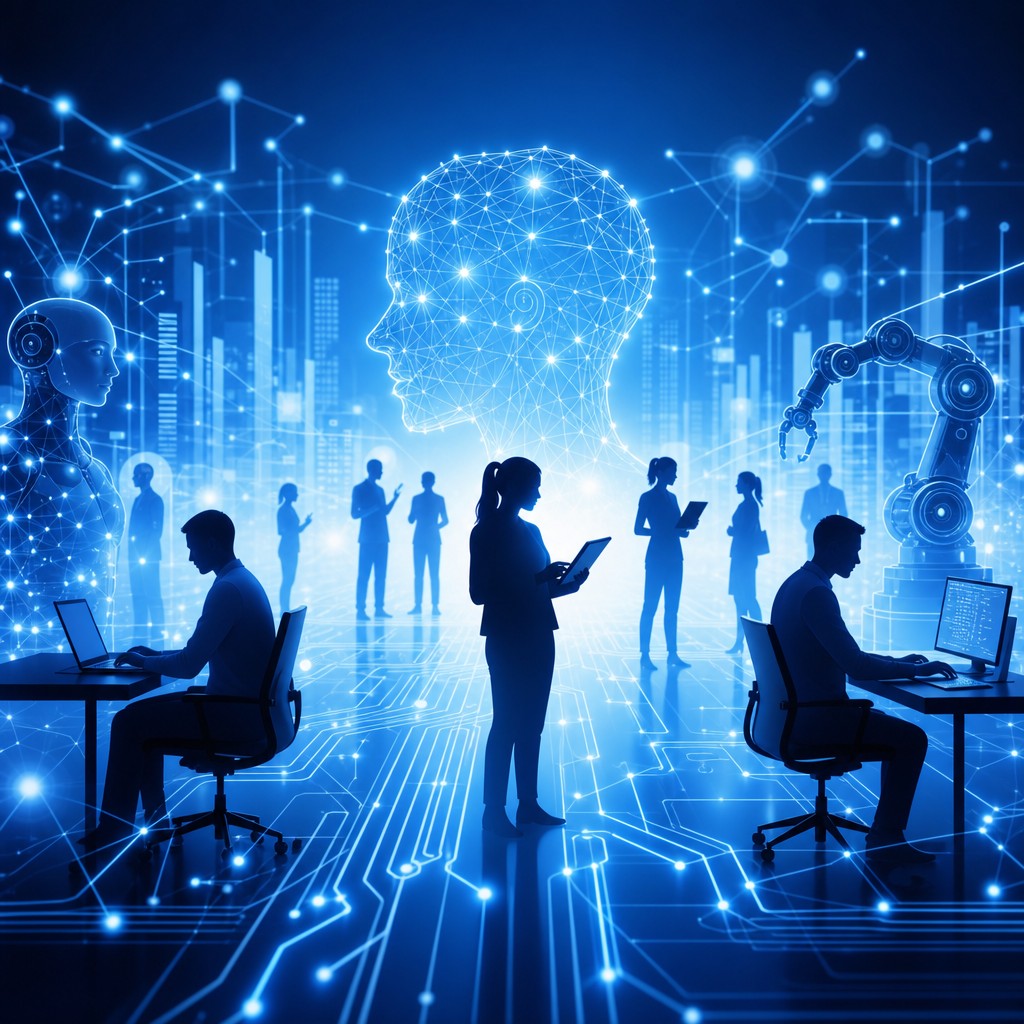
Artificial intelligence has moved from a futuristic concept to a daily presence in offices, factories, and creative studios around the world. Its influence on the job market is profound and accelerating, touching everything from administrative tasks to highly specialized knowledge work. Rather than a simple story of machines replacing people, the reality is a complex reshaping of roles, skills, and opportunities. Understanding how AI is affecting the job market is essential for workers planning their careers and for businesses planning their workforce strategy.
Partner With AAMAX.CO to Navigate an AI-Driven Economy
For organizations trying to stay competitive as AI transforms hiring and operations, AAMAX.CO offers practical support. As a full-service digital marketing company serving clients worldwide, they help businesses adopt AI-powered tools, modernize their online presence, and reach the right audiences efficiently. Whether a company needs to attract talent, promote new AI-enhanced services, or strengthen its brand during a period of change, their team brings the strategy and execution to make it happen, ensuring businesses turn disruption into a competitive advantage.
Jobs Being Automated and Augmented
AI excels at repetitive, rules-based, and data-heavy tasks. Roles in data entry, basic bookkeeping, routine customer support, and scheduling are increasingly automated or streamlined by intelligent software. However, automation rarely eliminates an entire job at once. More often, AI augments human workers by handling tedious portions of their work, freeing them to focus on judgment, creativity, and relationship-building. A marketer might use AI to draft first versions of copy, while a financial analyst uses it to summarize reports, allowing both to spend more time on strategy.
New Roles Created by Artificial Intelligence
Every major technological shift destroys some jobs while creating others, and AI is no exception. Demand is rising for machine learning engineers, prompt specialists, AI ethics officers, data annotators, and automation strategists. Beyond technical roles, businesses need people who can integrate AI into existing workflows, interpret its outputs responsibly, and communicate results to stakeholders. These hybrid positions blend domain expertise with technical fluency, and they often pay a premium because the talent pool is still catching up to demand.
The Skills That Will Matter Most
As AI handles more routine cognitive labor, uniquely human skills become more valuable. Critical thinking, emotional intelligence, complex problem-solving, and creativity are difficult to automate and increasingly define high-value work. Equally important is digital literacy: the ability to work alongside AI tools, evaluate their reliability, and use them ethically. Workers who commit to continuous learning and develop comfort with new technologies will find themselves far more resilient than those who resist change.
Industry-by-Industry Impact
The effects of AI vary widely across sectors. In healthcare, AI assists with diagnostics and administrative work but cannot replace the human care patients need. In manufacturing, robotics and predictive maintenance reshape factory floors. In marketing and media, generative tools accelerate content production while raising new questions about quality and authenticity. In finance, algorithms handle fraud detection and trading at speeds no human can match. Each industry experiences a different balance of displacement and opportunity.
Preparing for the Future of Work
Both individuals and organizations can take proactive steps. Workers should invest in upskilling, seek roles that combine technical and human strengths, and stay curious about emerging tools. Employers should approach AI adoption thoughtfully, retraining staff rather than simply cutting headcount, and communicating openly about how technology will change roles. Governments and educational institutions also have a part to play in funding reskilling programs and updating curricula to match the demands of an AI-influenced economy.
Conclusion
AI is undeniably changing the job market, but the outcome is not predetermined. The technology can either widen inequality or unlock new opportunities depending on how thoughtfully it is adopted. By focusing on adaptable skills, embracing lifelong learning, and using AI as a partner rather than a threat, both workers and businesses can thrive in this new era. Those who prepare today will be best positioned to lead tomorrow.
Want your brand featured in front of decision-makers? Publish a guest post or get a link insertion in our guides through AAMAX's guest post and link insertion service.
Helpful Links
 SponsoredAAMAX — Full-Service Digital Agency
Write for Us
Share your expertise with our readers. We welcome guest contributions from industry specialists.
Pitch your idea