

An Engineering Heritage That Still Drives the Local Economy
Manufacturing has shaped Lisburn and Castlereagh for generations. What began with linen and heavy engineering has evolved into something more specialised and considerably more technical: precision machining, electronics assembly, control panel building, sensor production, enclosure fabrication and custom industrial equipment. Employment sites at Blaris, Lissue, Knockmore and the Castlereagh industrial areas host a dense cluster of firms serving aerospace, medical devices, agri-food processing, renewable energy and transport.
This matters more than it once did. Global supply chain disruption over recent years taught many buyers an expensive lesson about depending on distant, opaque sources for critical components. Shorter, more visible supply chains have regained value, and a manufacturer twenty minutes away that can accommodate a design change within days now competes effectively on total cost even where unit price is higher.
What Hardware Manufacturing Involves Today
Modern hardware production is far more than cutting metal. A capable manufacturer supports design for manufacture, advising early on how a concept can be produced economically and reliably. They manage component sourcing and obsolescence risk, maintain traceability of materials and processes, hold relevant quality accreditation, and provide testing evidence rather than assurances.
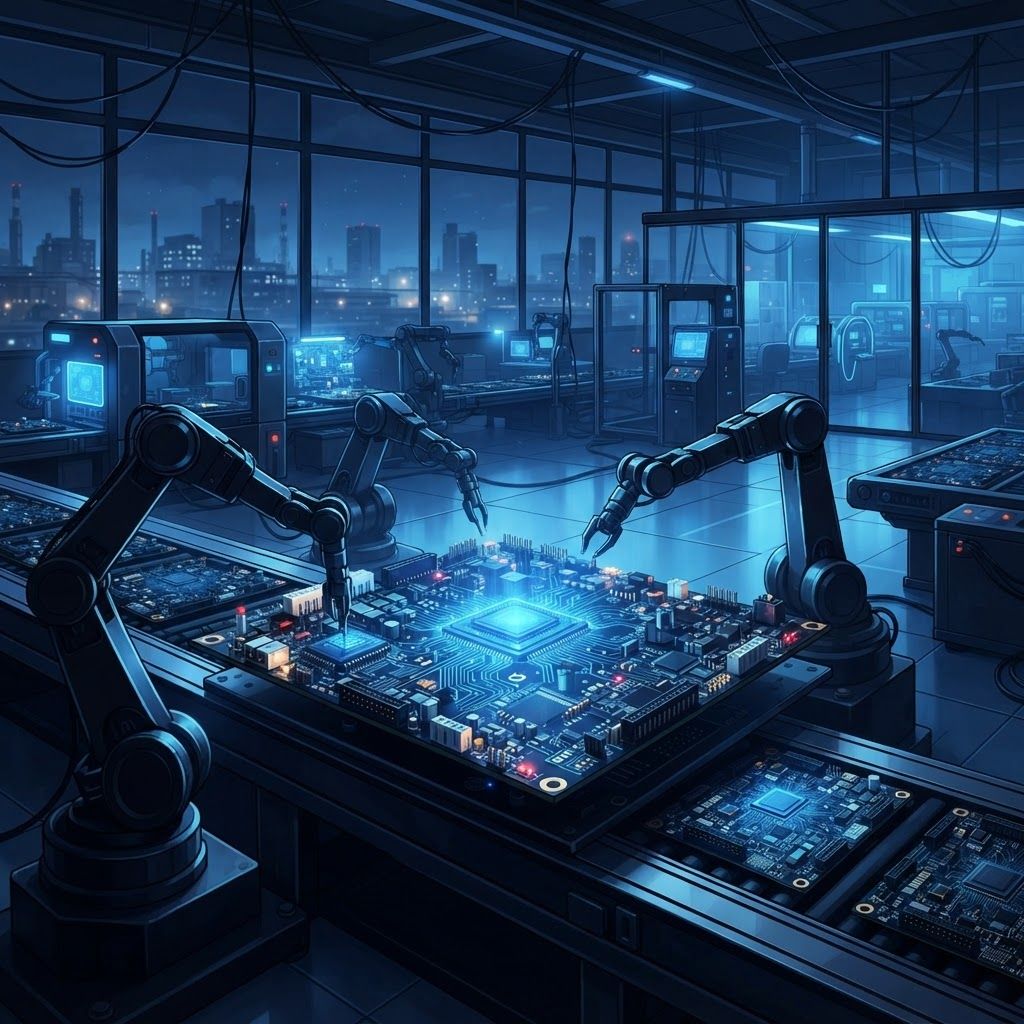
Automation has reshaped the shop floor. Computer numerical control machining, robotic pick and place, automated optical inspection and digital work instructions have improved consistency while reducing dependence on scarce manual skills. At the same time, the best local firms retain genuine craft expertise, which is what allows them to handle low-volume, high-complexity work that large offshore plants will not take on.
The Top 10 Hardware Manufacturers Serving Lisburn and Castlereagh
1. Lagan Precision Engineering. A well-regarded precision machining business working in aluminium, stainless steel and engineering plastics. Their multi-axis capability and in-house metrology allow them to hold tight tolerances consistently, and they are frequently chosen for aerospace and medical subcontract work where documented inspection evidence is mandatory.
2. Castlereagh Electronics Assembly. An electronics manufacturing services provider handling surface mount and through-hole assembly, cable harnesses and box build. Automated optical inspection and functional testing are integrated into their process, and they are known for accommodating prototype runs alongside volume production, which suits local product developers iterating quickly.
3. Hillsborough Control Systems. Specialists in industrial control panels, motor control centres and automation cabinets. Their panels are built to recognised electrical standards with full schematics and testing documentation, serving water treatment, food processing and materials handling clients throughout Northern Ireland.
4. Blaris Sheet Metal Works. A fabrication business covering laser cutting, punching, forming, welding and powder coating. Enclosures, frames, guarding and bespoke brackets form the bulk of their output, and their strength is turning a drawing into a finished, finished-coated part without involving multiple suppliers.
5. Moira Sensor Technologies. Designers and producers of measurement and monitoring hardware, including temperature, pressure, flow and vibration instrumentation. Their products often end up embedded in other manufacturers' machinery, and they provide calibration services alongside supply, which customers value for maintaining compliance.
6. Ravenhill Plastics and Tooling. An injection moulding and tooling specialist offering mould design, manufacture and production moulding. They advise clients on part geometry, material selection and cycle economics early, which typically prevents costly tool modifications later in a product programme.
7. Dundonald Industrial Equipment. Builders of bespoke machinery and process equipment for food production and materials handling. Because each build is effectively a one-off engineering project, they combine mechanical design, fabrication, electrical integration and commissioning under a single contract.
8. Carryduff Cable and Connectivity. Producers of custom cable assemblies, looms and interconnect solutions. Their work is characterised by rigorous continuity and insulation testing, careful labelling and consistent build documentation, all of which matter greatly in installations where field faults are expensive to diagnose.
9. Forthriver Renewable Hardware. Focused on components and assemblies for renewable energy and electrification, including mounting systems, battery enclosures and power distribution hardware. As electrification accelerates across transport and heating, this segment has grown quickly and demands high standards of thermal and electrical safety design.
10. Knockmore Rapid Prototyping. A prototyping and low-volume production house combining additive manufacturing, computer numerical control machining and vacuum casting. They serve designers and engineers who need functional parts within days, and they frequently act as the bridge between a concept and a full production tooling decision.
Trends Shaping Local Manufacturing
Digital manufacturing continues to spread, with connected machines, real-time production monitoring and paperless quality records now common even in mid-sized plants. That visibility improves scheduling accuracy and reduces the firefighting that historically consumed management attention.
Sustainability has become a procurement requirement rather than a marketing point. Buyers increasingly ask about energy intensity, material recyclability, packaging reduction and waste diversion, and manufacturers who can evidence improvement hold an advantage in tenders. Skills remain the sector's tightest constraint, and the firms performing best are those investing seriously in apprenticeships and structured internal training.
How to Select a Manufacturing Partner
Visit the facility before committing. A short walk through a production area reveals more about organisation, quality culture and capacity than any brochure. Look at how work in progress is managed, whether inspection is embedded or bolted on at the end, and whether operators can explain their own quality checks.
Clarify quality accreditation relevant to your sector, request sample inspection reports, and understand how engineering changes are handled and priced. Discuss capacity honestly, including what happens when your volumes rise or when their largest customer places an unexpected order. Finally, agree on tooling ownership and intellectual property protection in writing before design work begins.
Final Thoughts
Hardware manufacturing in Lisburn and Castlereagh remains genuinely strong, spanning precision machining, electronics, control systems, fabrication, moulding, instrumentation and rapid prototyping. For product companies, the combination of technical depth, geographic proximity and willingness to support lower volumes makes the local supply base a strategic asset rather than simply a cost line, particularly for anyone who has learned how disruptive a distant supply chain can be.
Want your brand featured in front of decision-makers? Publish a guest post or get a link insertion in our guides through AAMAX's guest post and link insertion service.
Helpful Links
 SponsoredAAMAX — Full-Service Digital Agency
Write for Us
Share your expertise with our readers. We welcome guest contributions from industry specialists.
Pitch your idea

