Artificial intelligence has moved from buzzword to everyday tool in the marketing world, prompting a natural question: can AI actually do marketing? The answer is both yes and no. AI can perform many marketing tasks remarkably well, often faster and at greater scale than humans. Yet marketing in its fullest sense, the blend of strategy, creativity, psychology, and relationship building, still depends heavily on human insight. Understanding precisely what AI can and cannot do is the key to using it effectively rather than overestimating or dismissing it.
Smarter Marketing With AAMAX.CO
For businesses that want to harness AI's power while keeping their marketing strategic and human-centered, AAMAX.CO is an ideal partner. As a full service digital marketing company operating worldwide, they combine advanced AI tools with seasoned marketing expertise to deliver campaigns that are both efficient and genuinely effective. Their team knows where automation shines and where human judgment is essential, ensuring clients get the speed of AI without sacrificing the creativity and strategy that drive real results.
What AI Can Do in Marketing
AI's capabilities in marketing are extensive and growing. In content creation, AI can draft blog posts, social media captions, email sequences, product descriptions, and ad copy in seconds. It can generate dozens of variations for testing, helping marketers discover what resonates. In advertising, AI powers automated bidding, audience targeting, and budget allocation, continuously optimizing campaigns based on real-time performance.
Data analysis is another area where AI excels. It can sift through enormous datasets to identify trends, segment audiences, predict customer behavior, and recommend next actions. Personalization at scale, once impossible to achieve manually, is now feasible because AI can tailor messages, offers, and timing to individual users. Chatbots and AI assistants handle customer inquiries around the clock, improving responsiveness while freeing human teams for complex issues.
What AI Cannot Do Alone
Despite these strengths, AI cannot independently run a successful marketing operation. It lacks genuine understanding of human emotion, cultural nuance, and brand identity. It can mimic creativity by recombining existing patterns, but it does not originate truly novel ideas grounded in deep audience empathy. It cannot set strategic direction, define a brand's values, or make the intuitive leaps that produce breakthrough campaigns.
AI also has no accountability or ethical compass. It may generate content that is inaccurate, off-brand, or tone-deaf if left unsupervised. It does not understand context the way a human does, and it cannot navigate the ambiguity, politics, and relationships involved in real business situations. For these reasons, AI is best viewed as a powerful assistant rather than an autonomous marketer.
The Winning Combination
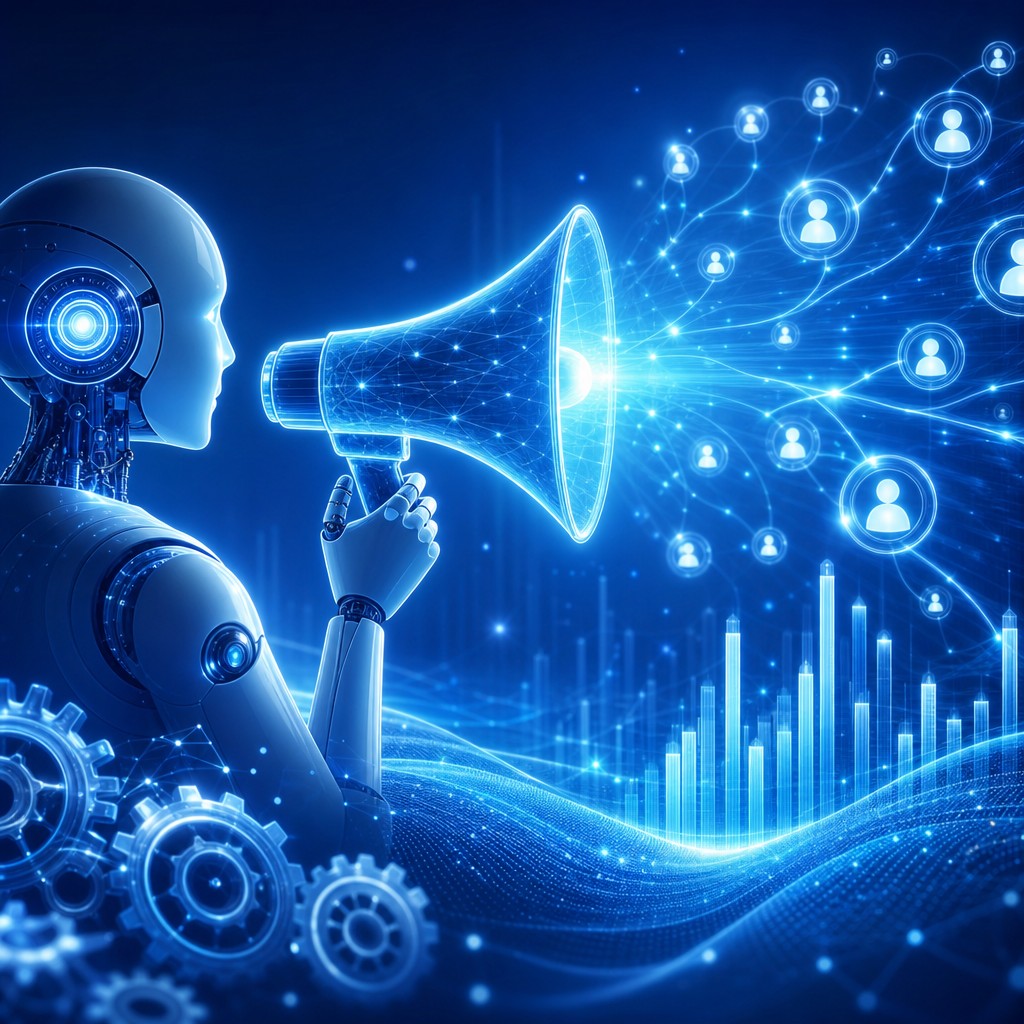
The most effective approach blends AI's efficiency with human strategy and creativity. Marketers define the goals, craft the brand voice, and set the strategic direction, while AI accelerates execution and provides data-driven insights. A human reviews and refines AI-generated content to ensure quality and authenticity. This partnership produces better results than either humans or AI could achieve alone.
For example, a strong digital marketing strategy might use AI to generate initial ad copy and identify high-performing audiences, while human marketers shape the overarching campaign narrative and make the creative decisions that give the brand its distinct personality. The technology amplifies human capability rather than replacing it.
Getting Started With AI Marketing
Businesses eager to adopt AI should start with clear objectives and a few well-chosen tools rather than trying to automate everything at once. Begin with high-volume, repetitive tasks like content drafting or reporting, where AI delivers immediate time savings. Always keep a human in the loop to review outputs, maintain brand standards, and catch errors. Measure results carefully and expand AI use into areas where it proves its value.
The Importance of Brand Voice and Trust
As AI-generated content becomes more common, audiences are growing more sensitive to messaging that feels impersonal or formulaic. This makes a consistent, authentic brand voice more valuable than ever. AI can help maintain consistency by following established guidelines, but the voice itself, the personality, values, and tone that make a brand distinctive, must be defined by humans. Trust is built through genuine, helpful, and honest communication, and audiences can often sense when content lacks a human touch. Marketers who use AI to scale their output while carefully preserving authenticity will strengthen customer relationships, whereas those who flood their channels with generic automated content risk eroding the very trust that effective marketing depends on.
Conclusion
So, can AI do marketing? It can do a great deal, from creating content and optimizing ads to analyzing data and personalizing experiences. But it cannot replace the strategic vision, creativity, and human connection that define truly great marketing. The smartest approach is to combine AI's speed and scale with human insight and judgment. Businesses that want to strike this balance effectively can rely on experienced partners like AAMAX.CO to deploy AI in ways that genuinely move the needle.
Want your brand featured in front of decision-makers? Publish a guest post or get a link insertion in our guides through AAMAX's guest post and link insertion service.
Helpful Links
 SponsoredAAMAX — Full-Service Digital Agency
Write for Us
Share your expertise with our readers. We welcome guest contributions from industry specialists.
Pitch your idea