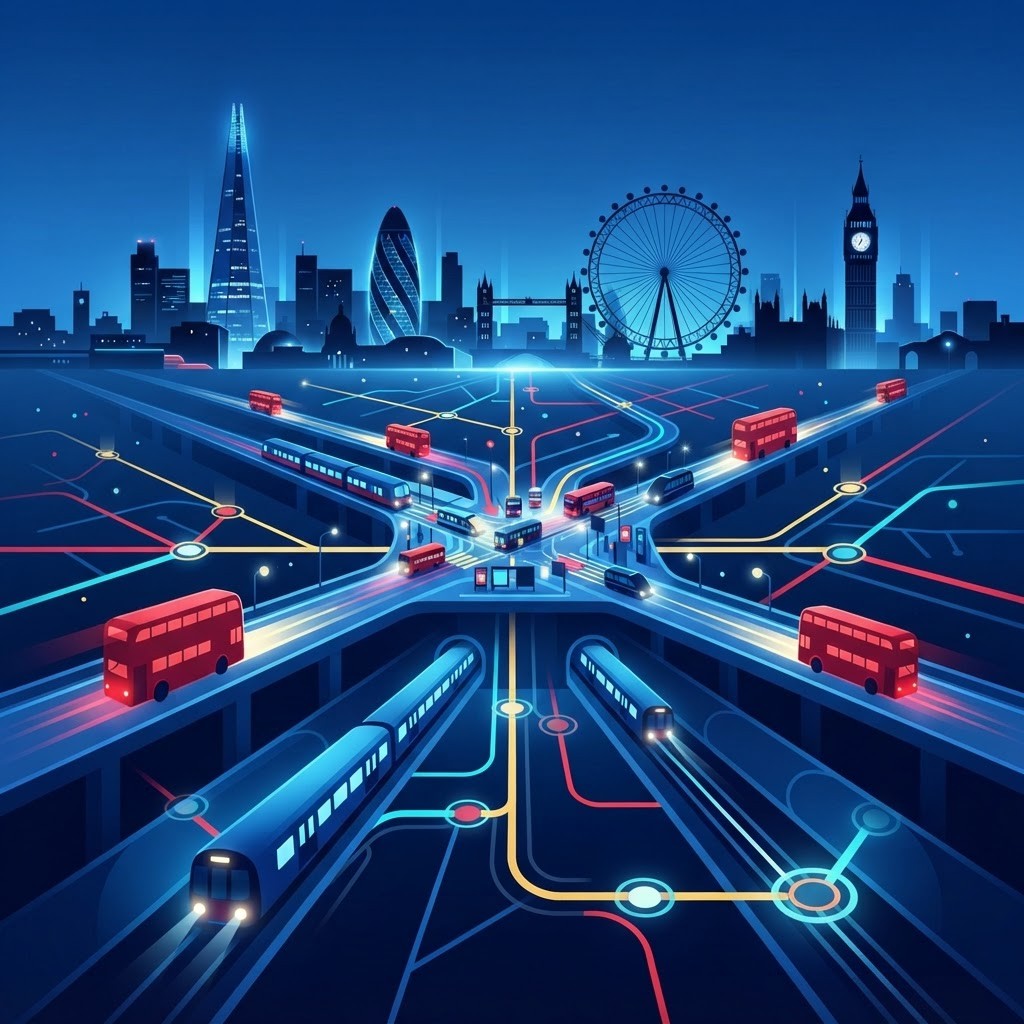
A World-Leading Transport Network
London's public transport system is a marvel of coordination, moving millions of people across the capital each day through an interconnected web of underground trains, buses, trams, riverboats, and cycle schemes. Managed to work together seamlessly, these services allow residents and visitors to travel across the city with remarkable ease, often without ever needing a car.
The strength of London's transit lies in its integration. A single payment method can carry a passenger across multiple modes, with fares automatically capped to ensure value. This joined-up approach, combined with high frequencies and extensive coverage, makes public transport the natural choice for the majority of journeys within the capital.
What Makes London's Transit Exceptional
Frequency, coverage, and reliability are the pillars of a great transit system, and London excels across all three. Services run from early morning until late at night, with night services on key routes, ensuring the city remains connected around the clock. Real-time information, contactless payment, and clear signage make journeys intuitive even for first-time visitors.
Accessibility has become a growing priority, with step-free access, audvisual announcements, and dedicated spaces improving travel for everyone. The system's commitment to sustainability, through electric buses and cleaner trains, reflects a broader ambition to reduce emissions and improve air quality across the capital.
The Top 10 Public Transit Services in London
1. London Underground. The iconic Tube is the backbone of the capital's transit, offering fast, frequent services across an extensive network that reaches deep into the city and suburbs.
2. London Buses. With one of the largest bus networks in the world, London Buses provide comprehensive coverage, frequent services, and an increasingly electric fleet.
3. Elizabeth Line. This modern high-capacity railway has transformed cross-city travel with spacious trains, fast journeys, and excellent accessibility.
4. London Overground. Weaving an orbital network around the capital, the Overground connects neighbourhoods and relieves pressure on the central network with reliable service.
5. Docklands Light Railway (DLR). An automated network serving east London, the DLR offers frequent, driverless services that connect key business and residential districts.
6. London Trams. Serving south London, the tram network provides a smooth, accessible option that links residential areas with town centres and rail connections.
7. London River Services (Uber Boat by Thames Clippers). Riverboat services along the Thames offer a scenic and efficient alternative, connecting piers across the capital with frequent departures.
8. Santander Cycles. London's public cycle hire scheme provides an affordable, healthy way to travel short distances, with docking stations across the city.
9. IFS Cloud Cable Car. Crossing the Thames in east London, this cable car offers a unique aerial link and a memorable way to travel between riverside districts.
10. Dial-a-Ride and Accessible Transport. Door-to-door services for those unable to use mainstream transport ensure the network remains inclusive and accessible to all residents.
Innovation Driving the Network Forward
London's transit system continues to evolve through investment and innovation. Contactless and mobile payments have simplified ticketing, while real-time apps help passengers plan journeys and avoid disruption. The rollout of electric buses is improving air quality, and ongoing signalling upgrades are increasing capacity on the busiest lines.
Integration remains a defining feature. The ability to combine trains, buses, boats, and bikes within a single, fare-capped journey encourages people to leave cars at home. This holistic approach supports the capital's environmental goals while keeping the city moving efficiently.
Transport as a Driver of Opportunity
London's public transit does far more than move people; it shapes the very fabric of the city. Access to reliable transport determines where people can afford to live, which jobs they can reach, and how easily they can access education, healthcare, and culture. Well-connected neighbourhoods flourish, attracting investment, businesses, and new residents, while transport improvements can transform the fortunes of previously overlooked districts. The affordability of the network, underpinned by fare caps and integrated ticketing, ensures that mobility remains within reach for the vast majority of Londoners. By keeping the city connected and inclusive, public transport underpins the economic vitality and social cohesion that make the capital such a dynamic place to live and work.
Getting the Most from London Transport
For travellers, the key to using London's transit effectively is embracing its integration. Contactless payment offers the simplest and most cost-effective way to travel, with daily and weekly caps automatically applied. Journey planning tools help identify the fastest routes and provide live updates on service status.
Whether commuting daily or exploring as a visitor, the network offers a mode of transport for every need, from the speed of the Tube to the scenic calm of a river journey. The services profiled here collectively form one of the most comprehensive and accessible transit systems anywhere in the world.
The Road Ahead
As London grows and prioritises sustainability, public transport will remain central to how the city moves. Continued investment in capacity, accessibility, and cleaner vehicles will shape the future, ensuring that the capital's transit network continues to serve millions with reliability, efficiency, and an ever-improving passenger experience.
Want your brand featured in front of decision-makers? Publish a guest post or get a link insertion in our guides through AAMAX's guest post and link insertion service.
 SponsoredAAMAX — Full-Service Digital Agency
Write for Us
Share your expertise with our readers. We welcome guest contributions from industry specialists.
Pitch your idea