Why East Hampshire Is Motorcycling Country
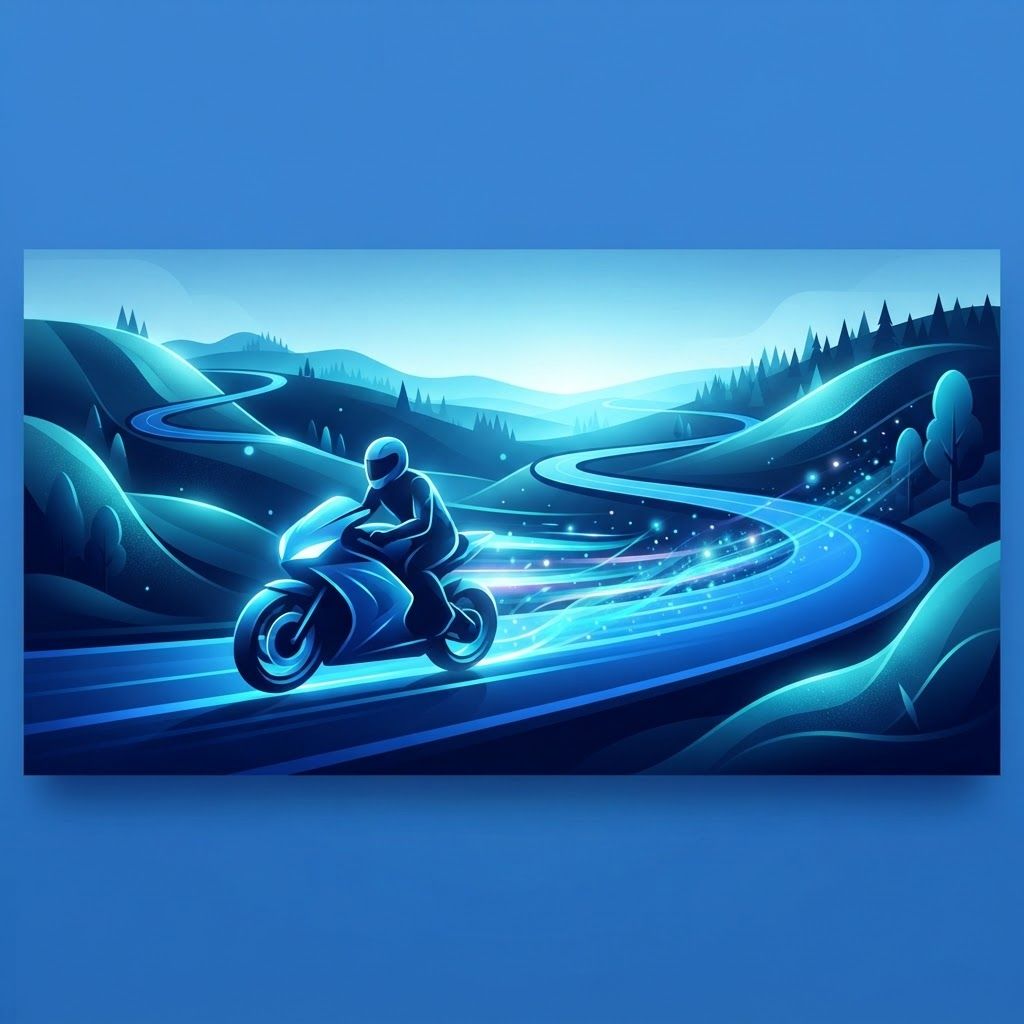
Few parts of southern England offer a better mix of riding conditions than East Hampshire. The district is threaded with the kind of roads motorcyclists actively seek out: the sweeping climbs and descents around Butser Hill, the tight wooded lanes near Selborne and Hawkley, the open runs across the chalk downland toward the Meon Valley, and the A3 corridor for fast, efficient distance work. Within an hour a rider can reach the coast, the New Forest or the Surrey Hills.
That geography shapes which motorcycle brands make sense locally. A machine optimised for straight-line motorway cruising is poorly suited to the district's lanes, while something aggressively track-focused becomes tiring on the broken rural surfaces that follow a wet Hampshire winter. The marques that dominate driveways across Petersfield, Alton, Liphook, Clanfield and Bordon tend to be those that balance agility, real-world comfort and all-weather usability.
The Marques That Define Local Riding
Triumph occupies a special place in the district. As a British manufacturer with a strong modern classic range, it appeals to riders who want character without sacrificing modern braking, fuel injection and rider aids. The Bonneville family, the Speed Twin and the Tiger adventure range are all common sights on Hampshire roads, and the brand's dealer network across the South East is well developed.
BMW Motorrad dominates the touring and adventure segment. The GS series in particular has become the default choice for riders who commute year-round and tour in summer, valued for its weather protection, luggage capability and long service intervals. The brand's technology-led approach, including adaptive cruise control and sophisticated electronic suspension, resonates with riders who cover high annual mileage.
Honda remains the reliability benchmark and the most common entry point for new riders. Its range spans everything from learner-legal 125s used by students commuting to Alton College and Havant and South Downs College, through to the CB and NC middleweights that suit rural commuting, and the Africa Twin for adventure touring. Honda's reputation for engineering longevity means used examples hold value strongly.
Yamaha has a strong following through the MT naked range and the Ténéré adventure line. The MT-07 in particular has become something of a default first big bike, prized for its manageable weight, torquey parallel twin and low running costs, all of which suit the district's mix of lanes and town riding.
Kawasaki, Suzuki and KTM each hold meaningful local share. Kawasaki appeals through the Z and Ninja families and the practical Versys. Suzuki retains loyal owners of the V-Strom and GSX-S. KTM draws riders who want sharper, more focused handling and lighter weight, which pays dividends on twisty Hampshire back roads.
Ducati and Harley-Davidson serve the character and lifestyle end of the market. Ducati's Monster and Multistrada are increasingly used as everyday machines rather than weekend exotica, while Harley-Davidson retains a committed local ownership community centred on organised ride-outs and rallies.
Royal Enfield has grown substantially in recent years, driven by genuinely affordable pricing, straightforward mechanicals and retro styling that suits leisurely exploration of the South Downs rather than outright speed. For riders returning to motorcycling after a long break, it has become a popular and low-risk re-entry point.
Finally, electric marques led by Zero and a growing set of newer manufacturers are establishing a presence. For riders whose usage is dominated by short commutes within the district, the combination of near-silent running, minimal servicing and very low energy cost is compelling, although touring range remains the constraint.
Matching a Brand to Real Local Use
The right choice depends far more on usage pattern than on brand prestige. A rider commuting daily from Liphook to Portsmouth in all weather needs weather protection, heated grips, luggage capacity and a machine that tolerates winter salt. Adventure and sports-touring models from BMW, Honda, Yamaha and Triumph are built for exactly this.
A rider whose motorcycling is primarily weekend leisure across the South Downs will get more enjoyment from something lighter and more responsive. Middleweight nakeds and modern classics excel here, because the district's roads rarely reward outright power but consistently reward agility and strong mid-range torque.
New and returning riders should weight reliability, insurance cost and parts availability heavily. Insurance in rural Hampshire is generally more favourable than in urban areas, but theft risk rises sharply for high-value machines stored without secure parking, which affects both premiums and the practical choice of brand.
Trends Shaping Motorcycling in the District
Several developments are reshaping local riding. Rider aids that were once premium features, including cornering ABS, traction control and ride-by-wire throttle mapping, have moved into mid-range machines. On rural roads with variable grip, unexpected gravel and frequent damp patches beneath tree cover, these systems have measurably improved safety.
Connected technology is now standard across most ranges, with turn-by-turn navigation displayed on colour dashboards and smartphone integration replacing bar-mounted phone holders. For exploring unfamiliar downland lanes this is a genuine practical gain.
Electrification continues to progress, though more slowly in motorcycling than in cars. The main constraints remain energy density and charging time rather than manufacturer willingness, and for most riders in East Hampshire an electric machine currently works best as a second bike for local use.
There is also a strong and growing culture of rider training beyond the basic licence. Advanced courses focused on cornering technique, observation and hazard perception on rural roads are increasingly popular, reflecting a recognition that the district's most enjoyable roads are also its most demanding.
Practical Considerations Before Buying
Consider dealer proximity for servicing and warranty work, as a marque with no support within a reasonable ride becomes inconvenient quickly. Think about secure storage, since a locked garage with a ground anchor influences both insurance cost and peace of mind. Factor in consumables honestly: tyres, chains and brake pads on a powerful machine represent a substantial annual cost that is easy to underestimate.
Above all, test ride. Seat height, reach to the bars, weight at walking pace and low-speed manoeuvrability vary enormously between brands and matter far more in daily use than peak horsepower figures ever will.
A Strong Local Riding Community
What ultimately makes East Hampshire good for motorcyclists is not any single brand but the surrounding ecosystem: independent specialists who understand particular marques, active local ride-out groups, and roads that reward skill. Choosing a brand is really about choosing which of those experiences you want to have most often.
Want your brand featured in front of decision-makers? Publish a guest post or get a link insertion in our guides through AAMAX's guest post and link insertion service.
Helpful Links
 SponsoredAAMAX — Full-Service Digital Agency
Write for Us
Share your expertise with our readers. We welcome guest contributions from industry specialists.
Pitch your idea