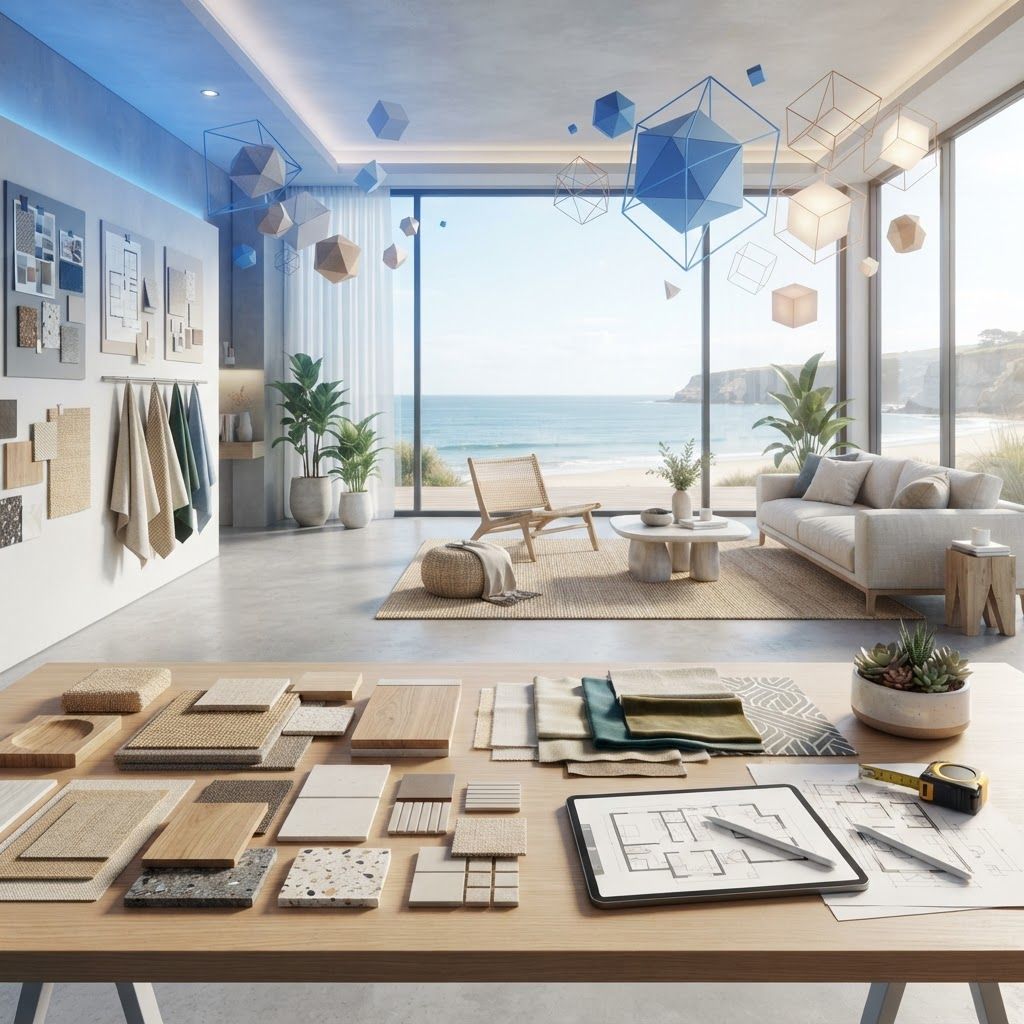
Designing for an Island Aesthetic
Interior design on the Isle of Wight is shaped by the buildings the island has inherited and the light it receives. Victorian and Edwardian seaside architecture dominates Ventnor, Shanklin and Ryde, with high ceilings, generous bay windows and often difficult proportions. The rural west is characterised by stone and brick cottages and converted agricultural buildings with low ceilings and small openings. Around Cowes and the northern shore, contemporary waterfront homes prioritise glazing and views.
Each type demands a different approach, but all share common island constraints. Salt air is aggressive on metalwork, finishes and textiles near the coast. Humidity levels in older solid-walled buildings require breathable materials rather than sealed modern systems. And every sofa, slab of stone and roll of wallpaper crosses the Solent by ferry, which affects both cost and lead time in ways mainland designers routinely underestimate.
The best island designers turn these constraints into a coherent design language: durable natural materials, layered lighting to handle short winter days, colour palettes that respond to the changing quality of sea light, and a preference for pieces that age gracefully rather than looking tired after two seasons.
Ten Interior Design Practices and Resources
1. Established Island Design Studios. Several full-service practices operate island-wide, handling everything from concept and space planning through to procurement and installation. Their advantage is managing the entire process, including the logistics of getting goods to the island on schedule.
2. Coastal and Marine-Influenced Designers in Cowes. Working close to the island's yachting industry, some designers bring genuine marine interior experience, including compact space planning, bespoke joinery and materials proven to withstand a marine environment. This expertise translates well to waterfront homes.
3. Period Property Specialists in Ventnor and Bonchurch. Restoring Victorian villas requires knowledge of lime plaster, sash window repair, cornice and fireplace restoration, and the sensitive integration of modern heating and lighting. Designers who work regularly with conservation officers are invaluable here.
4. Rural and Barn Conversion Designers in the West Wight. Agricultural conversions present challenges around insulation, natural light and defining zones in large open volumes. Practices focused on this sector combine architectural thinking with interior detail.
5. Holiday Let and Hospitality Interior Specialists. Designing for short-term rental is a distinct discipline. Everything must be photogenic, extremely durable, easy to clean and quick to turn around between guests. Designers working in this niche understand contract-grade specification and the commercial logic of nightly rates.
6. Kitchen and Bathroom Design Showrooms. Island showrooms offering full design, supply and installation remain the most common route for homeowners undertaking single-room projects. Their strength is coordinated delivery and local fitting teams who will return if something needs adjusting.
7. Independent Decorators and Colour Consultants. For homeowners who want direction rather than a full service, consultation-only designers provide schemes, palettes and shopping lists at a fraction of project-management fees.
8. Soft Furnishing and Curtain Makers. The island supports a network of skilled makers producing bespoke curtains, blinds, cushions and upholstery. Made-to-measure window treatments are particularly important in period properties where standard sizes rarely fit.
9. Island Furniture Makers and Craftspeople. A strong maker community produces bespoke joinery, cabinetry and furniture. Commissioning locally removes ferry freight from the equation and supports the island economy, and the results are usually better fitted to awkward period spaces than off-the-shelf alternatives.
10. Architectural Practices with Interior Capability. For structural reconfiguration, extensions or new-build homes, island architects who offer interiors as an integrated service produce the most coherent results, because material and lighting decisions are made alongside the plan rather than afterwards.
How to Choose the Right Designer
Begin by defining scope honestly. A single-room refresh, a whole-house refurbishment and a new-build fit-out demand different practices and different budgets. Ask to see completed projects of comparable scale and, ideally, in comparable buildings.
Clarify the fee model. Designers typically charge a fixed project fee, an hourly rate, a percentage of project cost, or a combination, and many take trade discounts on furniture. There is nothing wrong with any model, but it should be transparent and set out in writing at the outset.
Ask specifically about island logistics. How do they handle delivery of large items? What lead times do they build in? Do they have relationships with island fitters, electricians and decorators? A designer who has never coordinated a ferry delivery slot will learn expensively at your cost.
Trends Shaping Island Interiors
Several currents are visible in current island work. There is a decisive move away from the generic grey-and-white coastal look towards richer, more grounded palettes drawn from the landscape: chalk, gorse, heather, oak and sea green. Natural materials, reclaimed timber and locally made pieces are favoured over mass-market furniture.
Energy performance has become a design concern rather than purely a technical one. Insulation upgrades, secondary glazing that respects period windows, and heat pump installations all have significant spatial and visual consequences, and designers are increasingly involved in resolving them elegantly.
Multi-functionality is another theme, driven by remote working. Spare bedrooms are becoming studies, and open-plan spaces need acoustic separation for video calls, which has revived interest in broken-plan layouts, crittall-style screens and built-in joinery.
Budgeting Realistically
Island projects should carry a contingency above what a mainland equivalent would require, typically because of freight, access constraints on narrow lanes, and the limited pool of specialist trades during the busy summer months. Booking contractors in the quieter winter period frequently secures both better availability and better pricing.
Above all, invest in the elements that are difficult to change later: layout, lighting design, joinery and windows. Furnishings and finishes can evolve, but a well-resolved plan and a considered lighting scheme will carry an island home for decades.
Want your brand featured in front of decision-makers? Publish a guest post or get a link insertion in our guides through AAMAX's guest post and link insertion service.
Helpful Links
 SponsoredAAMAX — Full-Service Digital Agency
Write for Us
Share your expertise with our readers. We welcome guest contributions from industry specialists.
Pitch your idea