

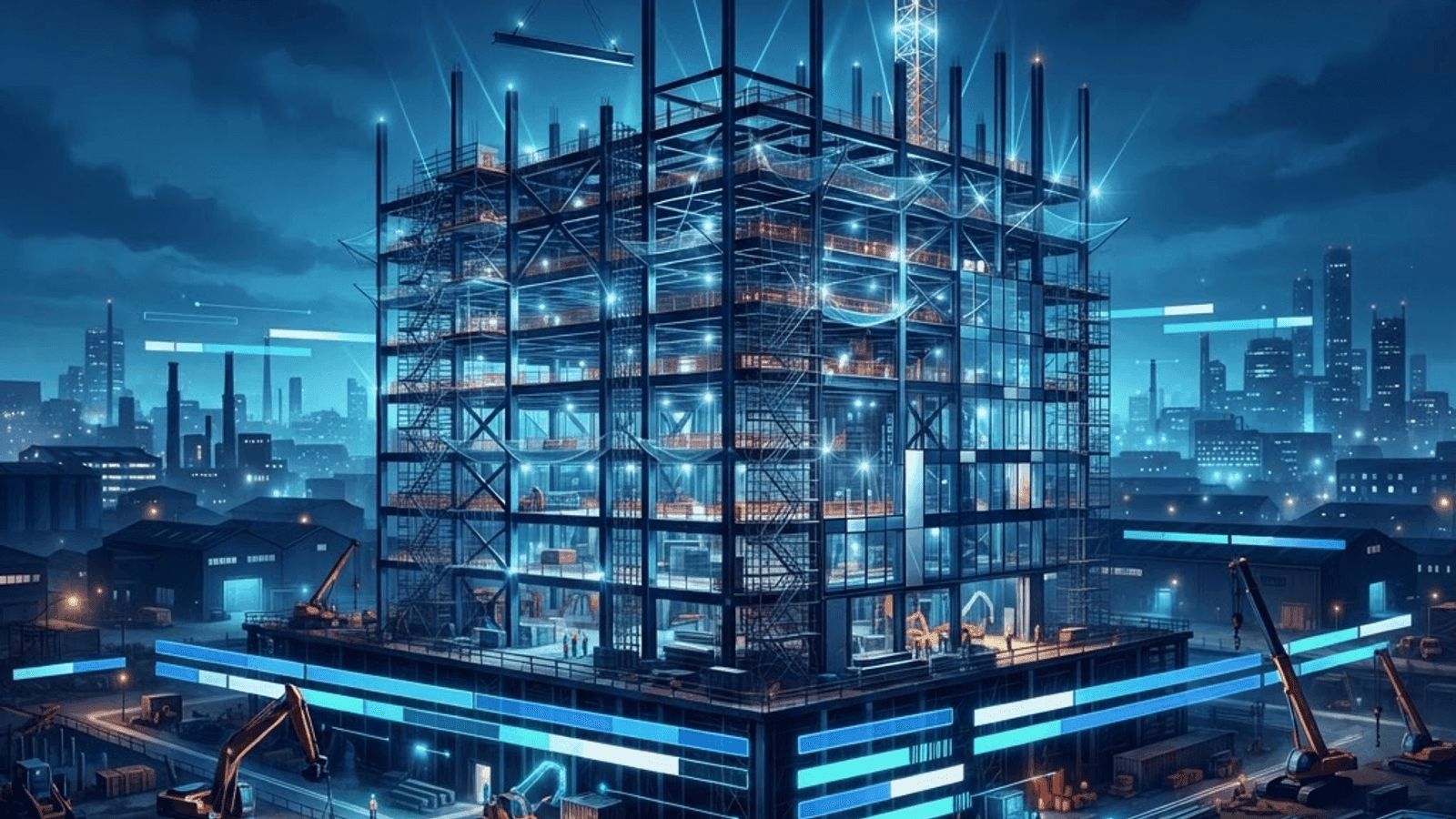
Commercial Building in the District
The commercial construction market in Fermanagh and Omagh is driven by a distinctive local economy. Agri-food processing, engineering and manufacturing, tourism and hospitality around the lakelands, retail in Enniskillen and Omagh town centres, healthcare, education and public sector facilities all generate construction demand. Each sector brings its own regulatory and technical requirements.
Commercial clients differ from domestic ones in what they value. Programme certainty usually outranks absolute lowest cost, because a delayed factory or retail unit means lost revenue. Compliance is non-negotiable, particularly in food processing and healthcare. And where works are carried out in occupied premises, minimising operational disruption becomes a primary design consideration rather than an afterthought.
Top 10 Commercial Construction Companies
1. Erne Commercial Construction
Erne Commercial Construction delivers offices, retail units and light industrial buildings across County Fermanagh. The firm's planning and programming discipline is its main strength, with detailed construction programmes maintained and reported against throughout the contract.
2. Omagh Industrial Builders
Omagh Industrial Builders specialises in steel-framed industrial and warehouse buildings. Portal frame construction, cladding systems, large-span roofs, loading infrastructure and heavy floor slabs form the core of its work for manufacturing and distribution clients.
3. Lakeland Hospitality Construction
Reflecting the tourism economy around Lough Erne, Lakeland Hospitality Construction builds and refurbishes hotels, guesthouses, restaurants and visitor facilities. Its experience with phased works allows hospitality businesses to continue trading through refurbishment, which is critical during the tourist season.
4. Strule Public Sector Contracting
Strule Public Sector Contracting focuses on schools, health facilities, community centres and council buildings. Public procurement demands rigorous documentation, social value commitments and formal contract administration, and the firm is structured to deliver against those requirements.
5. Tyrone Agri Construction
Tyrone Agri Construction serves the agri-food sector with processing facilities, cold storage, grain stores and large agricultural buildings. Hygienic construction standards, temperature-controlled envelopes and food safety compliance distinguish this work from general industrial building.
6. Fermanagh Retail Developments
Fermanagh Retail Developments delivers retail units, forecourt developments and shopping facilities. Rapid fit-out capability and experience coordinating with tenant requirements make it a frequent choice for landlords preparing units for occupation.
7. Dromore Commercial Projects
Dromore Commercial Projects handles small to medium commercial works including office conversions, workshop units and premises alterations. Its ability to mobilise quickly on modest-value projects fills a gap that larger contractors often leave open.
8. West Ulster Design and Build
West Ulster Design and Build offers single-point responsibility from concept through to completion, coordinating architects, engineers and construction under one contract. Clients who value a single accountable party for both design and delivery favour this route.
9. Irvinestown Steel Frame Solutions
Irvinestown Steel Frame Solutions concentrates on structural steel design, fabrication and erection. Controlling the steel package in house gives greater certainty over the critical path, since steel delivery delays commonly disrupt commercial programmes.
10. Enniskillen Healthcare Construction
Enniskillen Healthcare Construction specialises in medical and care facilities, including surgeries, dental practices, pharmacies and residential care homes. Infection control, specialist services installation and construction within live healthcare environments all require particular expertise.
Procurement Routes Explained
Traditional procurement separates design and construction, with the client appointing designers and then tendering the completed design. It gives maximum control over specification but places design risk with the client. Design and build transfers both design and construction to one contractor, improving programme certainty and cost certainty at the expense of some control over detail.
Management contracting and construction management suit larger, more complex projects where work packages are let progressively. For most projects in this district, the choice lies between traditional and design and build, and the right answer depends on how much the client values control versus certainty.
Managing Cost and Risk
Commercial projects fail commercially for predictable reasons: inadequate site investigation, incomplete design at tender, unclear scope boundaries and poor change control. Robust ground investigation before pricing avoids the most expensive surprises. A complete design at tender stage dramatically reduces variations. And a disciplined change control process ensures every variation is priced and authorised before work proceeds.
Payment terms deserve scrutiny. Construction legislation provides for payment notices, payless notices and adjudication rights, and both parties benefit from understanding these mechanisms before a dispute arises rather than after.
Compliance and Safety
Commercial construction carries substantial regulatory obligation. Construction design and management duties apply to clients as well as contractors, requiring appointment of appropriate duty holders and adequate resourcing of health and safety. Fire safety design, accessibility compliance, energy performance requirements and, for certain buildings, approved document requirements around structure and means of escape all shape the design.
For food and healthcare facilities, sector-specific standards add further layers. Contractors experienced in those sectors build compliance into the programme rather than discovering requirements at inspection.
Sector Trends
Energy performance is transforming commercial specification, with clients increasingly seeking low operational carbon buildings incorporating heat pumps, solar generation, LED lighting and building management systems. Environmental assessment ratings feature more frequently in briefs, particularly for public and institutional work.
Modern methods of construction are gaining ground, with volumetric and panelised systems reducing site time. Digital delivery through building information modelling has become standard on larger projects, improving coordination between structural, mechanical and electrical packages and reducing clashes discovered on site.
Final Thoughts
Commercial construction in Fermanagh and Omagh is served by contractors with genuine sector depth, from agri-food processing specialists to healthcare and hospitality builders. Success depends on completing the design before pricing, choosing the procurement route that matches your risk appetite, and appointing a contractor with demonstrable experience in your specific building type.
Want your brand featured in front of decision-makers? Publish a guest post or get a link insertion in our guides through AAMAX's guest post and link insertion service.
Helpful Links
 SponsoredAAMAX — Full-Service Digital Agency
Write for Us
Share your expertise with our readers. We welcome guest contributions from industry specialists.
Pitch your idea

