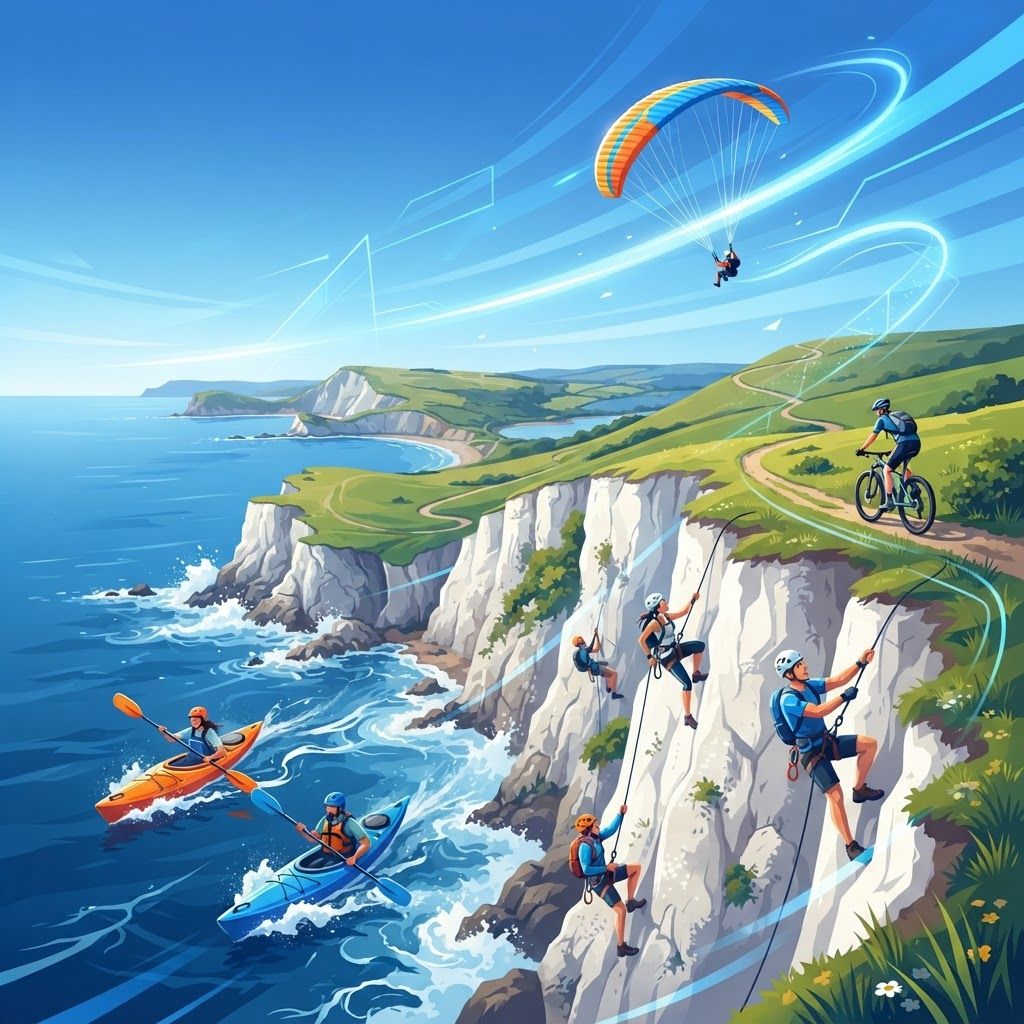
An Island Built for Adventure
For a place often characterised as a gentle seaside retreat, the Isle of Wight offers an unusually concentrated range of outdoor adventure. Its seventy-mile coastline includes chalk cliffs, sheltered bays, tidal races and reefs. Inland, chalk downland rises to over two hundred metres with long ridge lines and consistent sea breezes. The Solent to the north is one of the busiest and most technically interesting stretches of sailing water in the world.
Crucially, everything is close together. An adventure operator can run a sea kayaking session in the morning and a downland mountain bike ride in the afternoon without a long transfer. That density, combined with a mild climate and a long season, has supported a strong cluster of activity providers.
Ten Adventure Providers and Experiences
1. Tackt-Isle Adventures. One of the island's best-known multi-activity operators, offering coasteering, kayaking, climbing, archery and team-building programmes. Its breadth makes it a natural choice for groups with mixed interests and for families wanting to try several activities across a week.
2. Isle of Wight Adventure Activities. Providers in this category specialise in guided coasteering along the island's chalk and sandstone coastline, combining swimming, scrambling and controlled cliff jumping under qualified instruction. The geology around the southern coast makes for particularly dramatic routes.
3. Sea Kayaking and Paddleboarding Operators. Based around the sheltered northern harbours and the eastern bays, kayak and stand-up paddleboard providers offer everything from calm introductory sessions to challenging coastal expeditions. Paddling beneath the Needles on a settled day is among the island's outstanding experiences.
4. UKSA, Cowes. A major maritime training charity and activity centre with an international reputation. UKSA delivers professional yachting qualifications alongside watersports courses, youth development programmes and residential adventure weeks, and its Cowes base sits at the heart of British sailing.
5. Island Sailing Schools and Charter Operators. The Solent is the premier sailing training ground in the UK, and a network of schools offers recognised qualifications from beginner level through to offshore competency. Skippered charter allows less experienced visitors to experience the water without formal training.
6. Windsurfing and Kitesurfing Centres. Consistent wind and a choice of coastlines facing different directions mean there is nearly always a workable spot somewhere on the island. Centres in the north and east offer equipment hire and tuition for both disciplines.
7. Paragliding and Hang Gliding Clubs. The island's chalk ridges and coastal escarpments create reliable soaring conditions, and the south-facing downs are well regarded within the UK free-flight community. Tandem flights allow visitors to experience the coastline from the air without training.
8. Mountain Biking and E-Bike Tour Operators. The island's bridleway network crosses downland, woodland and former railway routes. Guided rides and e-bike hire have opened the more demanding climbs to a much wider range of riders, and the annual cycling festival draws thousands of participants.
9. Climbing, Abseiling and Rope Access Instruction. Sea cliffs and quarry faces support instructed climbing and abseiling. Because chalk and soft rock require specific technique and careful route selection, professional instruction matters more here than at inland climbing venues.
10. Walking, Trail Running and Ultra Event Organisers. The coastal path supports a strong calendar of endurance events, including long-distance challenge walks and ultramarathons circumnavigating the island. Organised events provide route support, timing and safety cover on terrain that includes significant cliff exposure.
Safety and Conditions
Adventure activity on the island demands respect for the environment. Tidal streams around the Needles and off the eastern corner are strong and can catch out paddlers who misjudge timing. Sections of the southern coast are geologically active, with recurring landslip affecting cliffs and paths. Always use operators who hold recognised national governing body qualifications and appropriate licensing for activities involving young people.
Weather changes quickly. A calm morning in a sheltered harbour tells you little about conditions on the exposed southwest coast. Good operators will change plans and locations on the day, and a provider willing to cancel or relocate is demonstrating competence rather than unreliability.
Best Times of Year
The main season runs from April to October, with water temperatures most comfortable from July through September. Spring offers excellent visibility and quiet trails. Autumn brings the most consistent wind for sailing and windsurfing, and storm-exposed beaches in winter are the best time for fossil hunting.
Booking ahead matters during the summer school holidays and around the island's festivals and cycling events, when capacity is genuinely constrained.
Conservation and Responsible Adventure
The whole Isle of Wight holds UNESCO Biosphere Reserve status, recognising the relationship between its communities and its natural environment. Responsible operators build this into their delivery: avoiding nesting seabird sites during breeding season, sticking to established paths across fragile chalk grassland, and briefing participants on the island's protected species, including its nationally important red squirrel population.
Visitors can support this by choosing operators who participate in conservation initiatives, travelling to activities by bike or public transport where practical, and treating the island's coastal environment as the fragile resource it is.
Planning an Adventure Trip
A well-constructed island adventure week might combine two guided water-based days, a long coastal path walk, a downland ride and a rest day exploring food producers and heritage sites. Base yourself centrally to minimise transfers, book weather-dependent activities early in your stay so there is room to reschedule, and allow recovery time. The island's compactness means you can pack in far more than the same week would allow almost anywhere else in England.
Want your brand featured in front of decision-makers? Publish a guest post or get a link insertion in our guides through AAMAX's guest post and link insertion service.
Helpful Links
 SponsoredAAMAX — Full-Service Digital Agency
Write for Us
Share your expertise with our readers. We welcome guest contributions from industry specialists.
Pitch your idea